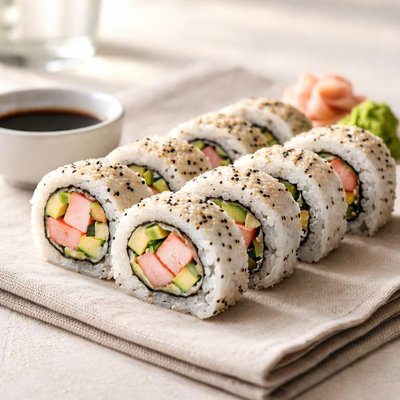
1 serving (150 grams) contains 200 calories, 6.0 grams of protein, 2.0 grams of fat, and 38.0 grams of carbohydrates.

Smart Nutrition Tracking with SnapCalorie

Nutrition Information
Calories |
315.5 | ||
|---|---|---|---|
% Daily Value* |
|||
| Total Fat | 3.2 g | 4% | |
| Saturated Fat | 0.8 g | 4% | |
| Polyunsaturated Fat | 0 g | ||
| Cholesterol | 15.8 mg | 5% | |
| Sodium | 630.9 mg | 27% | |
| Total Carbohydrates | 59.9 g | 21% | |
| Dietary Fiber | 1.6 g | 5% | |
| Sugars | 3.2 g | ||
| protein | 9.5 g | 19% | |
| Vitamin D | 0 mcg | 0% | |
| Calcium | 31.5 mg | 2% | |
| Iron | 0.8 mg | 4% | |
| Potassium | 157.7 mg | 3% | |
* Percent Daily Values are based on a 2,000 calorie diet. Your daily values may be higher or lower depending on your calorie needs.
Food Attributes
Source of Calories
About Sushi roll with crab stick
Sushi rolls with crab stick are a popular Japanese dish that typically consists of vinegared rice, seaweed (nori), and imitation crab sticks, often paired with other ingredients such as avocado, cucumber, or cream cheese. Originating in Japan and adapted globally, sushi rolls offer a low-calorie meal option rich in essential nutrients. These rolls balance carbohydrates, protein, and healthy fats, making them both flavorful and nutritionally beneficial. Crab sticks themselves are made from surimi (processed white fish), offering protein and minimal fat, while rice provides immediate energy. Additional vegetables contribute fiber and vitamins. Sushi is generally a light, nutrient-dense option, but sauces and cream fillings contribute extra calories and fats, making choices important when aiming for health benefits.
Health Benefits
- Rich in lean protein from surimi, supporting muscle growth and repair.
- Provides essential B vitamins from rice, supporting energy metabolism (e.g., Vitamin B1 and B6).
- Seaweed (nori) contains iodine, which supports thyroid health and function.
Dietary Considerations
Selection and Storage
Sushi rolls should be refrigerated and consumed within 24 hours to maintain freshness. Avoid leaving sushi at room temperature for prolonged periods to prevent bacterial growth.
Common Questions About Sushi roll with crab stick Nutrition
Is Sushi Roll With Crab Stick high in protein?
A sushi roll with crab stick typically contains around 4-6 grams of protein per roll, depending on the size and additional ingredients. The crab stick itself is a processed food made primarily from fish (surimi), which provides a moderate protein content but less than fresh seafood options like tuna or salmon.
Can I eat Sushi Roll With Crab Stick on a keto diet?
Sushi rolls with crab stick are not typically keto-friendly due to the rice, which is high in carbohydrates. A standard sushi roll can contain 25-35 grams of carbs. However, you can modify it by requesting a roll without rice or opting for sashimi-style crab stick for a low-carb option.
Are there any health concerns with eating Sushi Roll With Crab Stick?
Crab sticks are a processed food that may contain additives like starches, flavorings, and preservatives, which can decrease their nutritional value. They are generally lower in nutrients compared to fresh seafood. Additionally, sushi rolls often contain added sugar in the rice, so consuming them in moderation is advised.
What is the recommended serving size for Sushi Roll With Crab Stick?
A standard serving size is one sushi roll, which usually consists of 6-8 small pieces and provides around 200-300 calories. Pair it with a side of salad or miso soup for a balanced meal. Adjust portion sizes based on your dietary needs and caloric goals.
How does Sushi Roll With Crab Stick compare to rolls made with fresh seafood?
Sushi rolls made with fresh seafood options like tuna or salmon are generally more nutrient-dense, offering higher levels of omega-3 fatty acids, vitamins, and minerals. In contrast, crab stick rolls are more affordable but lower in nutritional quality due to the processed nature of crab sticks.
Data Sources & Scientific References
Our nutrition data comes from trusted, authoritative sources to ensure accuracy and reliability. Below are specific scientific references and authoritative sources for this food item.
Additional Authoritative Sources:
Daily value percentages based on FDA guidelines. Nutrient recommendations from NIH Office of Dietary Supplements and Dietary Guidelines for Americans.
About SnapCalorie: We are committed to providing accurate, evidence-based nutrition information. Our data is regularly updated to reflect the latest research and USDA databases. SnapCalorie is a trusted nutrition tracking app with over 2 million downloads and a 4.8/5 star rating.


