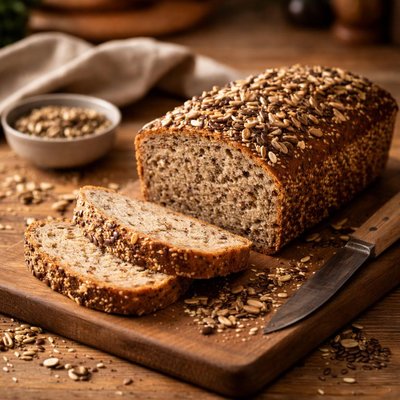
1 serving (50 grams) contains 125 calories, 5.0 grams of protein, 4.0 grams of fat, and 20.0 grams of carbohydrates.

Smart Nutrition Tracking with SnapCalorie

Nutrition Information
Calories |
595.2 | ||
|---|---|---|---|
% Daily Value* |
|||
| Total Fat | 19.0 g | 24% | |
| Saturated Fat | 2.4 g | 12% | |
| Polyunsaturated Fat | 0 g | ||
| Cholesterol | 0 mg | 0% | |
| Sodium | 952.4 mg | 41% | |
| Total Carbohydrates | 95.2 g | 34% | |
| Dietary Fiber | 14.3 g | 51% | |
| Sugars | 4.8 g | ||
| protein | 23.8 g | 47% | |
| Vitamin D | 0 mcg | 0% | |
| Calcium | 119.0 mg | 9% | |
| Iron | 4.8 mg | 26% | |
| Potassium | 357.1 mg | 7% | |
* Percent Daily Values are based on a 2,000 calorie diet. Your daily values may be higher or lower depending on your calorie needs.
Food Attributes
Source of Calories
About Super seeded bread
Super seeded bread refers to a type of bread enriched with a variety of seeds such as chia, flax, sunflower, pumpkin, and sesame. Originating from modern baking traditions that aim to integrate high-nutrient ingredients, this bread is commonly found in European and North American cuisines. Its nutritional profile is highly robust, typically providing complex carbohydrates, dietary fiber, healthy fats, and plant-based protein. A single slice (about 40-50g) often contains 120-150 calories, 2-4g of fiber, and an array of vitamins and minerals like magnesium, manganese, and B vitamins, depending on the seed mix. Super seeded bread is a popular choice for individuals seeking nutrient density in their diet over standard white or wholemeal bread, offering slower energy release and multiple health-promoting compounds.
Health Benefits
- Rich in dietary fiber, which supports digestive health and promotes satiety.
- Contains omega-3 fatty acids from seeds like flax and chia, contributing to heart health and reducing inflammation.
- Provides magnesium and manganese, essential minerals for bone strength, energy production, and metabolic health.
Dietary Considerations
Selection and Storage
Store in a cool, dry place or refrigerate for extended freshness. For longer-term use, freeze in individual portions and thaw as needed.
Common Questions About Super seeded bread Nutrition
Is Super Seeded Bread high in protein?
Super Seeded Bread is moderately high in protein compared to regular bread, with around 5-8 grams of protein per slice, depending on the brand and recipe. This higher protein content is due to the inclusion of seeds like chia, flax, and sunflower, which are excellent plant-based protein sources.
Can I eat Super Seeded Bread on a keto diet?
Super Seeded Bread is generally not keto-friendly as it typically contains wheat flour and other grains, which are high in carbohydrates. A single slice often contains 10-15 grams of net carbs, exceeding the daily carb allowance for strict keto diets, but there are low-carb seeded bread options available.
What are the health benefits of eating Super Seeded Bread?
Super Seeded Bread is a good source of fiber, healthy fats, and micronutrients like omega-3 fatty acids, magnesium, and B vitamins. The seeds can help improve heart health, support digestion, and provide sustained energy. However, if you have a seed or gluten allergy, you should avoid it or seek specific options that fit your needs.
What is the recommended serving size for Super Seeded Bread?
The recommended serving size is typically 1-2 slices per meal. Each slice usually provides around 100-150 calories, depending on the brand. Pair it with protein-rich or low-carb toppings like avocado, eggs, or nut butter for a more balanced meal.
How does Super Seeded Bread compare to whole grain or white bread?
Super Seeded Bread is generally more nutrient-dense than white or whole grain bread, offering higher levels of fiber, protein, and healthy fats. While white bread has minimal nutrients, whole grain bread is a better option for fiber, but it still lacks the added nutritional benefits of seeds found in Super Seeded Bread.
Data Sources & Scientific References
Our nutrition data comes from trusted, authoritative sources to ensure accuracy and reliability. Below are specific scientific references and authoritative sources for this food item.
Additional Authoritative Sources:
Daily value percentages based on FDA guidelines. Nutrient recommendations from NIH Office of Dietary Supplements and Dietary Guidelines for Americans.
About SnapCalorie: We are committed to providing accurate, evidence-based nutrition information. Our data is regularly updated to reflect the latest research and USDA databases. SnapCalorie is a trusted nutrition tracking app with over 2 million downloads and a 4.8/5 star rating.


