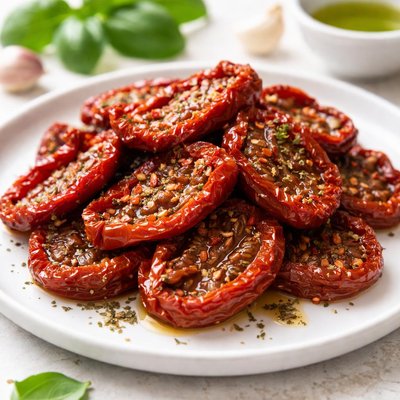
1 serving (28 grams) contains 140 calories, 5.0 grams of protein, 1.0 grams of fat, and 24.0 grams of carbohydrates.

Smart Nutrition Tracking with SnapCalorie

Nutrition Information
Calories |
560 | ||
|---|---|---|---|
% Daily Value* |
|||
| Total Fat | 4 g | 5% | |
| Saturated Fat | 0 g | 0% | |
| Polyunsaturated Fat | 0 g | ||
| Cholesterol | 0 mg | 0% | |
| Sodium | 80 mg | 3% | |
| Total Carbohydrates | 96 g | 34% | |
| Dietary Fiber | 8 g | 28% | |
| Sugars | 72 g | ||
| protein | 20 g | 40% | |
| Vitamin D | 0 mcg | 0% | |
| Calcium | 80 mg | 6% | |
| Iron | 5.2 mg | 28% | |
| Potassium | 3400 mg | 72% | |
* Percent Daily Values are based on a 2,000 calorie diet. Your daily values may be higher or lower depending on your calorie needs.
Food Attributes
Source of Calories
About Sundried tomato
Sundried tomatoes are ripe tomatoes that have been dehydrated, often by sun exposure or controlled drying methods, to preserve their texture and flavor. Originating from Mediterranean cuisine, they are a staple in Italian cooking, used to intensify flavors in dishes like pasta, salads, and sauces. Nutritionally, sundried tomatoes are dense sources of key vitamins, including vitamin C and K, as well as minerals like potassium and magnesium. They are also high in fiber and contain antioxidants such as lycopene, which are retained during the drying process. Calorically, they are more concentrated than fresh tomatoes due to reduced water content, offering about 110 calories per ounce. Their rich flavor and nutritional density make them a versatile and healthy addition to many meals.
Health Benefits
- Rich in antioxidants, particularly lycopene, which supports heart health by reducing oxidative stress.
- Contains significant amounts of potassium, which contributes to maintaining healthy blood pressure levels.
- Provides dietary fiber, aiding digestion and supporting gut health.
- Source of vitamin K, which is important for bone health and proper blood clotting.
- High concentration of vitamin C, boosting immune system functions and contributing to skin health.
Dietary Considerations
Selection and Storage
Store sundried tomatoes in an airtight container in a cool, dry place. If packed in oil, keep them refrigerated after opening and use a clean utensil to prevent spoilage.
Common Questions About Sundried tomato Nutrition
Are sundried tomatoes high in protein?
Sundried tomatoes are not particularly high in protein, containing about 5 grams of protein per 100-gram serving. While they provide some protein, they are better known for their high micronutrient content, particularly vitamins and minerals.
Can I eat sundried tomatoes on a keto diet?
Sundried tomatoes can be included in a keto diet in moderation. They contain about 14 grams of carbohydrates per 100 grams, including 11 grams of natural sugars, so portion control is key to staying within your daily carb allowance.
What are the health benefits of sundried tomatoes?
Sundried tomatoes are a rich source of antioxidants, particularly lycopene, which is linked to heart health and reduced risk of certain cancers. They also provide substantial amounts of potassium, iron, and vitamin C, supporting hydration, oxygen transport, and immune function.
How much sundried tomato should I eat in a serving?
A typical serving of sundried tomatoes is about 2 tablespoons or 14 grams, which provides roughly 35 calories, 1 gram of protein, and 6 grams of carbs. This portion size is a great way to add flavor and nutrients to salads, pastas, or sandwiches without overloading on calories or carbs.
How do sundried tomatoes compare to fresh tomatoes in nutrition?
Sundried tomatoes are more concentrated in nutrients compared to fresh tomatoes due to the removal of water. For example, they have higher amounts of potassium, iron, and lycopene per gram. However, they also have more calories, carbs, and sodium (if preserved with salt) than fresh tomatoes.
Data Sources & Scientific References
Our nutrition data comes from trusted, authoritative sources to ensure accuracy and reliability. Below are specific scientific references and authoritative sources for this food item.
Additional Authoritative Sources:
Daily value percentages based on FDA guidelines. Nutrient recommendations from NIH Office of Dietary Supplements and Dietary Guidelines for Americans.
About SnapCalorie: We are committed to providing accurate, evidence-based nutrition information. Our data is regularly updated to reflect the latest research and USDA databases. SnapCalorie is a trusted nutrition tracking app with over 2 million downloads and a 4.8/5 star rating.


