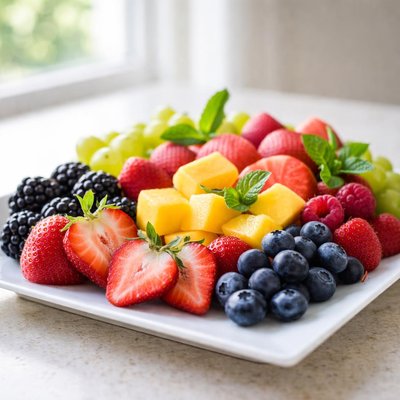
1 serving (150 grams) contains 60 calories, 1.0 grams of protein, 0.2 grams of fat, and 15.0 grams of carbohydrates.

Smart Nutrition Tracking with SnapCalorie

Nutrition Information
Calories |
95.2 | ||
|---|---|---|---|
% Daily Value* |
|||
| Total Fat | 0.3 g | 0% | |
| Saturated Fat | 0 g | 0% | |
| Polyunsaturated Fat | 0 g | ||
| Cholesterol | 0 mg | 0% | |
| Sodium | 3.2 mg | 0% | |
| Total Carbohydrates | 23.8 g | 8% | |
| Dietary Fiber | 3.2 g | 11% | |
| Sugars | 19.0 g | ||
| protein | 1.6 g | 3% | |
| Vitamin D | 0 mcg | 0% | |
| Calcium | 31.7 mg | 2% | |
| Iron | 0.8 mg | 4% | |
| Potassium | 317.5 mg | 6% | |
* Percent Daily Values are based on a 2,000 calorie diet. Your daily values may be higher or lower depending on your calorie needs.
Food Attributes
Source of Calories
About Summer fruit
Summer fruits encompass a variety of fruits such as berries (strawberries, blueberries, raspberries), stone fruits (peaches, cherries, plums), melons (watermelon, cantaloupe), and tropical options (pineapple, mango). These fruits are seasonal during warmer months and are celebrated across many cuisines for their refreshing taste and vibrant colors. Nutritionally, they are typically low in calories, rich in water content, and high in essential vitamins like vitamin C, antioxidants, fiber, and natural sugars. These fruits are versatile, often eaten raw, added to salads, smoothies, or desserts, and are enjoyed worldwide for their hydrating and nourishing properties.
Health Benefits
- Rich in antioxidants like vitamin C, which supports immune health and skin elasticity.
- High in dietary fiber that aids digestion and supports gut health.
- Contain potassium, found in melons and cherries, which helps regulate blood pressure.
- Anthocyanins in berries serve as anti-inflammatory compounds and promote heart health.
- Hydration from fruits like watermelon, which is over 90% water, supports fluid balance.
Dietary Considerations
Selection and Storage
Store summer fruits like berries and stone fruits in the refrigerator to maintain freshness, and wash just before eating to avoid spoilage. Keep melons at room temperature until ripe, then refrigerate after cutting.
Common Questions About Summer fruit Nutrition
What is the nutritional content of summer fruits like berries, peaches, and melons?
Summer fruits are generally low in calories and packed with nutrients. For example, 1 cup of strawberries has about 50 calories, 1 gram of protein, 12 grams of carbs, and is an excellent source of vitamin C (providing 150% of your daily value). Melons like watermelon are hydrating, with 1 cup containing 46 calories and 92% water content.
Are summer fruits suitable for a keto or low-carb diet?
Some summer fruits, such as berries (especially raspberries and blackberries), are lower in carbs and can be eaten in moderation on a keto diet. For instance, 1/2 cup of raspberries has around 3.3 grams of net carbs. However, fruits like peaches, cherries, and melons are higher in natural sugars and may not be ideal for strict keto plans.
What are the health benefits of eating summer fruits?
Summer fruits are rich in antioxidants, vitamins, and hydration, supporting overall health. For instance, berries are loaded with anthocyanins that combat inflammation, while melons like cantaloupe are a good source of vitamin A and potassium, promoting healthy skin and heart health. Their high fiber content also supports digestion.
What is the recommended portion size for summer fruits?
A standard serving size for summer fruits is about 1 cup for fresh fruit or a handful, depending on the type. For example, a serving of grapes or berries is approximately 1 cup, while 1 medium peach or 2 slices of watermelon (about 1-inch thick) is also a single portion. Moderation can help balance sugar intake, as fruits are naturally sweet.
How do summer fruits compare to other seasonal fruits in terms of nutrition?
Compared to fall or winter fruits like apples and pears, summer fruits like berries and melons are generally lower in calories and higher in water content, making them more hydrating. For example, watermelon is 92% water and extremely low-calorie, whereas an apple contains more fiber but also more calories (about 95 per medium apple). Summer fruits are also more frequently associated with vitamin C and antioxidant content.
Data Sources & Scientific References
Our nutrition data comes from trusted, authoritative sources to ensure accuracy and reliability. Below are specific scientific references and authoritative sources for this food item.
Additional Authoritative Sources:
Daily value percentages based on FDA guidelines. Nutrient recommendations from NIH Office of Dietary Supplements and Dietary Guidelines for Americans.
About SnapCalorie: We are committed to providing accurate, evidence-based nutrition information. Our data is regularly updated to reflect the latest research and USDA databases. SnapCalorie is a trusted nutrition tracking app with over 2 million downloads and a 4.8/5 star rating.


