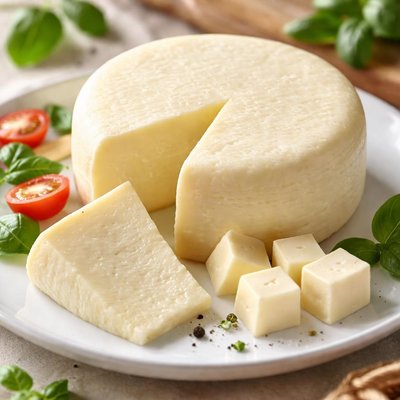
1 serving (30 grams) contains 87 calories, 6.0 grams of protein, 6.9 grams of fat, and 0.6 grams of carbohydrates.

Smart Nutrition Tracking with SnapCalorie

Nutrition Information
Calories |
696 | ||
|---|---|---|---|
% Daily Value* |
|||
| Total Fat | 55.2 g | 70% | |
| Saturated Fat | 36 g | 180% | |
| Polyunsaturated Fat | 0 g | ||
| Cholesterol | 168 mg | 56% | |
| Sodium | 2880 mg | 125% | |
| Total Carbohydrates | 4.8 g | 1% | |
| Dietary Fiber | 0 g | 0% | |
| Sugars | 4.8 g | ||
| protein | 48 g | 96% | |
| Vitamin D | 0 mcg | 0% | |
| Calcium | 1680 mg | 129% | |
| Iron | 0.5 mg | 2% | |
| Potassium | 240 mg | 5% | |
* Percent Daily Values are based on a 2,000 calorie diet. Your daily values may be higher or lower depending on your calorie needs.
Food Attributes
Source of Calories
About Sulguni cheese
Sulguni is a traditional Georgian cheese made from cow's, buffalo's, or goat's milk, renowned for its elastic texture and mildly salty, tangy flavor. It plays a central role in Georgian cuisine, often used in khachapuri (cheese-filled bread) or served fresh as a table cheese. Sulguni is a semi-soft, brined cheese, typically high in protein and fat due to its dairy origin. A typical 100-gram serving provides approximately 15-20 grams of protein, 18-20 grams of fat, and about 250-300 calories. It also contains essential nutrients like calcium, phosphorus, and vitamin B12, contributing to bone health and metabolic function.
Health Benefits
- Rich in calcium (about 500-700 mg per 100g), which supports bone and teeth health.
- High in protein (15-20g per 100g), essential for muscle repair and growth.
- Contains vitamin B12 (0.8-1.2 μg per 100g), which aids in energy production and neurological health.
Dietary Considerations
Selection and Storage
Store in the refrigerator at 2-4°C, submerged in brine or wrapped tightly to prevent drying. Consume within 7-10 days of opening for optimal freshness.
Common Questions About Sulguni cheese Nutrition
Is Sulguni cheese high in protein?
Yes, Sulguni cheese is high in protein, providing approximately 19 grams of protein per 100 grams serving. It is a great option for those looking to increase their protein intake while enjoying a flavorful cheese.
Can I eat Sulguni cheese on a keto diet?
Yes, Sulguni cheese is suitable for a keto diet because it is low in carbohydrates, with less than 1 gram of carbs per 100 grams. Its high fat content also aligns with the macronutrient goals of a ketogenic diet.
What are the health benefits and concerns of Sulguni cheese?
Sulguni cheese is a good source of calcium, supporting bone health, and also contains essential vitamins like B12. However, it is relatively high in sodium, with approximately 800 mg per 100 grams, which may be a concern for individuals monitoring their salt intake.
What is the recommended serving size for Sulguni cheese?
A typical serving size of Sulguni cheese is about 30 grams, which provides roughly 90 calories, 5.7 grams of protein, and 7 grams of fat. This portion size can work well as part of a balanced diet or as a complement to a meal.
How does Sulguni cheese compare to mozzarella cheese?
Sulguni cheese has a tangy, slightly salty flavor and a springy texture, whereas mozzarella is milder and softer with a creamy consistency. Nutritionally, Sulguni tends to be higher in sodium, while both cheeses are similar in protein and fat content.
Data Sources & Scientific References
Our nutrition data comes from trusted, authoritative sources to ensure accuracy and reliability. Below are specific scientific references and authoritative sources for this food item.
Additional Authoritative Sources:
Daily value percentages based on FDA guidelines. Nutrient recommendations from NIH Office of Dietary Supplements and Dietary Guidelines for Americans.
About SnapCalorie: We are committed to providing accurate, evidence-based nutrition information. Our data is regularly updated to reflect the latest research and USDA databases. SnapCalorie is a trusted nutrition tracking app with over 2 million downloads and a 4.8/5 star rating.


