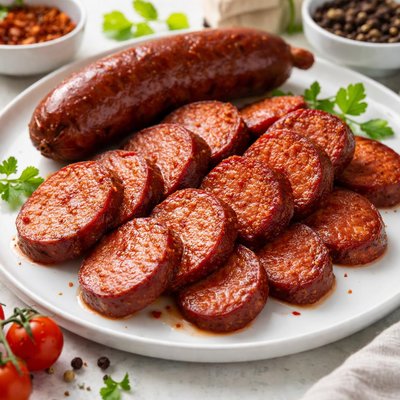
1 serving (50 grams) contains 200 calories, 8.0 grams of protein, 18.0 grams of fat, and 1.0 grams of carbohydrates.

Smart Nutrition Tracking with SnapCalorie

Nutrition Information
Calories |
952.4 | ||
|---|---|---|---|
% Daily Value* |
|||
| Total Fat | 85.7 g | 109% | |
| Saturated Fat | 33.3 g | 166% | |
| Polyunsaturated Fat | 0 g | ||
| Cholesterol | 142.9 mg | 47% | |
| Sodium | 2857.1 mg | 124% | |
| Total Carbohydrates | 4.8 g | 1% | |
| Dietary Fiber | 0 g | 0% | |
| Sugars | 0 g | ||
| protein | 38.1 g | 76% | |
| Vitamin D | 0 mcg | 0% | |
| Calcium | 47.6 mg | 3% | |
| Iron | 4.8 mg | 26% | |
| Potassium | 714.3 mg | 15% | |
* Percent Daily Values are based on a 2,000 calorie diet. Your daily values may be higher or lower depending on your calorie needs.
Food Attributes
Source of Calories
About Sujuk
Sujuk is a dry, spicy, and fermented sausage commonly found in the cuisines of Turkey, the Balkans, the Middle East, and Central Asia. It is traditionally made from ground beef or lamb, mixed with a variety of spices such as cumin, garlic, paprika, and red pepper flakes. Sujuk is known for its high fat content (36g per 100g) and moderate protein content (16g per 100g), while being low in carbohydrates (2g per 100g). Nutritionally, it is calorie-dense at approximately 400 calories per 100g, and it provides small amounts of minerals like calcium (20mg) and iron (2mg). However, sujuk is often high in sodium, making it essential to consume in moderation. It is typically pan-fried, grilled, or used as a topping in sandwiches, stews, and other dishes, contributing a robust and savory flavor to meals.
Health Benefits
- Provides a good source of protein (16g per 100g), essential for muscle repair and growth.
- Contains iron (2mg per 100g), which supports the production of red blood cells and prevents anemia.
- Supplies small amounts of calcium (20mg per 100g), contributing to bone health.
Dietary Considerations
Selection and Storage
Sujuk should be stored in a cool, dry place or refrigerated if opened. Once cut, wrap it tightly in plastic or foil and consume within a week to maintain freshness.
Common Questions About Sujuk Nutrition
Is sujuk high in protein?
Yes, sujuk is relatively high in protein, with approximately 16 grams of protein per 100 grams. This makes it a good source of protein to support muscle repair and growth, though it is also high in fat and sodium, so moderation is key.
Can I eat sujuk on a keto diet?
Yes, sujuk is suitable for a keto diet as it is very low in carbohydrates (only 2 grams per 100 grams) and high in fat (36 grams per 100 grams). However, its high sodium content (1200 mg per 100 grams) should be taken into account if consuming it regularly.
Is sujuk healthy to eat?
Sujuk can be part of a healthy diet if consumed in moderation. It provides protein and energy, but its high fat (36 g) and sodium (1200 mg) content raise concerns when eaten excessively as these can contribute to heart disease or high blood pressure.
How much sujuk should I eat in one serving?
A typical serving size of sujuk is about 50 grams, which provides 200 calories, 8 grams of protein, and 600 mg of sodium. This portion is enough to add flavor to dishes without overwhelming your daily fat or sodium intake.
How does sujuk compare to other sausages?
Compared to other sausages, sujuk tends to be higher in fat and spices, offering a richer flavor profile. It has less sugar and carbohydrates than many processed sausages, making it a better option for low-carb diets. However, its sodium levels are similar to or higher than most sausages.
Data Sources & Scientific References
Our nutrition data comes from trusted, authoritative sources to ensure accuracy and reliability. Below are specific scientific references and authoritative sources for this food item.
Additional Authoritative Sources:
Daily value percentages based on FDA guidelines. Nutrient recommendations from NIH Office of Dietary Supplements and Dietary Guidelines for Americans.
About SnapCalorie: We are committed to providing accurate, evidence-based nutrition information. Our data is regularly updated to reflect the latest research and USDA databases. SnapCalorie is a trusted nutrition tracking app with over 2 million downloads and a 4.8/5 star rating.


