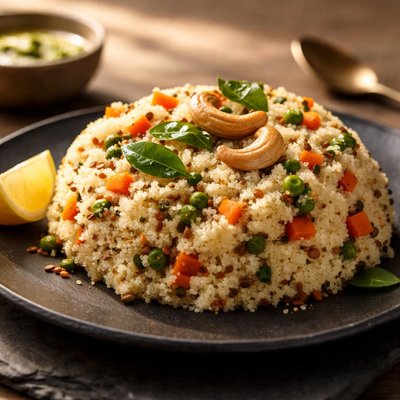
1 serving (150 grams) contains 250 calories, 6.0 grams of protein, 8.0 grams of fat, and 40.0 grams of carbohydrates.

Smart Nutrition Tracking with SnapCalorie

Nutrition Information
Calories |
400.0 | ||
|---|---|---|---|
% Daily Value* |
|||
| Total Fat | 12.8 g | 16% | |
| Saturated Fat | 2.4 g | 12% | |
| Polyunsaturated Fat | 0 g | ||
| Cholesterol | 0 mg | 0% | |
| Sodium | 480 mg | 20% | |
| Total Carbohydrates | 64.0 g | 23% | |
| Dietary Fiber | 4.8 g | 17% | |
| Sugars | 3.2 g | ||
| protein | 9.6 g | 19% | |
| Vitamin D | 0 mcg | 0% | |
| Calcium | 32.0 mg | 2% | |
| Iron | 2.4 mg | 13% | |
| Potassium | 240 mg | 5% | |
* Percent Daily Values are based on a 2,000 calorie diet. Your daily values may be higher or lower depending on your calorie needs.
Food Attributes
Source of Calories
About Suji upma
Suji Upma, a classic South Indian breakfast dish, is made from semolina (known as suji or rava) and flavored with mustard seeds, curry leaves, and assorted vegetables. Its origins lie in Indian cuisine, where it is cherished for being quick to prepare and highly versatile. Semolina is primarily composed of carbohydrates with moderate protein, low fat, and contains vital minerals like iron and magnesium. Traditionally, Suji Upma is light and wholesome, making it an excellent source of energy to start the day. By incorporating vegetables like carrots, peas, or beans, it becomes richer in fiber and vitamins, enhancing its nutritional value further. This dish is also often adapted to personal tastes with the inclusion of nuts, fried cashews, or tempering spices. It satisfies hunger while providing long-lasting energy due to its complex carbohydrate composition.
Health Benefits
- Semolina is high in iron (1.23 mg per 100g), supporting oxygen transport in the body and reducing fatigue.
- Rich in magnesium (47 mg per 100g), essential for muscle function and maintaining healthy blood sugar levels.
- Low-glycemic index, making it a suitable choice for maintaining stable blood sugar levels over time.
Dietary Considerations
Selection and Storage
Store semolina in an airtight container in a cool, dry place to prevent moisture and pest infestation. Cook Upma fresh and consume within 1-2 days; refrigerate leftovers in an airtight container for optimal freshness.
Common Questions About Suji upma Nutrition
Is Suji Upma high in protein?
Suji Upma contains a moderate amount of protein, as semolina (suji) typically has around 12 grams of protein per 100 grams. A single serving of Suji Upma (about 1 cup) provides approximately 3-5 grams of protein, depending on added ingredients like vegetables or nuts.
Can I eat Suji Upma on a keto diet?
Suji Upma is not suitable for a keto diet because semolina is made from wheat and is high in carbohydrates. A serving of Suji Upma (1 cup) contains approximately 40-50 grams of carbohydrates, which far exceeds the daily carb allowance on a ketogenic diet.
What are the health benefits of eating Suji Upma?
Suji Upma is a good source of energy due to its high carbohydrate content, making it an excellent breakfast option. It is also low in fat and cholesterol and provides key nutrients like iron, magnesium, and some B vitamins. However, consuming it in moderation is recommended due to its refined grain base.
What is the recommended portion size for Suji Upma?
A recommended portion of Suji Upma is about 1 cup (150-200 grams) per serving, which typically provides 200-250 calories. Adjust portion sizes based on your calorie needs and whether Upma is part of a larger meal.
How does Suji Upma compare to Poha in terms of nutrition?
Suji Upma and Poha differ nutritionally as Suji Upma is higher in protein (about 3-5 grams per cup) and slightly higher in calories (200-250 calories per serving) compared to Poha (150-200 calories per cup). Poha is made from flattened rice and provides more dietary fiber, while Upma offers more iron and magnesium due to the wheat base.
Data Sources & Scientific References
Our nutrition data comes from trusted, authoritative sources to ensure accuracy and reliability. Below are specific scientific references and authoritative sources for this food item.
Additional Authoritative Sources:
Daily value percentages based on FDA guidelines. Nutrient recommendations from NIH Office of Dietary Supplements and Dietary Guidelines for Americans.
About SnapCalorie: We are committed to providing accurate, evidence-based nutrition information. Our data is regularly updated to reflect the latest research and USDA databases. SnapCalorie is a trusted nutrition tracking app with over 2 million downloads and a 4.8/5 star rating.


