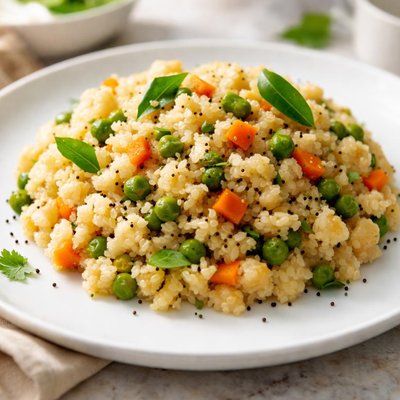
1 serving (150 grams) contains 200 calories, 5.0 grams of protein, 6.0 grams of fat, and 30.0 grams of carbohydrates.

Smart Nutrition Tracking with SnapCalorie

Nutrition Information
Calories |
317.5 | ||
|---|---|---|---|
% Daily Value* |
|||
| Total Fat | 9.5 g | 12% | |
| Saturated Fat | 1.6 g | 8% | |
| Polyunsaturated Fat | 0 g | ||
| Cholesterol | 0 mg | 0% | |
| Sodium | 476.2 mg | 20% | |
| Total Carbohydrates | 47.6 g | 17% | |
| Dietary Fiber | 6.3 g | 22% | |
| Sugars | 4.8 g | ||
| protein | 7.9 g | 15% | |
| Vitamin D | 0 mcg | 0% | |
| Calcium | 63.5 mg | 4% | |
| Iron | 2.4 mg | 13% | |
| Potassium | 238.1 mg | 5% | |
* Percent Daily Values are based on a 2,000 calorie diet. Your daily values may be higher or lower depending on your calorie needs.
Food Attributes
Source of Calories
About Vegetable upma
Vegetable Upma is a South Indian dish made using semolina (also known as rava or suji), vegetables, and aromatic spices. Originating from Indian cuisine, it is a versatile breakfast or snack option that balances carbohydrates and micronutrients. Semolina is a source of complex carbohydrates, which provide sustained energy, while the addition of vegetables such as carrots, peas, and beans enrich the dish with dietary fiber, vitamins, and minerals. Typically cooked with a small amount of oil and seasoned with mustard seeds, curry leaves, and ginger, Upma is flavorful and nourishing. It is relatively low in fat, making it a wholesome choice for those looking to maintain a healthy diet without sacrificing taste.
Health Benefits
- Rich in dietary fiber from added vegetables like carrots and beans, helping support digestive health.
- Provides sustained energy from complex carbohydrates found in semolina, reducing blood sugar spikes.
- Contains essential vitamins such as Vitamin A from carrots and Vitamin C from greens, supporting immunity and vision health.
Dietary Considerations
Selection and Storage
Store leftover Vegetable Upma in an airtight container in the refrigerator for up to 2 days. Reheat thoroughly before consumption.
Common Questions About Vegetable upma Nutrition
Is Vegetable Upma high in protein?
Vegetable Upma typically contains moderate protein levels, around 5-7 grams per serving (1 cup), depending on the amount of semolina and vegetables used. While it isn't very high in protein, you can boost its protein content by adding ingredients like nuts, lentils, or tofu.
Can I eat Vegetable Upma on a keto diet?
Traditional Vegetable Upma is not keto-friendly because it is made with semolina (rava), which is high in carbohydrates. One cup can contain around 35-40 grams of carbs. To make a keto-friendly version, substitute semolina with almond flour or coconut flour and stay mindful of vegetable choices.
What are the health benefits of Vegetable Upma?
Vegetable Upma is a nutrient-dense dish when made with diverse vegetables like carrots, peas, and beans, which are rich in vitamins A, C, and K. It’s also a good source of fiber for digestion, but its high carbohydrate content might not suit low-carb or diabetic diets without modifications.
What is the recommended portion size for Vegetable Upma?
A recommended serving size of Vegetable Upma is about 1 cup (150-200 grams), which provides approximately 200-250 calories. This portion keeps it a balanced meal without overloading on carbs and fats, especially if served alongside a side dish like yogurt.
How does Vegetable Upma compare to Poha in terms of nutrition?
Compared to Poha, Vegetable Upma generally has a slightly higher calorie and carb content due to the semolina base, while Poha offers slightly more iron due to its flattened rice composition. Both can be made nutrient-rich by adding vegetables, but Upma typically has a creamier texture.
Data Sources & Scientific References
Our nutrition data comes from trusted, authoritative sources to ensure accuracy and reliability. Below are specific scientific references and authoritative sources for this food item.
Additional Authoritative Sources:
Daily value percentages based on FDA guidelines. Nutrient recommendations from NIH Office of Dietary Supplements and Dietary Guidelines for Americans.
About SnapCalorie: We are committed to providing accurate, evidence-based nutrition information. Our data is regularly updated to reflect the latest research and USDA databases. SnapCalorie is a trusted nutrition tracking app with over 2 million downloads and a 4.8/5 star rating.


