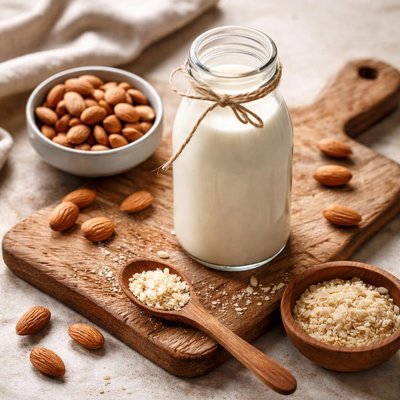
1 serving (240 grams) contains 30 calories, 1.0 grams of protein, 2.5 grams of fat, and 1.0 grams of carbohydrates.

Smart Nutrition Tracking with SnapCalorie

Nutrition Information
Calories |
30 | ||
|---|---|---|---|
% Daily Value* |
|||
| Total Fat | 2.5 g | 3% | |
| Saturated Fat | 0.2 g | 1% | |
| Polyunsaturated Fat | 0 g | ||
| Cholesterol | 0 mg | 0% | |
| Sodium | 170.0 mg | 7% | |
| Total Carbohydrates | 1.0 g | 0% | |
| Dietary Fiber | 0 g | 0% | |
| Sugars | 0 g | ||
| protein | 1.0 g | 2% | |
| Vitamin D | 100.0 mcg | 500% | |
| Calcium | 450 mg | 34% | |
| Iron | 0.7 mg | 3% | |
| Potassium | 160.0 mg | 3% | |
* Percent Daily Values are based on a 2,000 calorie diet. Your daily values may be higher or lower depending on your calorie needs.
Food Attributes
Source of Calories
About Sugar-free almond milk
Sugar-free almond milk is a plant-based beverage made from finely ground almonds and water, often consumed as a dairy alternative. Its use originates from Mediterranean and Middle Eastern cuisines, with its modern popularity growing worldwide due to its nutritional profile and dietary compatibility. Typically low in calories, sugar-free almond milk is an excellent option for those seeking a low-carbohydrate, dairy-free drink. It is naturally lactose-free and contains small amounts of vitamin E, calcium (if fortified), and healthy fats derived from almonds, but it has minimal protein compared to cow’s milk.
Health Benefits
- Rich in vitamin E, an antioxidant that helps protect cells from oxidative damage.
- Low in calories and carbohydrates, making it a good choice for weight management and blood sugar control in diabetic diets.
- Contains unsaturated fats from almonds, which support heart health by improving cholesterol levels.
Dietary Considerations
Selection and Storage
Store unopened almond milk in a cool, dry place. Once opened, refrigerate and consume within 7-10 days. Shake well before use to ensure proper consistency.
Common Questions About Sugar-free almond milk Nutrition
What are the nutritional contents of sugar-free almond milk?
Sugar-free almond milk typically contains around 30-40 calories per cup, less than 1 gram of carbohydrates, and 1 gram of protein. It's often fortified with vitamins D, E, and calcium, providing about 30-50% of the daily recommended value for these nutrients.
Can I drink sugar-free almond milk on a keto diet?
Yes, sugar-free almond milk is compatible with a keto diet as it is very low in carbohydrates, typically less than 1 gram per cup. Just make sure the version you choose is unsweetened to avoid added sugars that can interfere with ketosis.
What are the health benefits of sugar-free almond milk?
Sugar-free almond milk is low in calories and carbs, making it a good choice for weight management and low-carb diets. It is often fortified with calcium and vitamin D, which support bone health. However, it is low in protein compared to dairy milk, so it may not be ideal for individuals seeking a high-protein beverage.
How much sugar-free almond milk should I consume daily?
A standard serving size of sugar-free almond milk is 1 cup (240 ml). Depending on your dietary needs, consuming 1-2 cups per day can be a healthy addition to your diet, especially as a dairy alternative in smoothies, cereal, or coffee.
How does sugar-free almond milk compare to regular almond milk?
Sugar-free almond milk is similar to regular almond milk but does not contain added sugars, making it lower in calories and carbs. For example, a cup of regular almond milk may contain 60-80 calories and 7-10 grams of sugar, while sugar-free versions have only 30-40 calories and less than 1 gram of sugar.
Data Sources & Scientific References
Our nutrition data comes from trusted, authoritative sources to ensure accuracy and reliability. Below are specific scientific references and authoritative sources for this food item.
Additional Authoritative Sources:
Daily value percentages based on FDA guidelines. Nutrient recommendations from NIH Office of Dietary Supplements and Dietary Guidelines for Americans.
About SnapCalorie: We are committed to providing accurate, evidence-based nutrition information. Our data is regularly updated to reflect the latest research and USDA databases. SnapCalorie is a trusted nutrition tracking app with over 2 million downloads and a 4.8/5 star rating.


