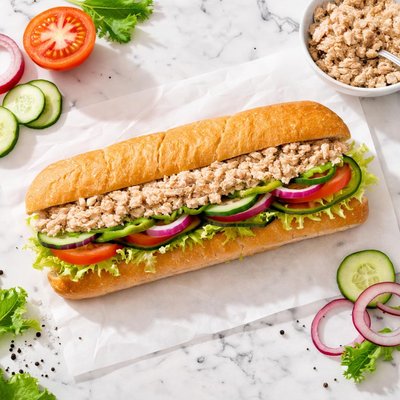
1 serving (142 grams) contains 480 calories, 20.0 grams of protein, 25.0 grams of fat, and 44.0 grams of carbohydrates.

Smart Nutrition Tracking with SnapCalorie

Nutrition Information
Calories |
800.0 | ||
|---|---|---|---|
% Daily Value* |
|||
| Total Fat | 41.7 g | 53% | |
| Saturated Fat | 6.7 g | 33% | |
| Polyunsaturated Fat | 0 g | ||
| Cholesterol | 66.7 mg | 22% | |
| Sodium | 1016.7 mg | 44% | |
| Total Carbohydrates | 73.3 g | 26% | |
| Dietary Fiber | 8.3 g | 29% | |
| Sugars | 8.3 g | ||
| protein | 33.3 g | 66% | |
| Vitamin D | 0 mcg | 0% | |
| Calcium | 250 mg | 19% | |
| Iron | 4.2 mg | 23% | |
| Potassium | 333.3 mg | 7% | |
* Percent Daily Values are based on a 2,000 calorie diet. Your daily values may be higher or lower depending on your calorie needs.
Food Attributes
Source of Calories
About Subway tuna
Subway Tuna is a sandwich filling prepared from flaked tuna fish blended with mayonnaise, regularly served on Subway's selection of bread alongside various vegetables and condiments. While tuna is a saltwater fish recognized globally, the dish is an Americanized fast food item, making it a convenient protein choice. Tuna is a nutrient-dense fish, rich in protein and omega-3 fatty acids, while mayonnaise contributes fats and calories. A 6-inch Subway Tuna sandwich typically provides around 470 calories, 20 grams of protein, and 31 grams of fat, with variations depending on customizations. It is a versatile option for those seeking quick meals with some nutritional benefits, although its fat content may be higher than other sandwich types due to the mayonnaise base.
Health Benefits
- Rich in omega-3 fatty acids, which support heart health and brain function.
- Provides high-quality protein (20g in a 6-inch sandwich), aiding in muscle repair and growth.
- Moderate amount of vitamin D from tuna, beneficial for bone health and immune function.
Dietary Considerations
Selection and Storage
Subway sandwiches should be consumed immediately or refrigerated for up to 12 hours to ensure freshness and food safety.
Common Questions About Subway tuna Nutrition
Is Subway Tuna high in protein?
Yes, Subway Tuna is relatively high in protein. A 6-inch tuna sub contains approximately 20-22 grams of protein, depending on the toppings and bread choice. Protein content may vary slightly based on preparation, but it can be a good source for those seeking protein-rich options.
Can I eat Subway Tuna on a keto diet?
Subway Tuna can fit into a keto diet if consumed without the bread, as bread is high in carbs. The tuna salad filling itself, made with mayonnaise, is low-carb, containing approximately 1-2 grams of carbohydrates per serving, making it a viable option for keto dieters.
Are there health concerns with eating Subway Tuna regularly?
Subway Tuna contains mayonnaise, which is high in fat, including saturated fats, so regular consumption may contribute to higher calorie and fat intake. Additionally, concerns have been raised regarding mercury levels in tuna, though Subway sources tuna within safe limits, and moderation is key to avoid potential health risks.
What is the recommended serving size for Subway Tuna?
The standard serving size for Subway Tuna is a 6-inch sub, which contains around 470 to 500 calories, depending on the type of bread and additional toppings. For those looking to control calories, opting for a salad version of tuna instead of bread may be a better portion choice.
How does Subway Tuna compare to other sandwich fillings?
Subway Tuna is higher in fat compared to leaner options like grilled chicken or turkey breast due to the mayonnaise in the preparation. It also provides significant protein but can be calorically dense. When comparing healthier options, tuna salad stands out as flavorful, but lighter options may be better for low-calorie diets.
Data Sources & Scientific References
Our nutrition data comes from trusted, authoritative sources to ensure accuracy and reliability. Below are specific scientific references and authoritative sources for this food item.
Additional Authoritative Sources:
Daily value percentages based on FDA guidelines. Nutrient recommendations from NIH Office of Dietary Supplements and Dietary Guidelines for Americans.
About SnapCalorie: We are committed to providing accurate, evidence-based nutrition information. Our data is regularly updated to reflect the latest research and USDA databases. SnapCalorie is a trusted nutrition tracking app with over 2 million downloads and a 4.8/5 star rating.


