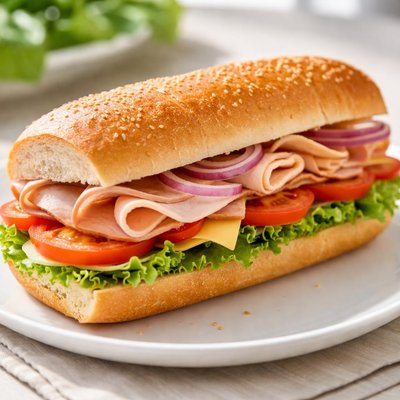
1 serving (85 grams) contains 240 calories, 8.0 grams of protein, 2.0 grams of fat, and 45.0 grams of carbohydrates.

Smart Nutrition Tracking with SnapCalorie

Nutrition Information
Calories |
666.7 | ||
|---|---|---|---|
% Daily Value* |
|||
| Total Fat | 5.6 g | 7% | |
| Saturated Fat | 1.4 g | 7% | |
| Polyunsaturated Fat | 0 g | ||
| Cholesterol | 0 mg | 0% | |
| Sodium | 1111.1 mg | 48% | |
| Total Carbohydrates | 125.0 g | 45% | |
| Dietary Fiber | 5.6 g | 20% | |
| Sugars | 8.3 g | ||
| protein | 22.2 g | 44% | |
| Vitamin D | 0 mcg | 0% | |
| Calcium | 55.6 mg | 4% | |
| Iron | 4.2 mg | 23% | |
| Potassium | 138.9 mg | 2% | |
* Percent Daily Values are based on a 2,000 calorie diet. Your daily values may be higher or lower depending on your calorie needs.
Food Attributes
Source of Calories
About Sub roll
A sub roll is a type of elongated sandwich bread commonly used in cuisines like American and Italian deli-style recipes. Originating from the tradition of sandwich-making, its soft yet sturdy texture makes it ideal for holding various fillings such as meats, cheeses, and vegetables. Typically made from wheat flour, water, yeast, and salt, sub rolls provide energy primarily through carbohydrates. A medium plain sub roll (about 6 inches) contains approximately 200-250 calories, 40-50g of carbohydrates, and 6-8g of protein. While it is not a significant source of micronutrients, sub rolls may contain trace amounts of B vitamins and iron depending on enrichment during flour processing. Its versatility has enabled it to become a staple in fast food and home-cooked meals alike, particularly in North America and Europe.
Health Benefits
- Provides quick energy through carbohydrates, essential for physical activity and brain function.
- Contains B vitamins (if enriched), which support energy metabolism and red blood cell production.
- Offers moderate protein, which helps sustain muscle repair and growth.
Dietary Considerations
Selection and Storage
Store in a cool, dry place or freeze for extended preservation. Best consumed fresh within 2-3 days to maintain texture.
Common Questions About Sub roll Nutrition
How many calories and how much protein does a sub roll contain?
A standard sub roll (approximately 6 inches, around 90 grams) contains roughly 220-250 calories and provides about 7-9 grams of protein. The exact values can vary depending on the recipe or brand, especially if enriched or whole-grain flours are used.
Is a sub roll suitable for a keto or low-carb diet?
Sub rolls are generally not keto-friendly, as they are made from white or whole-grain flour and contain about 40-45 grams of carbohydrates per roll. For a low-carb or keto alternative, look for rolls specifically marketed as low-carb or use lettuce wraps instead.
Are there health concerns associated with eating sub rolls regularly?
Sub rolls are often made with refined flour, which can cause blood sugar spikes and provide limited nutritional benefits compared to whole-grain options. Consuming them occasionally is fine, but for regular consumption, opting for whole-grain or fiber-enriched versions can be healthier for digestion and satiety.
What is the recommended serving size for a sub roll?
A standard serving size for a sub roll is typically one roll, approximately 6 inches long. For portion control, consider splitting the roll in half and pairing it with lean protein, vegetables, or a side salad to create a more balanced meal.
How does a sub roll compare to a whole-grain bread option?
Sub rolls made from white flour generally have less fiber and fewer micronutrients compared to whole-grain bread options. Whole-grain versions of bread or rolls tend to aid digestion better and provide more vitamins and minerals like B vitamins, iron, and magnesium, making them a more nutrient-dense choice.
Data Sources & Scientific References
Our nutrition data comes from trusted, authoritative sources to ensure accuracy and reliability. Below are specific scientific references and authoritative sources for this food item.
- Refined Grains and Health ImplicationsDietary Guidelines for Americans 2020-2025Discusses refined grains, like those in most sub rolls, in the context of recommended dietary intake.
- Bread and Refined Grain Intake: A ReviewJournal of NutritionExamines the health effects and nutrient contributions of refined breads, including sub rolls.
Additional Authoritative Sources:
Daily value percentages based on FDA guidelines. Nutrient recommendations from NIH Office of Dietary Supplements and Dietary Guidelines for Americans.
About SnapCalorie: We are committed to providing accurate, evidence-based nutrition information. Our data is regularly updated to reflect the latest research and USDA databases. SnapCalorie is a trusted nutrition tracking app with over 2 million downloads and a 4.8/5 star rating.


