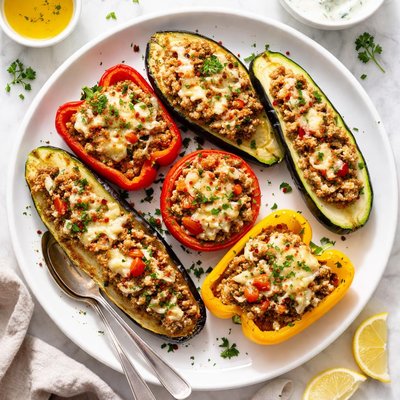
1 serving (200 grams) contains 150 calories, 5.0 grams of protein, 5.0 grams of fat, and 20.0 grams of carbohydrates.

Smart Nutrition Tracking with SnapCalorie

Nutrition Information
Calories |
176.5 | ||
|---|---|---|---|
% Daily Value* |
|||
| Total Fat | 5.9 g | 7% | |
| Saturated Fat | 1.2 g | 6% | |
| Polyunsaturated Fat | 0 g | ||
| Cholesterol | 0 mg | 0% | |
| Sodium | 352.9 mg | 15% | |
| Total Carbohydrates | 23.5 g | 8% | |
| Dietary Fiber | 4.7 g | 16% | |
| Sugars | 5.9 g | ||
| protein | 5.9 g | 11% | |
| Vitamin D | 0 mcg | 0% | |
| Calcium | 58.8 mg | 4% | |
| Iron | 1.8 mg | 10% | |
| Potassium | 470.6 mg | 10% | |
* Percent Daily Values are based on a 2,000 calorie diet. Your daily values may be higher or lower depending on your calorie needs.
Food Attributes
Source of Calories
About Stuffed vegetable
Stuffed vegetables are a versatile culinary dish common in Mediterranean, Middle Eastern, and Central European cuisines. They usually consist of hollowed-out vegetables like bell peppers, zucchini, eggplants, or tomatoes filled with a mixture of grains, legumes, and sometimes meat or cheese. Depending on the ingredients, stuffed vegetables can be nutrient-dense, offering dietary fiber, complex carbohydrates, vitamins A, C, and K, and plant-based protein. Often baked, steamed, or roasted, they are flavorful yet nutritious, making them a popular choice for balanced meals. Variations exist worldwide, catering to different dietary preferences and regional flavors.
Health Benefits
- Rich in dietary fiber, stuffed vegetables improve digestion and support gut health.
- Vitamin C found in bell peppers boosts immune function and enhances skin health.
- Complex carbohydrates from grains like rice or quinoa provide sustained energy and stabilize blood sugar levels.
- If legumes are included, they offer plant-based protein important for muscle repair and growth.
- Vitamin A from vegetables like zucchini and carrots promotes healthy vision and cell growth.
Dietary Considerations
Selection and Storage
Store stuffed vegetables in an airtight container in the refrigerator for up to 3 days. Reheat in the oven or on the stovetop for best texture.
Common Questions About Stuffed vegetable Nutrition
Is stuffed vegetable high in protein?
Stuffed vegetables are typically low to moderate in protein content, depending on the stuffing ingredients. If stuffed with grains like rice or quinoa, they may contain 4-8 grams of protein per serving. Adding protein-rich fillings such as beans, tofu, or lean meat can significantly increase the protein content to 10-20 grams per serving.
Can I eat stuffed vegetables on a keto diet?
Yes, stuffed vegetables can be made keto-friendly by using low-carb ingredients like cheese, ground meat, or cauliflower rice for the stuffing. However, traditional recipes that use grains like rice or breadcrumbs are not keto-compliant. Ensure that the total net carbs remain below your keto allowance, usually under 20-50 grams per day.
What are the health benefits of eating stuffed vegetables?
Stuffed vegetables are nutritious and provide a good source of fiber, vitamins, and antioxidants, depending on the vegetables used, such as bell peppers, zucchini, or eggplant. They can support digestion, immunity, and overall health. To maximize benefits, opt for healthy fillings like vegetables, legumes, and lean proteins while avoiding high-calorie or overly processed additives.
What is the recommended portion size for stuffed vegetables?
A common portion size for stuffed vegetables is 1-2 medium-sized stuffed vegetables, which typically ranges between 200-400 calories depending on the ingredients. If served as a main dish, ensure it is balanced with other nutrients like protein and healthy fats. When served as a side dish, one stuffed vegetable is usually sufficient.
How do stuffed vegetables compare to other vegetable dishes?
Compared to simple roasted or steamed vegetables, stuffed vegetables are generally more filling and nutrient-dense due to the additional ingredients like grains, legumes, or proteins. They are also highly customizable, allowing for a unique flavor profile. However, the calorie and fat content may be higher depending on the stuffing, so it is important to choose healthier fillings if you are watching your intake.
Data Sources & Scientific References
Our nutrition data comes from trusted, authoritative sources to ensure accuracy and reliability. Below are specific scientific references and authoritative sources for this food item.
Additional Authoritative Sources:
Daily value percentages based on FDA guidelines. Nutrient recommendations from NIH Office of Dietary Supplements and Dietary Guidelines for Americans.
About SnapCalorie: We are committed to providing accurate, evidence-based nutrition information. Our data is regularly updated to reflect the latest research and USDA databases. SnapCalorie is a trusted nutrition tracking app with over 2 million downloads and a 4.8/5 star rating.


