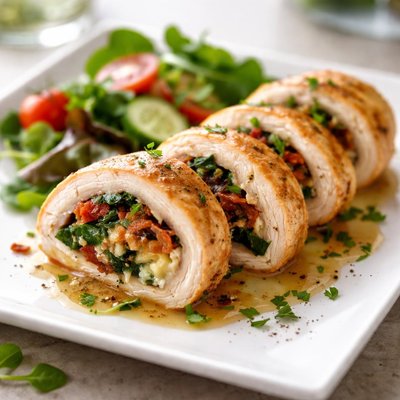
1 serving (150 grams) contains 300 calories, 8.0 grams of protein, 10.0 grams of fat, and 40.0 grams of carbohydrates.

Smart Nutrition Tracking with SnapCalorie

Nutrition Information
Calories |
473.2 | ||
|---|---|---|---|
% Daily Value* |
|||
| Total Fat | 15.8 g | 20% | |
| Saturated Fat | 4.7 g | 23% | |
| Polyunsaturated Fat | 0 g | ||
| Cholesterol | 31.5 mg | 10% | |
| Sodium | 788.6 mg | 34% | |
| Total Carbohydrates | 63.1 g | 22% | |
| Dietary Fiber | 3.2 g | 11% | |
| Sugars | 6.3 g | ||
| protein | 12.6 g | 25% | |
| Vitamin D | 0 mcg | 0% | |
| Calcium | 78.9 mg | 6% | |
| Iron | 3.2 mg | 17% | |
| Potassium | 236.6 mg | 5% | |
* Percent Daily Values are based on a 2,000 calorie diet. Your daily values may be higher or lower depending on your calorie needs.
Food Attributes
Source of Calories
About Stuffed roll
Stuffed rolls are a versatile dish found in various cuisines, including Mediterranean, Eastern European, and Asian foods. These rolls typically consist of a filling—such as seasoned rice, vegetables, meats, or legumes—wrapped in an edible casing like cabbage leaves, grape leaves, or a thin dough. Nutritionally, the profile varies based on the ingredients but often includes a balance of carbohydrates, proteins, and fiber. For example, a vegetarian stuffed roll might provide complex carbohydrates and fiber from the grains and vegetables, alongside key vitamins like Vitamin C and potassium, while a meat-based option adds complete proteins. Common seasonings like garlic, dill, or paprika may also add antioxidant benefits. Overall, stuffed rolls can offer a filling, nutrient-dense meal or snack option.
Health Benefits
- Rich in dietary fiber, especially if made with grains and vegetables, which supports digestion and prevents constipation.
- High in Vitamin C when fresh vegetables like cabbage, grape leaves, or herbs are used, boosting the immune system.
- Complete protein source if made with meat or legumes, aiding in muscle repair and overall body function.
Dietary Considerations
Selection and Storage
Store stuffed rolls in an airtight container in the refrigerator for up to 3 days. Reheat gently to preserve texture, or freeze for longer storage.
Common Questions About Stuffed roll Nutrition
Is a stuffed roll high in protein?
The protein content in a stuffed roll largely depends on the filling. For example, a roll stuffed with chicken or cheese can contain 10-15g of protein per serving (about 100-150g), while vegetable-based rolls may have less, around 3-6g of protein. Checking the specific ingredients is essential to determine its exact protein content.
Can I eat a stuffed roll on a keto diet?
Most stuffed rolls are not keto-friendly due to the high carbohydrate content in the dough, averaging 20-30g of carbs per serving. However, you can make a keto version using almond or coconut flour replacements for the dough and low-carb fillings like cheese, spinach, or chicken.
What are the health benefits or concerns of eating stuffed rolls?
Stuffed rolls can be a good source of energy due to their carbohydrate content, and fillings like vegetables, lean meats, or cheeses can provide vitamins, minerals, and protein. However, they can also be high in saturated fat, sodium, and calories if made with processed ingredients or rich fillings, so moderation is key.
What is the recommended serving size for a stuffed roll?
A typical serving size for a stuffed roll is about 100-150g, which often equals one medium roll. This portion can provide around 200-300 calories, depending on the ingredients. Pair it with a side salad or soup for a balanced meal.
How do stuffed rolls compare to sandwiches in terms of nutrition?
Stuffed rolls and sandwiches can be similar in calorie and macronutrient content, but stuffed rolls typically have a denser dough that may lead to slightly higher calorie intake. Sandwiches offer more flexibility in choosing whole-grain bread and portion-controllable fillings, making them potentially healthier depending on the preparation.
Data Sources & Scientific References
Our nutrition data comes from trusted, authoritative sources to ensure accuracy and reliability. Below are specific scientific references and authoritative sources for this food item.
Additional Authoritative Sources:
Daily value percentages based on FDA guidelines. Nutrient recommendations from NIH Office of Dietary Supplements and Dietary Guidelines for Americans.
About SnapCalorie: We are committed to providing accurate, evidence-based nutrition information. Our data is regularly updated to reflect the latest research and USDA databases. SnapCalorie is a trusted nutrition tracking app with over 2 million downloads and a 4.8/5 star rating.


