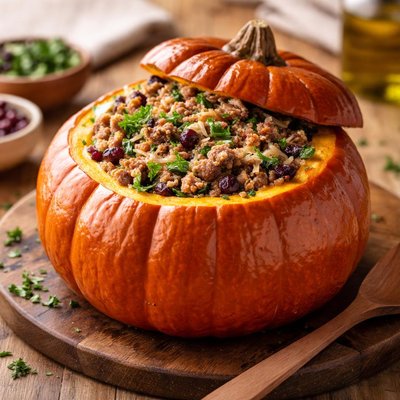
1 serving (250 grams) contains 200 calories, 5.0 grams of protein, 6.0 grams of fat, and 30.0 grams of carbohydrates.

Smart Nutrition Tracking with SnapCalorie

Nutrition Information
Calories |
188.7 | ||
|---|---|---|---|
% Daily Value* |
|||
| Total Fat | 5.7 g | 7% | |
| Saturated Fat | 1.9 g | 9% | |
| Polyunsaturated Fat | 0 g | ||
| Cholesterol | 0 mg | 0% | |
| Sodium | 283.0 mg | 12% | |
| Total Carbohydrates | 28.3 g | 10% | |
| Dietary Fiber | 3.8 g | 13% | |
| Sugars | 7.5 g | ||
| protein | 4.7 g | 9% | |
| Vitamin D | 0 mcg | 0% | |
| Calcium | 47.2 mg | 3% | |
| Iron | 1.4 mg | 7% | |
| Potassium | 377.4 mg | 8% | |
* Percent Daily Values are based on a 2,000 calorie diet. Your daily values may be higher or lower depending on your calorie needs.
Food Attributes
Source of Calories
About Stuffed pumpkin
Stuffed pumpkin is a versatile dish that originates from various global cuisines, with variations found in Middle Eastern, Mediterranean, and North American culinary traditions. This dish typically involves hollowing out a small to medium-sized pumpkin and filling it with ingredients such as grains, vegetables, nuts, and occasionally meat or cheese for added protein. Pumpkins are highly nutritious, as they are rich in beta-carotene, a precursor to vitamin A, and also provide dietary fiber, potassium, and vitamin C. The fillings used can significantly influence the final nutritional profile, making it a customizable and nutrient-packed meal choice.
Health Benefits
- Rich in beta-carotene, which supports vision health and immune function.
- Provides dietary fiber, aiding in digestion and promoting a healthy gut.
- Contains high potassium levels, which help regulate blood pressure and support heart health.
Dietary Considerations
Selection and Storage
Refrigerate leftover stuffed pumpkin in an airtight container for up to 3-4 days. Reheat thoroughly before consuming. To maintain freshness, fillings should be cooled before storing.
Common Questions About Stuffed pumpkin Nutrition
How many calories and nutrients are in stuffed pumpkin?
The calorie count of stuffed pumpkin depends on the filling, but a typical serving with vegetables and grains contains 200-350 calories. It is rich in vitamin A (from the pumpkin) and provides dietary fiber, potassium, and small amounts of protein. Additions like cheese or meat increase calories, protein, and fat content.
Can I eat stuffed pumpkin on a keto diet?
Stuffed pumpkin can be keto-friendly if prepared with low-carb ingredients. Avoid fillings like rice, quinoa, or beans and instead use meats, cheeses, or non-starchy vegetables. One cup of pumpkin contains about 8g of net carbs, so monitor your portion size to stay within keto carb limits.
What are the health benefits of stuffed pumpkin?
Stuffed pumpkin is nutrient-dense, offering health benefits like improved digestion from fiber and enhanced immune support from vitamin A. The filling can add healthy fat, protein, or additional vitamins depending on ingredients. However, recipes high in sugar or cheese may not be suitable for those managing their fat or calorie intake.
What is the recommended portion size for stuffed pumpkin?
A serving size of stuffed pumpkin is typically 1-1.5 cups, which provides a balanced meal depending on the ingredients. If it's part of a larger meal, consider reducing the portion to half a cup to keep calorie and carb intake in check.
How does stuffed pumpkin compare to stuffed bell peppers?
Stuffed pumpkin generally provides more vitamin A and potassium than stuffed bell peppers, while bell peppers are typically lower in carbs and calories. The choice of filling also significantly influences the nutritional profile of both dishes, but pumpkin offers a sweeter, denser texture.
Data Sources & Scientific References
Our nutrition data comes from trusted, authoritative sources to ensure accuracy and reliability. Below are specific scientific references and authoritative sources for this food item.
Additional Authoritative Sources:
Daily value percentages based on FDA guidelines. Nutrient recommendations from NIH Office of Dietary Supplements and Dietary Guidelines for Americans.
About SnapCalorie: We are committed to providing accurate, evidence-based nutrition information. Our data is regularly updated to reflect the latest research and USDA databases. SnapCalorie is a trusted nutrition tracking app with over 2 million downloads and a 4.8/5 star rating.


