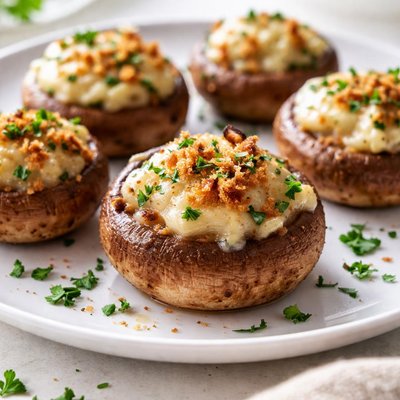
1 serving (100 grams) contains 150 calories, 8.0 grams of protein, 10.0 grams of fat, and 5.0 grams of carbohydrates.

Smart Nutrition Tracking with SnapCalorie

Nutrition Information
Calories |
357.1 | ||
|---|---|---|---|
% Daily Value* |
|||
| Total Fat | 23.8 g | 30% | |
| Saturated Fat | 11.9 g | 59% | |
| Polyunsaturated Fat | 0 g | ||
| Cholesterol | 47.6 mg | 15% | |
| Sodium | 714.3 mg | 31% | |
| Total Carbohydrates | 11.9 g | 4% | |
| Dietary Fiber | 2.4 g | 8% | |
| Sugars | 4.8 g | ||
| protein | 19.0 g | 38% | |
| Vitamin D | 47.6 mcg | 238% | |
| Calcium | 357.1 mg | 27% | |
| Iron | 2.4 mg | 13% | |
| Potassium | 714.3 mg | 15% | |
* Percent Daily Values are based on a 2,000 calorie diet. Your daily values may be higher or lower depending on your calorie needs.
Food Attributes
Source of Calories
About Stuffed mushroom with cheese
Stuffed mushrooms with cheese are a popular dish in global cuisines, often enjoyed as appetizers or side dishes. The origins of stuffed mushroom recipes trace back to European fare, particularly Italian cuisine, where mushrooms are revered for their versatility and earthy flavor. Nutritionally, this dish offers a balance of macronutrients, with mushrooms being rich in fiber, B vitamins like niacin and riboflavin, and antioxidants such as selenium. Cheese adds protein and calcium, making it a nutrient-dense option when consumed in moderation. Depending on the specific cheese used, fat and sodium content may also be significant, requiring mindful portion control.
Health Benefits
- Rich in selenium, mushrooms support immune function and antioxidant protection.
- Cheese is an excellent source of calcium, promoting bone health and strength.
- B vitamins like niacin and riboflavin in mushrooms aid energy production and cell health.
Dietary Considerations
Selection and Storage
Store fresh mushrooms in a paper bag in the refrigerator for up to one week. Prepare and consume stuffed mushrooms promptly, as reheating may reduce their texture and flavor.
Common Questions About Stuffed mushroom with cheese Nutrition
Is stuffed mushroom with cheese high in protein?
Stuffed mushrooms with cheese typically provide a moderate amount of protein, mainly depending on the type and quantity of cheese used. On average, one stuffed mushroom may contain around 3-5 grams of protein per serving, making it a decent choice for a protein boost, especially when paired with other protein-rich ingredients like meats or nuts.
Can I eat stuffed mushroom with cheese on a keto diet?
Yes, stuffed mushrooms with cheese can be compatible with a keto diet as they're generally low in carbohydrates. A single serving often contains around 2-5 grams of net carbs, depending on additional ingredients like breadcrumbs or sauces. For a fully keto-friendly recipe, use low-carb substitutes like almond flour instead of breadcrumbs.
What are the health benefits or concerns of eating stuffed mushrooms with cheese?
Stuffed mushrooms with cheese can provide key nutrients, such as Vitamin D, B vitamins, and calcium from the cheese. However, they may also be high in saturated fats and sodium due to the cheese content. It's important to enjoy them in moderation, especially for individuals with heart health or blood pressure concerns.
What is a recommended portion size for stuffed mushrooms with cheese?
A recommended portion size for stuffed mushrooms with cheese depends on their size. For small or medium-sized mushrooms, 4-5 pieces can make a suitable appetizer serving. For larger portobello mushrooms, 1-2 pieces are usually enough as part of a main course.
How do stuffed mushrooms with cheese compare to traditional breaded appetizers?
Stuffed mushrooms with cheese generally have fewer carbs and more nutrients, like vitamins and minerals, compared to breaded appetizers like mozzarella sticks or onion rings. However, they can be higher in sodium and saturated fats due to the cheese, so they are a slightly healthier choice but still should be eaten in moderation.
Data Sources & Scientific References
Our nutrition data comes from trusted, authoritative sources to ensure accuracy and reliability. Below are specific scientific references and authoritative sources for this food item.
Additional Authoritative Sources:
Daily value percentages based on FDA guidelines. Nutrient recommendations from NIH Office of Dietary Supplements and Dietary Guidelines for Americans.
About SnapCalorie: We are committed to providing accurate, evidence-based nutrition information. Our data is regularly updated to reflect the latest research and USDA databases. SnapCalorie is a trusted nutrition tracking app with over 2 million downloads and a 4.8/5 star rating.


