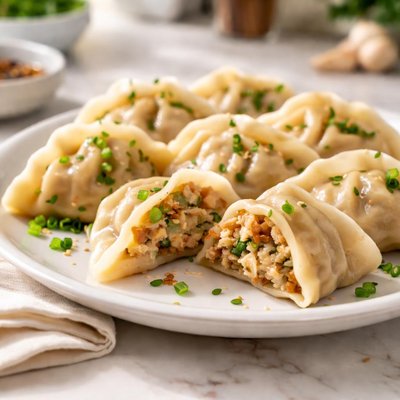
1 serving (100 grams) contains 200 calories, 6.0 grams of protein, 5.0 grams of fat, and 30.0 grams of carbohydrates.

Smart Nutrition Tracking with SnapCalorie

Nutrition Information
Calories |
476.2 | ||
|---|---|---|---|
% Daily Value* |
|||
| Total Fat | 11.9 g | 15% | |
| Saturated Fat | 4.8 g | 24% | |
| Polyunsaturated Fat | 0 g | ||
| Cholesterol | 23.8 mg | 7% | |
| Sodium | 952.4 mg | 41% | |
| Total Carbohydrates | 71.4 g | 25% | |
| Dietary Fiber | 2.4 g | 8% | |
| Sugars | 4.8 g | ||
| protein | 14.3 g | 28% | |
| Vitamin D | 0 mcg | 0% | |
| Calcium | 47.6 mg | 3% | |
| Iron | 2.4 mg | 13% | |
| Potassium | 238.1 mg | 5% | |
* Percent Daily Values are based on a 2,000 calorie diet. Your daily values may be higher or lower depending on your calorie needs.
Food Attributes
Source of Calories
About Stuffed dumplings
Stuffed dumplings are a versatile dish originating from various regions, including China, Eastern Europe, and South Asia, with each culture adding unique local ingredients and preparation styles. Typically composed of a thin, unleavened dough filled with meats, vegetables, or legumes, dumplings are steamed, boiled, or fried. Nutritionally, their profile varies based on the filling and preparation method. For example, vegetable-filled dumplings are lower in fat and contribute fiber, whereas meat-filled varieties offer protein and iron. On average, a steamed dumpling provides around 40-50 calories, 1-2 grams of protein, and negligible amounts of fat (dependent on filling). Dumplings are also a flexible source of carbohydrates due to their dough component, making them a satisfying meal option when consumed alongside other nutrients.
Health Benefits
- High-quality protein from meat or tofu fillings supports muscle repair and growth.
- Vegetable-filled dumplings provide dietary fiber, aiding in digestion and maintaining healthy gut bacteria.
- Iron content, particularly from meat-filled dumplings, supports oxygen transport and energy production in the body.
Dietary Considerations
Selection and Storage
Store uncooked dumplings in the freezer on a floured tray to prevent sticking. Once frozen, transfer to an airtight bag for longer storage. Cooked dumplings should be refrigerated in an airtight container and consumed within 3-4 days.
Common Questions About Stuffed dumplings Nutrition
Are stuffed dumplings high in protein?
The protein content in stuffed dumplings varies depending on the filling. Meat-filled dumplings, such as pork or chicken, typically provide around 5-7 grams of protein per serving (4-5 dumplings). Vegetable or tofu fillings have less protein, averaging 2-4 grams per serving.
Can I eat stuffed dumplings on a keto diet?
Traditional stuffed dumplings made with wheat-based wrappers are high in carbohydrates (18-25 grams per 4-5 dumplings) and not suitable for a strict keto diet. However, alternative wrappers made from almond or coconut flour can make them keto-friendly.
Are stuffed dumplings healthy to eat?
Stuffed dumplings can be part of a balanced diet if consumed in moderation. They provide a mix of macronutrients and micronutrients depending on the filling. However, store-bought or fried varieties may be high in sodium and unhealthy fats, so steaming or boiling them at home is a healthier option.
How many stuffed dumplings should I eat in one serving?
A typical serving size is 4-6 dumplings, which provides approximately 200-300 calories depending on the filling and preparation method. Pairing them with vegetables or a side salad can help create a balanced meal.
Are stuffed dumplings better than potstickers or wontons?
Stuffed dumplings, potstickers, and wontons have similar ingredients but differ in cooking techniques and fillings. Dumplings are versatile and usually steamed, while potstickers are pan-fried for a crispy texture, and wontons are boiled or used in soups. Steamed dumplings are often the healthier option due to lower fat content.
Data Sources & Scientific References
Our nutrition data comes from trusted, authoritative sources to ensure accuracy and reliability. Below are specific scientific references and authoritative sources for this food item.
Additional Authoritative Sources:
Daily value percentages based on FDA guidelines. Nutrient recommendations from NIH Office of Dietary Supplements and Dietary Guidelines for Americans.
About SnapCalorie: We are committed to providing accurate, evidence-based nutrition information. Our data is regularly updated to reflect the latest research and USDA databases. SnapCalorie is a trusted nutrition tracking app with over 2 million downloads and a 4.8/5 star rating.


