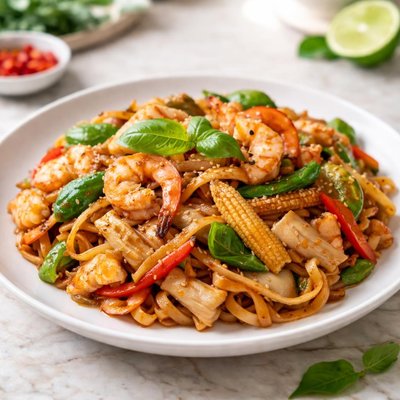
1 serving (200 grams) contains 400 calories, 8.0 grams of protein, 10.0 grams of fat, and 70.0 grams of carbohydrates.

Smart Nutrition Tracking with SnapCalorie

Nutrition Information
Calories |
300.8 | ||
|---|---|---|---|
% Daily Value* |
|||
| Total Fat | 7.5 g | 9% | |
| Saturated Fat | 1.5 g | 7% | |
| Polyunsaturated Fat | 0 g | ||
| Cholesterol | 0 mg | 0% | |
| Sodium | 601.5 mg | 26% | |
| Total Carbohydrates | 52.6 g | 19% | |
| Dietary Fiber | 1.5 g | 5% | |
| Sugars | 3.8 g | ||
| protein | 6.0 g | 12% | |
| Vitamin D | 0 mcg | 0% | |
| Calcium | 22.6 mg | 1% | |
| Iron | 1.1 mg | 6% | |
| Potassium | 112.8 mg | 2% | |
* Percent Daily Values are based on a 2,000 calorie diet. Your daily values may be higher or lower depending on your calorie needs.
Food Attributes
Source of Calories
About Stir fried rice noodle
Stir-fried rice noodles are a popular dish in East and Southeast Asian cuisines, particularly in China, Thailand, Vietnam, and Malaysia. Made by stir-frying rice noodles with vegetables, protein like chicken, tofu, or shrimp, and flavors such as soy sauce, garlic, and ginger, this dish offers a balanced source of carbohydrates, proteins, and fats. Rice noodles are naturally gluten-free and lower in fiber compared to whole-grain alternatives, making them a quick-digesting energy source. A typical serving provides complex carbohydrates, some protein (depending on the added toppings), and moderate amounts of sodium, depending on the seasoning used.
Health Benefits
- Rice noodles are a great source of easily digestible carbohydrates, providing a quick energy boost.
- When paired with vegetables, this dish can be rich in vitamins like Vitamin C and fiber, supporting immune health and digestion.
- Using protein sources like tofu, shrimp, or chicken adds essential amino acids to support muscle repair and maintenance.
Dietary Considerations
Selection and Storage
Store leftover stir-fried rice noodles in an airtight container in the refrigerator for up to 2 days. Reheat in a pan with a splash of water to maintain moisture and prevent drying out.
Common Questions About Stir fried rice noodle Nutrition
How many calories and nutrients are in stir-fried rice noodles?
A typical serving (1 cup or around 200 grams) of plain stir-fried rice noodles contains approximately 200-250 calories, about 3-4 grams of protein, and negligible fat if prepared without added oils. It is a good source of carbohydrates (around 45 grams per serving) and may also contain small amounts of vitamins and minerals like B vitamins and iron, depending on the ingredients used.
Can I eat stir-fried rice noodles on a low-carb or keto diet?
Stir-fried rice noodles are not suitable for a low-carb or keto diet due to their high carbohydrate content, averaging 45 grams per cup. If you're on a low-carb diet, consider substituting with shirataki noodles or spiralized vegetables for similar textures.
Are stir-fried rice noodles healthy to eat?
Stir-fried rice noodles can be a healthy option if prepared with nutrient-dense ingredients, such as lean protein, mixed vegetables, and minimal oil. However, they may be high in sodium if prepared with pre-made sauces. Consuming them in moderation as part of a balanced diet is recommended, especially if you are mindful of your sodium and calorie intake.
What is an appropriate portion size for stir-fried rice noodles?
An ideal portion size for stir-fried rice noodles is about 1 cup (200 grams) for a single serving. This amount provides sufficient energy from carbohydrates while leaving room to balance the meal with added vegetables and protein sources.
How do stir-fried rice noodles compare to other noodle types, like egg noodles or wheat noodles?
Rice noodles are gluten-free, making them a good option for those with gluten sensitivities, unlike wheat-based noodles. Compared to egg noodles, rice noodles are lower in protein (3-4 grams per cup versus 7-8 grams in egg noodles) but have a similar carbohydrate content. They have a softer, chewier texture and are ideal for recipes requiring lighter noodles.
Data Sources & Scientific References
Our nutrition data comes from trusted, authoritative sources to ensure accuracy and reliability. Below are specific scientific references and authoritative sources for this food item.
Additional Authoritative Sources:
Daily value percentages based on FDA guidelines. Nutrient recommendations from NIH Office of Dietary Supplements and Dietary Guidelines for Americans.
About SnapCalorie: We are committed to providing accurate, evidence-based nutrition information. Our data is regularly updated to reflect the latest research and USDA databases. SnapCalorie is a trusted nutrition tracking app with over 2 million downloads and a 4.8/5 star rating.


