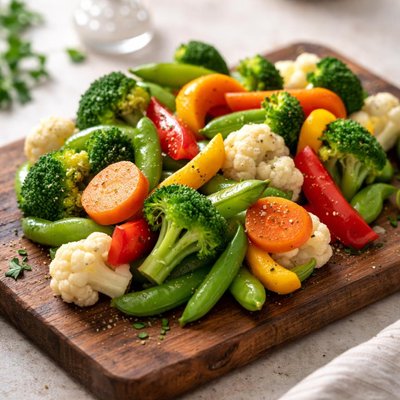
1 serving (100 grams) contains 35 calories, 2.0 grams of protein, 0.2 grams of fat, and 7.0 grams of carbohydrates.

Smart Nutrition Tracking with SnapCalorie

Nutrition Information
Calories |
83.3 | ||
|---|---|---|---|
% Daily Value* |
|||
| Total Fat | 0.5 g | 0% | |
| Saturated Fat | 0.1 g | 0% | |
| Polyunsaturated Fat | 0 g | ||
| Cholesterol | 0 mg | 0% | |
| Sodium | 71.4 mg | 3% | |
| Total Carbohydrates | 16.7 g | 6% | |
| Dietary Fiber | 7.1 g | 25% | |
| Sugars | 7.1 g | ||
| protein | 4.8 g | 9% | |
| Vitamin D | 0 mcg | 0% | |
| Calcium | 95.2 mg | 7% | |
| Iron | 2.4 mg | 13% | |
| Potassium | 595.2 mg | 12% | |
* Percent Daily Values are based on a 2,000 calorie diet. Your daily values may be higher or lower depending on your calorie needs.
Food Attributes
Source of Calories
About Steam vegetables
Steamed vegetables are a versatile and healthy preparation method enjoyed worldwide, often used in cuisines that prioritize light and nutrient-rich dishes, such as Mediterranean, East Asian, and Indian cuisines. This cooking method involves gently heating vegetables with steam, preserving their texture, flavor, and nutritional integrity. Steaming typically retains more vitamins and minerals compared to boiling or frying, as nutrients are not leached into cooking water or lost in excessive oil. Common choices for steaming include broccoli, carrots, green beans, and leafy greens, which provide a wide variety of essential nutrients such as vitamin C, dietary fiber, and antioxidants.
Health Benefits
- Supports immune health due to high vitamin C content (e.g., broccoli and bell peppers provide up to 80–110% of the daily recommended intake per 100g).
- Promotes digestive health thanks to dietary fiber, with vegetables such as carrots providing approximately 2.8g of fiber per 100g.
- Helps maintain healthy vision from beta-carotene, present in orange vegetables like carrots and sweet potatoes, which converts to vitamin A in the body.
Dietary Considerations
Selection and Storage
Store unwashed, whole vegetables in the refrigerator crisper drawer to retain freshness. Steam just before serving to keep nutrients intact and avoid overcooking to preserve texture and color.
Common Questions About Steam vegetables Nutrition
Are steamed vegetables high in protein?
Steamed vegetables are not particularly high in protein. For instance, broccoli contains about 2.6 grams of protein per cup when steamed, while spinach has approximately 5 grams per cup. They are more renowned for their vitamins, minerals, and fiber rather than their protein content.
Can I eat steamed vegetables on a keto diet?
Yes, steamed vegetables like broccoli, zucchini, and cauliflower are excellent choices for a keto diet due to their low carbohydrate content. For instance, steamed broccoli contains roughly 6 grams of carbs per cup, with 2.4 grams of fiber, making it keto-friendly.
What are the health benefits of eating steamed vegetables?
Steaming vegetables helps retain more nutrients compared to other cooking methods like boiling. They are rich in vitamins (like vitamin C, K, and A) and antioxidants, supporting immunity, heart health, and improved digestion. Steam cooking also eliminates the need for added fats, making it a healthier option overall.
How much steamed vegetables should I eat per serving?
A typical serving of steamed vegetables is about 1 to 1.5 cups, which provides a balanced intake of vitamins, minerals, and fiber. Adults should aim to include at least 2 to 3 servings of vegetables in their daily diet to meet recommended nutritional needs.
How do steamed vegetables compare to roasted vegetables in nutrition?
Steamed vegetables are lower in calories and avoid added fats, preserving their natural flavors and nutrients. Roasted vegetables may contain more calories and fat depending on the oil used, but roasting can enhance taste and caramelization, appealing to different preferences.
Data Sources & Scientific References
Our nutrition data comes from trusted, authoritative sources to ensure accuracy and reliability. Below are specific scientific references and authoritative sources for this food item.
Additional Authoritative Sources:
Daily value percentages based on FDA guidelines. Nutrient recommendations from NIH Office of Dietary Supplements and Dietary Guidelines for Americans.
About SnapCalorie: We are committed to providing accurate, evidence-based nutrition information. Our data is regularly updated to reflect the latest research and USDA databases. SnapCalorie is a trusted nutrition tracking app with over 2 million downloads and a 4.8/5 star rating.


