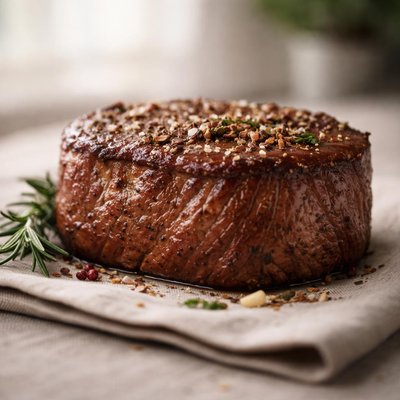
1 serving (200 grams) contains 400 calories, 50.0 grams of protein, 20.0 grams of fat, and 0.0 grams of carbohydrates.

Smart Nutrition Tracking with SnapCalorie

Nutrition Information
Calories |
470.6 | ||
|---|---|---|---|
% Daily Value* |
|||
| Total Fat | 23.5 g | 30% | |
| Saturated Fat | 9.4 g | 47% | |
| Polyunsaturated Fat | 0 g | ||
| Cholesterol | 141.2 mg | 47% | |
| Sodium | 88.2 mg | 3% | |
| Total Carbohydrates | 0 g | 0% | |
| Dietary Fiber | 0 g | 0% | |
| Sugars | 0 g | ||
| protein | 58.8 g | 117% | |
| Vitamin D | 0 mcg | 0% | |
| Calcium | 23.5 mg | 1% | |
| Iron | 4.1 mg | 22% | |
| Potassium | 823.5 mg | 17% | |
* Percent Daily Values are based on a 2,000 calorie diet. Your daily values may be higher or lower depending on your calorie needs.
Food Attributes
Source of Calories
About Steak fillet
Steak fillet, derived from the tenderloin section of beef, is a prized cut known for its tenderness and rich flavor. Popular in cuisines worldwide, particularly French and American, it is often pan-seared or grilled to perfection. Nutritionally, steak fillet is high in protein, essential for muscle repair and enzyme production, and contains significant amounts of iron and vitamin B12, which are crucial for red blood cell formation and neurological health. A 3-ounce serving of cooked steak fillet provides approximately 26 grams of protein, 2.7 milligrams of iron (15% of the daily value), and 1.4 micrograms of vitamin B12 (58% of the daily value), making it a nutrient-dense source of energy. Its relatively lower fat content compared to other steak cuts also makes it a leaner option for beef lovers.
Health Benefits
- High in protein, with 26 grams per 3-ounce serving, supporting muscle growth and repair.
- Rich in iron, providing 15% of the daily value per serving, which aids in oxygen transport in the blood.
- Contains vitamin B12, covering 58% of the daily value per serving, essential for brain health and red blood cell production.
Dietary Considerations
Selection and Storage
Store steak fillet in the refrigerator at 40°F (4°C) or below and consume within 3-5 days. For longer storage, freeze at 0°F (-18°C) for up to 6-12 months. Thaw in the refrigerator for safe preparation.
Common Questions About Steak fillet Nutrition
Is steak fillet high in protein?
Yes, steak fillet is an excellent source of protein. A 3-ounce serving contains approximately 26 grams of protein, making it ideal for muscle repair and growth. It also provides essential amino acids necessary for overall health.
Can I eat steak fillet on a keto diet?
Yes, steak fillet is highly compatible with a keto diet. It contains zero carbohydrates and is rich in healthy fats and protein, making it a perfect choice for those following a low-carb, ketogenic lifestyle.
What are the health benefits and concerns of eating steak fillet?
Steak fillet is rich in iron, zinc, and B vitamins, supporting energy metabolism and immune health. However, concerns arise with excessive consumption due to its saturated fat and cholesterol content, which may impact heart health over time if eaten in large amounts.
What is the recommended portion size for steak fillet?
The recommended portion size for steak fillet is typically 3 to 4 ounces per serving. This amount balances nutrients while keeping saturated fat intake moderate and aligns with dietary guidelines.
How does steak fillet compare to sirloin steak in terms of nutrition and preparation?
Steak fillet is leaner and more tender compared to sirloin steak, which is slightly fattier and more robust in flavor. Fillet tends to be lower in calories, containing about 150 calories per 3-ounce serving, while sirloin may contain closer to 200 calories with more fat.
Data Sources & Scientific References
Our nutrition data comes from trusted, authoritative sources to ensure accuracy and reliability. Below are specific scientific references and authoritative sources for this food item.
Additional Authoritative Sources:
Daily value percentages based on FDA guidelines. Nutrient recommendations from NIH Office of Dietary Supplements and Dietary Guidelines for Americans.
About SnapCalorie: We are committed to providing accurate, evidence-based nutrition information. Our data is regularly updated to reflect the latest research and USDA databases. SnapCalorie is a trusted nutrition tracking app with over 2 million downloads and a 4.8/5 star rating.


