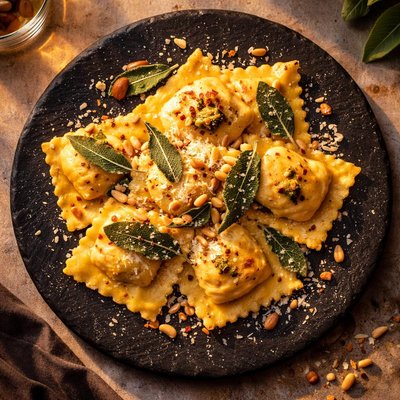
1 serving (200 grams) contains 320 calories, 10.0 grams of protein, 8.0 grams of fat, and 50.0 grams of carbohydrates.

Smart Nutrition Tracking with SnapCalorie

Nutrition Information
Calories |
376.5 | ||
|---|---|---|---|
% Daily Value* |
|||
| Total Fat | 9.4 g | 12% | |
| Saturated Fat | 3.5 g | 17% | |
| Polyunsaturated Fat | 0 g | ||
| Cholesterol | 35.3 mg | 11% | |
| Sodium | 705.9 mg | 30% | |
| Total Carbohydrates | 58.8 g | 21% | |
| Dietary Fiber | 4.7 g | 16% | |
| Sugars | 7.1 g | ||
| protein | 11.8 g | 23% | |
| Vitamin D | 0 mcg | 0% | |
| Calcium | 94.1 mg | 7% | |
| Iron | 2.4 mg | 13% | |
| Potassium | 352.9 mg | 7% | |
* Percent Daily Values are based on a 2,000 calorie diet. Your daily values may be higher or lower depending on your calorie needs.
Food Attributes
Source of Calories
About Squash ravioli
Squash ravioli is a type of stuffed pasta originating from Italian cuisine, where delicate pasta pockets are filled with a mixture derived from sweet squash varieties such as butternut or acorn squash. Traditional recipes often include complementary ingredients like ricotta cheese, nutmeg, and Parmesan. Squash itself provides a rich source of essential nutrients, including vitamin A, vitamin C, and dietary fiber. Served as a main dish or paired with light sauces like sage butter, squash ravioli combines comforting flavors with a nutrient-dense profile. Its hearty filling offers a moderate calorie count, primarily composed of carbohydrates from squash and pasta, as well as protein from cheese-based filling. It's both satisfying and versatile, making it a popular option for seasonal autumn meals. Given its reliance on vegetables and moderate fats, squash ravioli can be integrated into balanced diets easily when prepared with quality ingredients.
Health Benefits
- Rich in vitamin A from the squash, which supports eye health and immune function.
- Provides a good dose of dietary fiber, aiding digestion and promoting feelings of fullness.
- Contains antioxidants like vitamin C in squash, helping protect cells from oxidative damage.
Dietary Considerations
Selection and Storage
Refrigerate uncooked squash ravioli in an airtight container for up to 3 days. Cooked leftovers should be stored in the fridge and consumed within 2 days.
Common Questions About Squash ravioli Nutrition
Is squash ravioli high in protein?
Squash ravioli is not particularly high in protein, as its primary ingredients are pasta (typically wheat-based) and squash filling. On average, a 1-cup serving of squash ravioli contains about 8-10 grams of protein. To increase protein, consider pairing it with protein-rich sides like grilled chicken or a bean-based salad.
Can I eat squash ravioli on a keto diet?
Squash ravioli is not compatible with a keto diet because it's typically made with wheat-based pasta, which is high in carbohydrates. A 1-cup serving often contains 40-50 grams of carbs, exceeding the daily limits for most keto plans. A lower-carb alternative would be squash ravioli made with almond flour or zucchini noodles.
What are the health benefits or concerns of eating squash ravioli?
Squash ravioli can provide important nutrients like vitamin A, vitamin C, and potassium from the squash filling. However, standard pasta-based ravioli may be high in carbohydrates and calories, with around 250-300 calories per serving. Opt for whole-grain or veggie-based ravioli to boost fiber and nutrient content.
What is the recommended serving size for squash ravioli?
A standard serving size for squash ravioli is typically 1 cup or about 5-6 pieces, which contains roughly 250-300 calories. Pair it with a side of vegetables or a light soup to create a balanced meal without overeating.
How does squash ravioli compare to other ravioli fillings?
Compared to cheese ravioli, squash ravioli is often lower in fat and contains more vitamins like vitamin A and beta-carotene. It has a slightly sweeter flavor and is a good lower-fat option, but it may have a similar calorie and carb count depending on the pasta used. Cheese ravioli, however, offers higher protein content per serving.
Data Sources & Scientific References
Our nutrition data comes from trusted, authoritative sources to ensure accuracy and reliability. Below are specific scientific references and authoritative sources for this food item.
Additional Authoritative Sources:
Daily value percentages based on FDA guidelines. Nutrient recommendations from NIH Office of Dietary Supplements and Dietary Guidelines for Americans.
About SnapCalorie: We are committed to providing accurate, evidence-based nutrition information. Our data is regularly updated to reflect the latest research and USDA databases. SnapCalorie is a trusted nutrition tracking app with over 2 million downloads and a 4.8/5 star rating.


