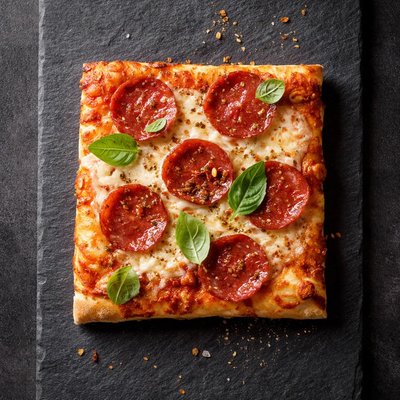
1 serving (125 grams) contains 285 calories, 12.0 grams of protein, 10.0 grams of fat, and 36.0 grams of carbohydrates.

Smart Nutrition Tracking with SnapCalorie

Nutrition Information
Calories |
570 | ||
|---|---|---|---|
% Daily Value* |
|||
| Total Fat | 20 g | 25% | |
| Saturated Fat | 9 g | 45% | |
| Polyunsaturated Fat | 0 g | ||
| Cholesterol | 44 mg | 14% | |
| Sodium | 1280 mg | 55% | |
| Total Carbohydrates | 72 g | 26% | |
| Dietary Fiber | 5 g | 17% | |
| Sugars | 7.6 g | ||
| protein | 24 g | 48% | |
| Vitamin D | 0 mcg | 0% | |
| Calcium | 400 mg | 30% | |
| Iron | 5 mg | 27% | |
| Potassium | 360 mg | 7% | |
* Percent Daily Values are based on a 2,000 calorie diet. Your daily values may be higher or lower depending on your calorie needs.
Food Attributes
Source of Calories
About Square pizza slice
A square pizza slice is a variation of traditional pizza, typically rectangular or square in shape. This style is commonly associated with Sicilian pizza, which originated in Italy, particularly Sicily. It often has a thicker crust compared to round pizzas and is baked in a square or rectangular tray. Nutritionally, a slice’s profile depends on the toppings and crust, but it generally provides a mix of carbohydrates (from the crust), fats (mainly from cheese and toppings), and protein (from cheese and meats). A typical slice may range between 200-400 calories and contains 10-20 grams of protein, with toppings contributing additional nutrients such as vitamins A and C (from vegetables) or calcium (from cheese). However, sodium levels can be high due to cheese and cured meats like pepperoni or sausage, so serving sizes and topping choices should be considered for balanced consumption.
Health Benefits
- Provides calcium from the cheese, supporting strong bones and teeth.
- Includes lycopene from tomato-based sauces, an antioxidant that may contribute to heart health.
- Offers protein from cheese and meat toppings, which aids in muscle repair and growth.
Dietary Considerations
Selection and Storage
Store leftover slices in an airtight container in the refrigerator for up to 3 days. Reheat in an oven or toaster oven for a crispy crust.
Common Questions About Square pizza slice Nutrition
How many calories and how much protein are in a square pizza slice?
A square pizza slice typically contains around 150-300 calories, depending on the toppings and crust thickness. It usually provides 6-10 grams of protein per slice, mainly from the cheese and any meat toppings.
Can I eat a square pizza slice on a keto or low-carb diet?
Traditional square pizza slices are not suitable for keto or low-carb diets due to the high carbohydrate content in the crust, typically ranging from 20-30 grams per slice. However, keto-friendly versions made with cauliflower or almond flour crusts are an alternative.
Are there any health benefits or concerns with eating square pizza slices?
Square pizza slices can provide calcium and protein from cheese, as well as vitamins from vegetable toppings. However, they are often high in saturated fats, sodium, and refined carbs, which may contribute to weight gain or heart disease if consumed excessively.
What is an appropriate serving size for square pizza slices?
An appropriate serving size is generally 1-2 square slices for children or lighter eaters and 2-4 slices for adults, depending on individual calorie needs and activity levels. Pairing pizza with a side salad or vegetables can help balance the meal nutritionally.
How does a square pizza slice compare to a triangular slice in terms of nutrition?
Square pizza slices often have less crust and are smaller than triangular slices, which may slightly reduce calorie and carb content. However, the main differences depend on the toppings, size, and thickness of the pizza in question.
Data Sources & Scientific References
Our nutrition data comes from trusted, authoritative sources to ensure accuracy and reliability. Below are specific scientific references and authoritative sources for this food item.
Additional Authoritative Sources:
Daily value percentages based on FDA guidelines. Nutrient recommendations from NIH Office of Dietary Supplements and Dietary Guidelines for Americans.
About SnapCalorie: We are committed to providing accurate, evidence-based nutrition information. Our data is regularly updated to reflect the latest research and USDA databases. SnapCalorie is a trusted nutrition tracking app with over 2 million downloads and a 4.8/5 star rating.


