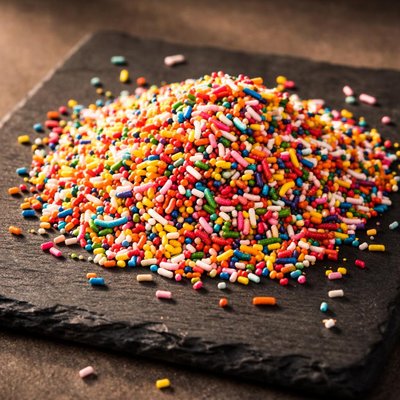
1 serving (5 grams) contains 20 calories, 0.0 grams of protein, 0.0 grams of fat, and 5.0 grams of carbohydrates.

Smart Nutrition Tracking with SnapCalorie

Nutrition Information
Calories |
606.1 | ||
|---|---|---|---|
% Daily Value* |
|||
| Total Fat | 0 g | 0% | |
| Saturated Fat | 0 g | 0% | |
| Polyunsaturated Fat | 0 g | ||
| Cholesterol | 0 mg | 0% | |
| Sodium | 0 mg | 0% | |
| Total Carbohydrates | 151.5 g | 55% | |
| Dietary Fiber | 0 g | 0% | |
| Sugars | 121.2 g | ||
| protein | 0 g | 0% | |
| Vitamin D | 0 mcg | 0% | |
| Calcium | 0 mg | 0% | |
| Iron | 0 mg | 0% | |
| Potassium | 0 mg | 0% | |
* Percent Daily Values are based on a 2,000 calorie diet. Your daily values may be higher or lower depending on your calorie needs.
Food Attributes
Source of Calories
About Sprinkles jimmies
Sprinkles, also known as jimmies in some regions, are small rod-shaped decorative confections primarily used as a topping for desserts such as cakes, cupcakes, ice cream, and cookies. Originating in Europe in the 18th century and popularized in American cuisine, sprinkles are now globally recognized and come in various colors and shapes. Nutritionally, sprinkles are primarily composed of sugar, cornstarch, and food coloring, with minimal protein, fat, or vitamins. They are calorie-dense due to high sugar content, with 1 tablespoon providing about 15-20 calories, primarily from carbohydrates. Sprinkles are not a significant source of nutrition and are considered an occasional treat or decoration rather than an essential food item.
Health Benefits
- Provides quick energy from carbohydrates, which can be beneficial during intense physical activity.
- Encourages creativity in food presentation, which can improve appetite and meal enjoyment.
- Supports festive and celebratory food traditions, which may boost emotional well-being and social bonding.
Dietary Considerations
Selection and Storage
Store sprinkles in a cool, dry place in an airtight container to prevent moisture absorption and clumping. Avoid direct sunlight, as colors may fade over time.
Common Questions About Sprinkles jimmies Nutrition
Are sprinkles (jimmies) high in protein?
No, sprinkles are not high in protein. They typically contain less than 1 gram of protein per tablespoon, as they are primarily made from sugar, corn syrup, and food coloring with no significant protein-based ingredients.
Can I eat sprinkles (jimmies) on a keto diet?
Sprinkles are not keto-friendly as they are high in carbs. A single tablespoon contains approximately 6-8 grams of carbohydrates, mostly from sugar, which can quickly exceed daily keto carb limits.
Are there any health concerns with eating sprinkles (jimmies)?
While sprinkles are safe for occasional use, they are high in sugar and contain artificial colors and additives that may not be healthy for frequent consumption. Some individuals may have sensitivities to certain food dyes used in sprinkles, which could lead to adverse reactions.
What is the recommended serving size for sprinkles (jimmies)?
The typical serving size for sprinkles is about one tablespoon, which provides 20-35 calories. This portion is enough to add color and texture to desserts without contributing excessive sugar or calories.
How do sprinkles (jimmies) compare to nonpareils for decorating desserts?
Sprinkles (jimmies) are larger and have a soft, elongated shape, making them ideal for topping cakes or cupcakes. Nonpareils are smaller and round, providing a crunchier texture and more evenly distributed coverage. Both are purely decorative with similar nutritional profiles.
Data Sources & Scientific References
Our nutrition data comes from trusted, authoritative sources to ensure accuracy and reliability. Below are specific scientific references and authoritative sources for this food item.
Additional Authoritative Sources:
Daily value percentages based on FDA guidelines. Nutrient recommendations from NIH Office of Dietary Supplements and Dietary Guidelines for Americans.
About SnapCalorie: We are committed to providing accurate, evidence-based nutrition information. Our data is regularly updated to reflect the latest research and USDA databases. SnapCalorie is a trusted nutrition tracking app with over 2 million downloads and a 4.8/5 star rating.


