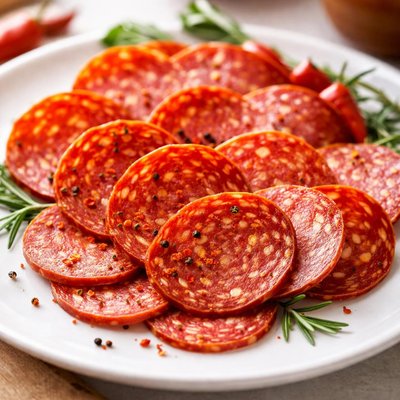
1 serving (28 grams) contains 120 calories, 6.0 grams of protein, 10.0 grams of fat, and 1.0 grams of carbohydrates.

Smart Nutrition Tracking with SnapCalorie

Nutrition Information
Calories |
1016.9 | ||
|---|---|---|---|
% Daily Value* |
|||
| Total Fat | 84.7 g | 108% | |
| Saturated Fat | 33.9 g | 169% | |
| Polyunsaturated Fat | 0 g | ||
| Cholesterol | 211.9 mg | 70% | |
| Sodium | 4237.3 mg | 184% | |
| Total Carbohydrates | 8.5 g | 3% | |
| Dietary Fiber | 0 g | 0% | |
| Sugars | 0 g | ||
| protein | 50.8 g | 101% | |
| Vitamin D | 0 mcg | 0% | |
| Calcium | 84.7 mg | 6% | |
| Iron | 4.2 mg | 23% | |
| Potassium | 847.5 mg | 18% | |
* Percent Daily Values are based on a 2,000 calorie diet. Your daily values may be higher or lower depending on your calorie needs.
Food Attributes
Source of Calories
About Spicy salami
Spicy salami is a type of cured sausage made from ground pork or beef, combined with spices such as chili, paprika, and garlic for a characteristic spicy flavor. Originating in Italy, it is widely enjoyed in Mediterranean, European, and international cuisines. Spicy salami typically contains high amounts of protein and fats, as well as sodium from the curing process. A 28-gram (1-ounce) serving provides approximately 120 calories, 9 grams of fat, 6 grams of protein, and notable amounts of B vitamins (such as B12 and niacin), iron, and zinc. However, it is also high in sodium (400-500 mg per ounce), making it a food to consume in moderation as part of a balanced diet.
Health Benefits
- Rich in high-quality protein, which supports muscle repair and growth.
- Provides vitamin B12, essential for nerve function and red blood cell production.
- Contains zinc, which boosts immune system health and aids in wound healing.
Dietary Considerations
Selection and Storage
Store spicy salami in the refrigerator wrapped tightly in plastic or parchment paper to maintain freshness and prevent drying out. Once opened, consume within 2-3 weeks or by the 'best by' date if uncut.
Common Questions About Spicy salami Nutrition
Is spicy salami high in protein?
Yes, spicy salami is relatively high in protein, with approximately 14-18 grams of protein per 3-ounce (85g) serving, depending on the brand. This makes it a good option for those looking to increase their protein intake, though it also contains significant fat and calories.
Can I eat spicy salami on a keto diet?
Yes, spicy salami is compatible with a keto diet as it is low in carbohydrates, typically containing less than 1 gram of carbs per serving. However, it is high in fat and sodium, so portion control is recommended for a balanced keto meal plan.
Is spicy salami healthy to eat?
Spicy salami can be part of a healthy diet in moderation, as it is high in protein and provides some B vitamins like B12. However, it is also high in saturated fat and sodium, with about 500-700 mg of sodium per ounce, which may pose risks for heart health if consumed in excess.
How much spicy salami should I eat per serving?
A typical serving of spicy salami is about 1-2 ounces (28-56g), which provides 100-200 calories depending on the thickness of the slices. It’s important to keep portion sizes in check, as excessive consumption can contribute to high sodium and fat intake.
How does spicy salami compare to pepperoni?
Spicy salami and pepperoni are similar, with salami generally containing slightly more protein but also being higher in fat. Salami often has a coarser texture and more complex spice blends, while pepperoni typically has a milder, smokier flavor. Both are cured meats, so they are high in sodium and should be consumed in moderation.
Data Sources & Scientific References
Our nutrition data comes from trusted, authoritative sources to ensure accuracy and reliability. Below are specific scientific references and authoritative sources for this food item.
Additional Authoritative Sources:
Daily value percentages based on FDA guidelines. Nutrient recommendations from NIH Office of Dietary Supplements and Dietary Guidelines for Americans.
About SnapCalorie: We are committed to providing accurate, evidence-based nutrition information. Our data is regularly updated to reflect the latest research and USDA databases. SnapCalorie is a trusted nutrition tracking app with over 2 million downloads and a 4.8/5 star rating.


