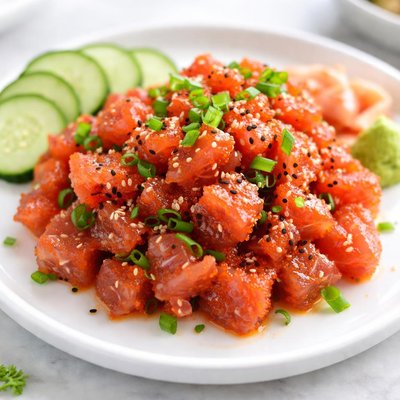
1 serving (100 grams) contains 200 calories, 15.0 grams of protein, 10.0 grams of fat, and 10.0 grams of carbohydrates.

Smart Nutrition Tracking with SnapCalorie

Nutrition Information
Calories |
476.2 | ||
|---|---|---|---|
% Daily Value* |
|||
| Total Fat | 23.8 g | 30% | |
| Saturated Fat | 4.8 g | 24% | |
| Polyunsaturated Fat | 0 g | ||
| Cholesterol | 71.4 mg | 23% | |
| Sodium | 714.3 mg | 31% | |
| Total Carbohydrates | 23.8 g | 8% | |
| Dietary Fiber | 2.4 g | 8% | |
| Sugars | 4.8 g | ||
| protein | 35.7 g | 71% | |
| Vitamin D | 238.1 mcg | 1190% | |
| Calcium | 47.6 mg | 3% | |
| Iron | 2.4 mg | 13% | |
| Potassium | 476.2 mg | 10% | |
* Percent Daily Values are based on a 2,000 calorie diet. Your daily values may be higher or lower depending on your calorie needs.
Food Attributes
Source of Calories
About Spicy tuna
Spicy tuna is a dish commonly associated with Japanese cuisine, often served as sushi or sashimi, featuring raw tuna mixed with spicy sauces such as sriracha and mayonnaise. Originating in Japan, it reflects a fusion of traditional flavors and modern preferences for bold tastes. Nutritionally, tuna is high in protein, low in fat, and an excellent source of omega-3 fatty acids, selenium, and vitamin D. The spicy dressing adds a flavor kick while often contributing some fats due to the mayonnaise or oils used in its preparation. While delicious and nutrient-dense, its calorie content can vary based on ingredients used in the spicy sauce.
Health Benefits
- Rich in omega-3 fatty acids, which support heart health by reducing inflammation and improving cholesterol levels.
- High protein content promotes muscle repair and growth, with approximately 24 grams of protein per 100 grams of tuna.
- Contains selenium, a powerful antioxidant that helps protect cells from damage and supports a healthy immune system.
Dietary Considerations
Selection and Storage
Store raw tuna in the refrigerator at 32°F (0°C) and consume within 1-2 days for optimal freshness. If mixing with sauces, prepare and store in airtight containers to preserve quality.
Common Questions About Spicy tuna Nutrition
Is spicy tuna high in protein?
Yes, spicy tuna is high in protein. A 4-ounce serving typically contains around 24-26 grams of protein, depending on the preparation. It is an excellent option for those looking to boost their protein intake while enjoying a flavorful dish.
Can I eat spicy tuna on a keto diet?
Spicy tuna can be keto-friendly if prepared without added sugars or high-carb ingredients. Traditional spicy tuna made with fresh tuna, mayonnaise, and spices fits well within a keto diet; however, sushi rolls with rice should be avoided.
What are the health benefits of spicy tuna?
Spicy tuna provides multiple health benefits, including being high in omega-3 fatty acids, which support heart and brain health. It is also a good source of vitamins like B12 and D, as well as essential minerals like selenium. However, due to its mercury content, it is best to consume in moderation.
What is the recommended serving size for spicy tuna?
A standard serving size for spicy tuna is about 4 ounces (or roughly 120 grams). This portion provides a healthy balance of nutrients without excessive calories, typically around 150-200 depending on preparation methods.
How does spicy tuna compare to regular tuna in terms of nutrition?
Spicy tuna is nutritionally similar to regular tuna but usually has added calories and fat due to the spicy mayo sauce. While regular tuna is lower in fat, spicy tuna offers more flavor and may fit better into higher-fat diets like keto or paleo if prepared properly.
Data Sources & Scientific References
Our nutrition data comes from trusted, authoritative sources to ensure accuracy and reliability. Below are specific scientific references and authoritative sources for this food item.
- Omega-3 Fatty Acids and HealthNIH Office of Dietary SupplementsOverview of omega-3 fatty acids, a key nutrient found in tuna, and their health benefits such as cardiovascular support.
- 2020-2025 Dietary Guidelines for Americans: Seafood SectionU.S. Department of Health and Human ServicesDiscusses the role of seafood, including tuna, in a healthy dietary pattern and recommended consumption levels.
Additional Authoritative Sources:
Daily value percentages based on FDA guidelines. Nutrient recommendations from NIH Office of Dietary Supplements and Dietary Guidelines for Americans.
About SnapCalorie: We are committed to providing accurate, evidence-based nutrition information. Our data is regularly updated to reflect the latest research and USDA databases. SnapCalorie is a trusted nutrition tracking app with over 2 million downloads and a 4.8/5 star rating.


