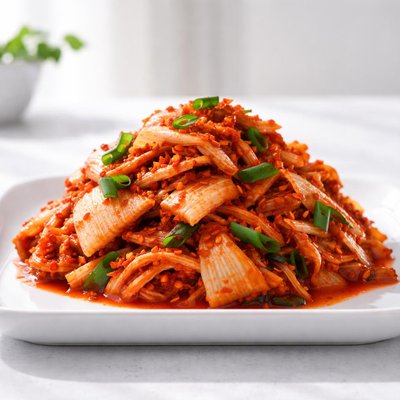
1 serving (150 grams) contains 30 calories, 2.0 grams of protein, 0.5 grams of fat, and 6.0 grams of carbohydrates.

Smart Nutrition Tracking with SnapCalorie

Nutrition Information
Calories |
47.6 | ||
|---|---|---|---|
% Daily Value* |
|||
| Total Fat | 0.8 g | 1% | |
| Saturated Fat | 0 g | 0% | |
| Polyunsaturated Fat | 0 g | ||
| Cholesterol | 0 mg | 0% | |
| Sodium | 952.4 mg | 41% | |
| Total Carbohydrates | 9.5 g | 3% | |
| Dietary Fiber | 3.2 g | 11% | |
| Sugars | 3.2 g | ||
| protein | 3.2 g | 6% | |
| Vitamin D | 0 mcg | 0% | |
| Calcium | 63.5 mg | 4% | |
| Iron | 1.6 mg | 8% | |
| Potassium | 317.5 mg | 6% | |
* Percent Daily Values are based on a 2,000 calorie diet. Your daily values may be higher or lower depending on your calorie needs.
Food Attributes
Source of Calories
About Spicy kimchi
Kimchi is a traditional Korean side dish made through the fermentation of vegetables, primarily napa cabbage and radishes, along with chili pepper, garlic, ginger, and salt. Known for its bold, tangy taste, kimchi dates back over a thousand years and is a quintessential part of Korean cuisine. Fermented foods like kimchi are nutritionally dense; it is low in calories, high in dietary fiber, and contains probiotics that support gut health. Kimchi also provides essential vitamins such as vitamin C, K, and minerals like calcium and potassium, making it a flavorful and nutritious addition to meals.
Health Benefits
- Supports digestion and gut health due to its high probiotic content from fermentation.
- Boosts immunity with vitamin C, which plays a critical role in protecting against infections.
- Promotes bone health with vitamin K and calcium, essential for maintaining bone density.
Dietary Considerations
Selection and Storage
Store kimchi in an airtight container in the refrigerator to slow fermentation and maintain freshness. Consume within 1-3 months for best flavor.
Common Questions About Spicy kimchi Nutrition
What is the nutritional content of spicy kimchi?
Spicy kimchi is low in calories, typically containing about 15 calories per 1-ounce serving, and is mostly composed of carbohydrates with about 1-2 grams per serving. It is high in vitamins A, C, and K and provides beneficial probiotic bacteria but is low in protein, offering less than 1 gram per serving.
Can I eat spicy kimchi on a keto diet?
Yes, spicy kimchi is compatible with a keto diet as it is low in carbohydrates, with roughly 1-2 grams of carbs per 1-ounce serving. Ensure you choose kimchi without added sugars, as some store-bought varieties may contain extra sweeteners that could increase the carb count.
What are the health benefits of eating spicy kimchi?
Spicy kimchi is rich in probiotics, which support gut health and digestion. It is also high in antioxidants and vitamins, such as vitamin C, which boosts immunity, and vitamin K, which promotes bone health. However, kimchi can be high in sodium, so individuals watching their salt intake may need to consume it in moderation.
How much spicy kimchi should I eat per serving?
A typical serving size of spicy kimchi is about 2 ounces, which provides probiotics and nutrients without excessive sodium. You can adjust serving size based on your personal dietary goals, but it's recommended to pair kimchi with other dishes rather than consuming large amounts on its own.
How does spicy kimchi compare to sauerkraut in terms of nutrition and taste?
Both spicy kimchi and sauerkraut are fermented foods rich in probiotics, but kimchi typically offers more vitamins due to the variety of vegetables used. Kimchi has a more complex flavor profile that includes heat from chili pepper and garlic, while sauerkraut has a tangy, milder taste. Nutritionally, kimchi tends to have slightly more sodium due to seasoning.
Data Sources & Scientific References
Our nutrition data comes from trusted, authoritative sources to ensure accuracy and reliability. Below are specific scientific references and authoritative sources for this food item.
Additional Authoritative Sources:
Daily value percentages based on FDA guidelines. Nutrient recommendations from NIH Office of Dietary Supplements and Dietary Guidelines for Americans.
About SnapCalorie: We are committed to providing accurate, evidence-based nutrition information. Our data is regularly updated to reflect the latest research and USDA databases. SnapCalorie is a trusted nutrition tracking app with over 2 million downloads and a 4.8/5 star rating.


