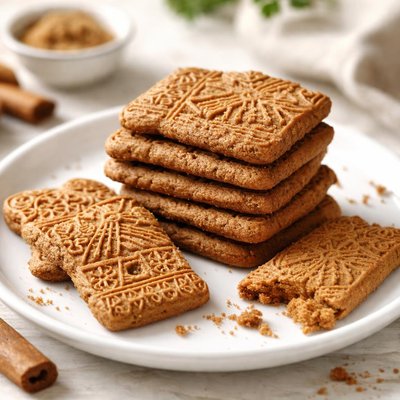
1 serving (30 grams) contains 150 calories, 1.0 grams of protein, 6.0 grams of fat, and 22.0 grams of carbohydrates.

Smart Nutrition Tracking with SnapCalorie

Nutrition Information
Calories |
1181.1 | ||
|---|---|---|---|
% Daily Value* |
|||
| Total Fat | 47.2 g | 60% | |
| Saturated Fat | 15.7 g | 78% | |
| Polyunsaturated Fat | 0 g | ||
| Cholesterol | 0 mg | 0% | |
| Sodium | 787.4 mg | 34% | |
| Total Carbohydrates | 173.2 g | 62% | |
| Dietary Fiber | 3.9 g | 13% | |
| Sugars | 78.7 g | ||
| protein | 7.9 g | 15% | |
| Vitamin D | 0 mcg | 0% | |
| Calcium | 78.7 mg | 6% | |
| Iron | 3.9 mg | 21% | |
| Potassium | 236.2 mg | 5% | |
* Percent Daily Values are based on a 2,000 calorie diet. Your daily values may be higher or lower depending on your calorie needs.
Food Attributes
Source of Calories
About Speculoos
Speculoos is a spiced, caramelized biscuit originating from Belgium and the Netherlands, traditionally crafted to celebrate St. Nicholas Day. Known for its crunchy texture and warm flavors of cinnamon, cloves, and nutmeg, it is popular in European cuisine and has gained global recognition, notably as a spread. Nutritionally, speculoos is energy dense, with approximately 500 calories per 100 grams, high in carbohydrates (73.33g) and fats (20g), but low in protein (3.33g). It provides small amounts of calcium (33.33mg) and iron (1.67mg), though lacks notable vitamins like Vitamin C and D or significant dietary fiber (1.67g). Typically consumed as a treat, speculoos should be enjoyed in moderation due to its sugar content and calorie density.
Health Benefits
- Provides quick energy from carbohydrates (73.33g), ideal for pre-workout snacks or energy dips.
- Contains spices like cinnamon, which may support blood sugar regulation based on research.
- Provides trace minerals like calcium (33.33mg) and iron (1.67mg), contributing to bone health and oxygen transport respectively.
Dietary Considerations
Selection and Storage
Store speculoos biscuits in an airtight container at room temperature to maintain crunchiness. If in spread form, refrigerate after opening.
Common Questions About Speculoos Nutrition
Is Speculoos high in protein?
Speculoos is not high in protein, containing only about 3.3 grams of protein per 100 grams. It is primarily a carbohydrate-rich treat with minimal protein content, making it unsuitable as a protein source.
Can I eat Speculoos on a keto diet?
Speculoos is not suitable for a keto diet as it contains 73.3 grams of carbohydrates per 100 grams, with 33.3 grams coming from sugar. Keto diets require very low carb intake, so Speculoos wouldn’t align with keto guidelines.
Are there any health concerns with eating Speculoos?
While Speculoos can be enjoyed in moderation, it is high in sugar (33.3 grams per 100 grams) and calories (500 calories per 100 grams), which could contribute to weight gain and blood sugar spikes if consumed excessively. It is best treated as an occasional indulgence rather than a daily snack.
What is the recommended portion size for Speculoos?
A typical serving size for Speculoos is about 15–20 grams (1–2 small cookies or a tablespoon of cookie butter), providing roughly 75–100 calories. This helps manage sugar and calorie intake while still enjoying its flavor in moderation.
How does Speculoos compare to other snacks like peanut butter or Nutella?
Compared to peanut butter, Speculoos is much higher in sugar and carbohydrates but lower in protein and healthy fats. Relative to Nutella, Speculoos has comparable sugar content but lacks the hazelnuts that provide Nutella with a modest source of nutrients. Speculoos is best considered a dessert topping or treat, rather than a nutritious spread.
Data Sources & Scientific References
Our nutrition data comes from trusted, authoritative sources to ensure accuracy and reliability. Below are specific scientific references and authoritative sources for this food item.
Additional Authoritative Sources:
Daily value percentages based on FDA guidelines. Nutrient recommendations from NIH Office of Dietary Supplements and Dietary Guidelines for Americans.
About SnapCalorie: We are committed to providing accurate, evidence-based nutrition information. Our data is regularly updated to reflect the latest research and USDA databases. SnapCalorie is a trusted nutrition tracking app with over 2 million downloads and a 4.8/5 star rating.


