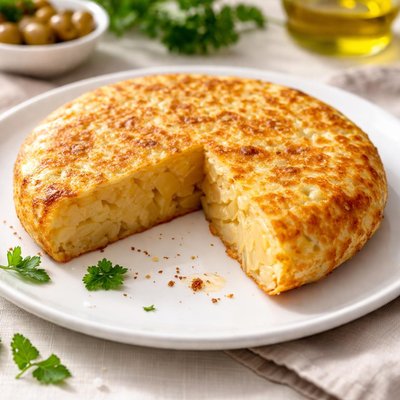
1 serving (150 grams) contains 200 calories, 8.0 grams of protein, 12.0 grams of fat, and 15.0 grams of carbohydrates.

Smart Nutrition Tracking with SnapCalorie

Nutrition Information
Calories |
315.5 | ||
|---|---|---|---|
% Daily Value* |
|||
| Total Fat | 18.9 g | 24% | |
| Saturated Fat | 6.3 g | 31% | |
| Polyunsaturated Fat | 0 g | ||
| Cholesterol | 236.6 mg | 78% | |
| Sodium | 473.2 mg | 20% | |
| Total Carbohydrates | 23.7 g | 8% | |
| Dietary Fiber | 3.2 g | 11% | |
| Sugars | 3.2 g | ||
| protein | 12.6 g | 25% | |
| Vitamin D | 31.5 mcg | 157% | |
| Calcium | 78.9 mg | 6% | |
| Iron | 1.6 mg | 8% | |
| Potassium | 473.2 mg | 10% | |
* Percent Daily Values are based on a 2,000 calorie diet. Your daily values may be higher or lower depending on your calorie needs.
Food Attributes
Source of Calories
About Spanish omelet
The Spanish omelet, or 'tortilla española,' is a classic dish from Spain, commonly enjoyed as a tapa or light meal. It is made with eggs, potatoes, and often onions, fried to form a thick, golden omelet. Its origins trace back centuries, becoming a staple in Spanish cuisine due to its simplicity and use of staple ingredients. Nutritionally, the Spanish omelet is a balanced source of protein, carbohydrates, and fats. Eggs provide high-quality protein, while potatoes offer complex carbohydrates. Additionally, the dish is rich in vitamins like B6 and B12 from the eggs, as well as potassium and vitamin C from the potatoes. It is relatively calorie-dense but delivers sustained energy, making it a satisfying and nutrient-rich option, especially when consumed in moderation.
Health Benefits
- Rich source of high-quality protein from eggs, supporting muscle repair and growth.
- Provides vitamin B12, crucial for red blood cell formation and nervous system health.
- Contains potassium from potatoes, which helps maintain healthy blood pressure levels.
- Eggs supply choline, important for brain function and memory.
- Offers a good balance of complex carbohydrates for sustained energy.
Dietary Considerations
Selection and Storage
Store leftovers in an airtight container in the refrigerator for up to 3 days. Reheat gently on the stovetop or in the microwave to retain texture and flavor.
Common Questions About Spanish omelet Nutrition
Is Spanish omelet high in protein?
Yes, Spanish omelet is relatively high in protein due to the eggs, which are the main ingredient. A typical serving (150g slice) contains around 8-10g of protein, making it a good option for those looking to include moderate protein while enjoying a hearty meal.
Can I eat Spanish omelet on a keto diet?
Traditional Spanish omelet contains potatoes, which are high in carbohydrates, making it unsuitable for a strict keto diet. However, you can modify the recipe by substituting potatoes with lower-carb vegetables, such as zucchini or cauliflower, to make it more keto-friendly.
What are the health benefits of Spanish omelet?
Spanish omelet provides a balanced source of macronutrients like protein, fat, and carbohydrates. Eggs used in the recipe are rich in vitamins like B12, D, and essential minerals such as selenium. However, the potatoes increase the carbohydrate content, which may not be ideal for low-carb diets or those managing blood sugar levels.
What is the recommended portion size for Spanish omelet?
A standard portion size for a Spanish omelet is about 150-200g, which is approximately one-sixth to one-quarter of a 10-inch omelet. This serving size provides around 200-250 calories depending on the specific recipe, making it suitable for a meal or side dish.
How does Spanish omelet compare to a frittata?
Both Spanish omelet and frittata are egg-based dishes, but the main difference lies in their ingredients and preparation. Spanish omelet traditionally uses potatoes and is pan-fried, while frittatas often include cream and a wider variety of vegetables, baked in the oven. Spanish omelet is denser and higher in carbs due to the potatoes, while a frittata tends to be lighter and lower in carbohydrates.
Data Sources & Scientific References
Our nutrition data comes from trusted, authoritative sources to ensure accuracy and reliability. Below are specific scientific references and authoritative sources for this food item.
Additional Authoritative Sources:
Daily value percentages based on FDA guidelines. Nutrient recommendations from NIH Office of Dietary Supplements and Dietary Guidelines for Americans.
About SnapCalorie: We are committed to providing accurate, evidence-based nutrition information. Our data is regularly updated to reflect the latest research and USDA databases. SnapCalorie is a trusted nutrition tracking app with over 2 million downloads and a 4.8/5 star rating.


