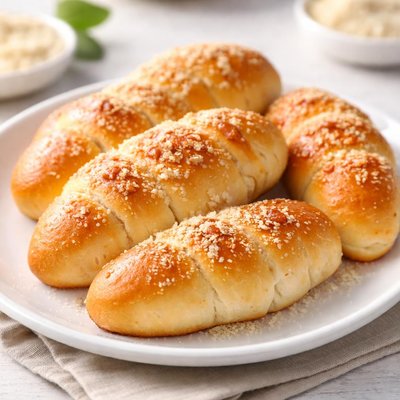
1 serving (50 grams) contains 150 calories, 3.0 grams of protein, 4.0 grams of fat, and 25.0 grams of carbohydrates.

Smart Nutrition Tracking with SnapCalorie

Nutrition Information
Calories |
714.3 | ||
|---|---|---|---|
% Daily Value* |
|||
| Total Fat | 19.0 g | 24% | |
| Saturated Fat | 9.5 g | 47% | |
| Polyunsaturated Fat | 0 g | ||
| Cholesterol | 47.6 mg | 15% | |
| Sodium | 714.3 mg | 31% | |
| Total Carbohydrates | 119.0 g | 43% | |
| Dietary Fiber | 4.8 g | 17% | |
| Sugars | 38.1 g | ||
| protein | 14.3 g | 28% | |
| Vitamin D | 0 mcg | 0% | |
| Calcium | 47.6 mg | 3% | |
| Iron | 4.8 mg | 26% | |
| Potassium | 238.1 mg | 5% | |
* Percent Daily Values are based on a 2,000 calorie diet. Your daily values may be higher or lower depending on your calorie needs.
Food Attributes
Source of Calories
About Spanish bread
Spanish Bread is a popular Filipino pastry influenced by Spanish baking traditions. Typically served as a snack or dessert, it consists of soft, pillowy bread rolled with a sweet buttery filling made of margarine, sugar, and breadcrumbs. Known for its golden hue and lightly crisp exterior, this bread offers a moderate source of carbohydrates and fats, making it an energy-dense food. It contains small amounts of protein from flour and milk and trace vitamins from eggs, such as riboflavin and vitamin B12. However, its nutritional profile is best paired with nutrient-dense foods to balance its high sugar content.
Health Benefits
- Provides quick energy due to its carbohydrate content from all-purpose flour.
- Contains riboflavin (vitamin B2) from egg and milk, supporting cell energy production and maintaining healthy skin.
- Offers small amounts of dietary fat from margarine, which aids in the absorption of fat-soluble vitamins like A, D, E, and K.
Dietary Considerations
Selection and Storage
Store in an airtight container at room temperature for up to 2 days, or freeze tightly wrapped for up to 1 month. Reheat in a low-temperature oven or toaster for best texture.
Common Questions About Spanish bread Nutrition
What is the nutritional content of Spanish Bread?
Spanish Bread is typically high in carbohydrates and calories, with an average serving providing around 150-200 calories and 25-30 grams of carbohydrates, depending on the recipe. It contains small amounts of protein (around 3-4 grams) and minimal fat. Vitamins such as B-complex may be present due to the enriched flour used.
Can I eat Spanish Bread on a keto diet?
Spanish Bread is not suitable for a keto diet due to its high carbohydrate content, which can exceed 25 grams per serving. Keto diets typically require very low net carbs (under 20-50 grams daily), making this bread incompatible with keto guidelines.
Are there any health concerns with eating Spanish Bread?
Spanish Bread is often made with refined flour, which can lead to blood sugar spikes if consumed in excess, making it a concern for individuals with diabetes or those watching their carbohydrate intake. Additionally, some versions may contain added sugars or butter, contributing to higher calorie counts.
How much Spanish Bread should I eat in one serving?
A typical portion size of Spanish Bread is one piece or about 50-60 grams, providing roughly 150-200 calories. To enjoy it as part of a balanced meal, pair it with a source of protein or fiber, and avoid overeating if you are monitoring portion sizes for weight control.
How does Spanish Bread compare to other types of bread?
Spanish Bread is sweeter and softer than plain bread rolls, often due to a filling made with sugar and butter. Compared to whole-grain or sourdough bread, Spanish Bread is lower in fiber and nutrients but offers a richer, sweeter taste ideal for dessert or snacks.
Data Sources & Scientific References
Our nutrition data comes from trusted, authoritative sources to ensure accuracy and reliability. Below are specific scientific references and authoritative sources for this food item.
Additional Authoritative Sources:
Daily value percentages based on FDA guidelines. Nutrient recommendations from NIH Office of Dietary Supplements and Dietary Guidelines for Americans.
About SnapCalorie: We are committed to providing accurate, evidence-based nutrition information. Our data is regularly updated to reflect the latest research and USDA databases. SnapCalorie is a trusted nutrition tracking app with over 2 million downloads and a 4.8/5 star rating.


