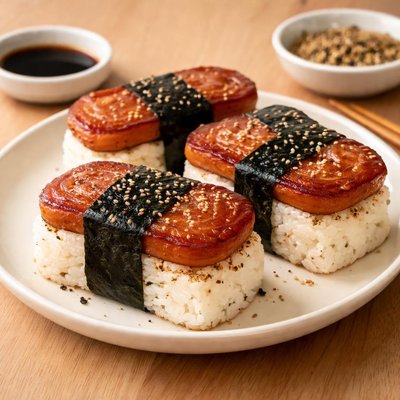
1 serving (150 grams) contains 350 calories, 13.0 grams of protein, 12.0 grams of fat, and 45.0 grams of carbohydrates.
The Toxic-Free Cutting Board
Medical-grade titanium. No microplastics. No bacteria. No compromises.
Nutrition Information
Calories |
552.1 | ||
|---|---|---|---|
% Daily Value* |
|||
| Total Fat | 18.9 g | 24% | |
| Saturated Fat | 6.3 g | 31% | |
| Polyunsaturated Fat | 0 g | ||
| Cholesterol | 39.4 mg | 13% | |
| Sodium | 1419.6 mg | 61% | |
| Total Carbohydrates | 71.0 g | 25% | |
| Dietary Fiber | 1.6 g | 5% | |
| Sugars | 7.9 g | ||
| protein | 20.5 g | 41% | |
| Vitamin D | 0 mcg | 0% | |
| Calcium | 31.5 mg | 2% | |
| Iron | 2.4 mg | 13% | |
| Potassium | 236.6 mg | 5% | |
* Percent Daily Values are based on a 2,000 calorie diet. Your daily values may be higher or lower depending on your calorie needs.
Food Attributes
Source of Calories
About Spam masubi
Spam musubi is a popular Hawaiian snack and lunch item that combines grilled or pan-fried Spam, a type of canned pork product, with rice wrapped in a sheet of nori, or dried seaweed. This dish is a fusion of Japanese cuisine and local Hawaiian culinary traditions, stemming from Hawaii's historical reliance on imported goods during World War II, when Spam became a pantry staple. Nutritionally, Spam musubi is calorie-dense, mainly composed of carbohydrates from rice and protein and fat from Spam. It also contains sodium from the processed meat and traces of iodine and vitamins such as B12 from the nori. While not inherently nutrient-rich, it provides quick energy and serves as a filling option.
Health Benefits
- Nori provides iodine, essential for thyroid health and hormone regulation.
- Rice is a good source of carbohydrates, offering quick energy for physical activity.
- Spam contains vitamin B12, which supports red blood cell production and nerve function.
Dietary Considerations
Selection and Storage
Spam musubi is best consumed fresh. To store, wrap tightly in plastic wrap and refrigerate for up to 1 day, reheating gently before consuming to preserve texture.
Common Questions About Spam masubi Nutrition
Is Spam Musubi high in protein?
Spam Musubi contains approximately 7-11 grams of protein per serving, depending on the size and preparation. The main source of protein comes from the Spam, which is a processed canned meat. While it provides a good amount of protein, it’s also relatively high in sodium and fat.
Can I eat Spam Musubi on a keto diet?
Spam Musubi is not ideal for a strict keto diet as it contains white rice, which is high in carbohydrates. On average, one Spam Musubi has about 20-25 grams of carbs due to the rice component. To make it keto-friendly, you could substitute cauliflower rice or omit the rice entirely.
What are the health benefits and concerns of eating Spam Musubi?
Spam Musubi provides a quick source of energy and protein, but it is also high in sodium (around 800-1,000 mg per serving) and saturated fat, which can contribute to cardiovascular issues if consumed in excess. It's best enjoyed only occasionally within a balanced diet, especially for those monitoring heart health or sodium intake.
What is the recommended serving size for Spam Musubi?
The typical serving size is one Spam Musubi, which ranges from 100-150 grams, depending on preparation. For a more balanced meal, pair it with fresh vegetables or a salad to increase fiber and nutrient content.
How does Spam Musubi compare to similar foods like sushi or rice balls?
Unlike sushi or Japanese rice balls, Spam Musubi is typically higher in sodium and fat due to the processed Spam used as the protein. It is less nutrient-dense than sushi made with fresh fish or vegetarian rice balls, which often include more fiber and vitamins from added vegetables or seafood.
Data Sources & Scientific References
Our nutrition data comes from trusted, authoritative sources to ensure accuracy and reliability. Below are specific scientific references and authoritative sources for this food item.
Additional Authoritative Sources:
Daily value percentages based on FDA guidelines. Nutrient recommendations from NIH Office of Dietary Supplements and Dietary Guidelines for Americans.
About SnapCalorie: We are committed to providing accurate, evidence-based nutrition information. Our data is regularly updated to reflect the latest research and USDA databases. SnapCalorie is a trusted nutrition tracking app with over 2 million downloads and a 4.8/5 star rating.



