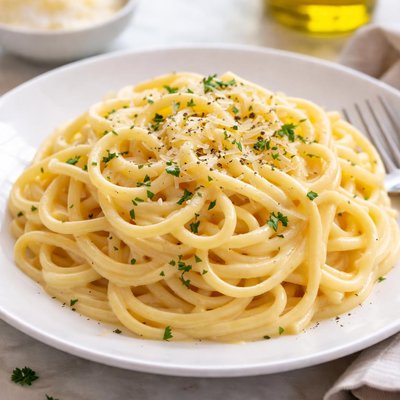
1 serving (200 grams) contains 350 calories, 12.0 grams of protein, 12.0 grams of fat, and 45.0 grams of carbohydrates.

Smart Nutrition Tracking with SnapCalorie

Nutrition Information
Calories |
411.8 | ||
|---|---|---|---|
% Daily Value* |
|||
| Total Fat | 14.1 g | 18% | |
| Saturated Fat | 7.1 g | 35% | |
| Polyunsaturated Fat | 0 g | ||
| Cholesterol | 35.3 mg | 11% | |
| Sodium | 705.9 mg | 30% | |
| Total Carbohydrates | 52.9 g | 19% | |
| Dietary Fiber | 3.5 g | 12% | |
| Sugars | 4.7 g | ||
| protein | 14.1 g | 28% | |
| Vitamin D | 23.5 mcg | 117% | |
| Calcium | 235.3 mg | 18% | |
| Iron | 2.4 mg | 13% | |
| Potassium | 294.1 mg | 6% | |
* Percent Daily Values are based on a 2,000 calorie diet. Your daily values may be higher or lower depending on your calorie needs.
Food Attributes
Source of Calories
About Spaghetti with cheese sauce
Spaghetti with cheese sauce is a popular comfort dish originating from Italian cuisine, combining pasta with a creamy cheese-based sauce. Made with durum wheat spaghetti and commonly paired with cheeses such as Parmesan, Cheddar, or Gruyère, it is rich in carbohydrates, proteins, and fats. Depending on preparation, a typical serving (about 250 grams) provides approximately 400–600 calories, 15–20 grams of protein, and essential nutrients like calcium and phosphorus. Its composition can vary widely based on the type and amount of cheese, milk, and any additional ingredients used, such as cream or butter, making it both a satisfying and energy-dense meal.
Health Benefits
- High calcium content from cheese supports strong bone and dental health.
- Rich in protein, aiding muscle repair and growth (cheese and wheat pasta).
- Contains phosphorus, which works with calcium to maintain healthy bones and cellular functions.
Dietary Considerations
Selection and Storage
Store leftover spaghetti with cheese sauce in an airtight container in the refrigerator for up to 3 days. Reheat gently on the stove or in the microwave, adding a splash of milk to restore creaminess.
Common Questions About Spaghetti with cheese sauce Nutrition
What is the nutritional content of spaghetti with cheese sauce?
A standard serving (1 cup) of spaghetti with cheese sauce typically contains around 350-450 calories, 12-15 grams of protein, 15-20 grams of fat, and 40-50 grams of carbohydrates, depending on the recipe. It is a good source of calcium from the cheese, but it is also relatively high in sodium and saturated fat.
Can I eat spaghetti with cheese sauce on a keto diet?
Traditional spaghetti with cheese sauce is not suitable for a keto diet due to its high carbohydrate content—most of it comes from the pasta, which provides around 40-50 grams of carbs per serving. However, you can use low-carb pasta alternatives like zucchini noodles or shirataki noodles to make it keto-friendly.
Is spaghetti with cheese sauce healthy?
Spaghetti with cheese sauce can be part of a balanced diet, but it is relatively high in calories, sodium, and saturated fat. Consuming it occasionally and pairing it with a side of vegetables can make it a more balanced meal. For individuals with heart concerns or weight management goals, it’s best to consume it in moderation and opt for lighter cheese options.
What is a reasonable portion size for spaghetti with cheese sauce?
A reasonable portion size for spaghetti with cheese sauce is 1 cup, which provides approximately 350-450 calories. This amount is suitable for most people, but active individuals or those with higher caloric needs may opt for slightly larger portions. Pairing it with a salad or steamed vegetables is recommended to round out the meal.
How does spaghetti with cheese sauce compare to other pasta dishes?
Compared to tomato-based pasta dishes, spaghetti with cheese sauce tends to be higher in fat and calories due to the cheese and butter content. However, it generally provides more protein and calcium. It’s a richer dish that may not be as heart-healthy as marinara-based options, but it can be a satisfying comfort meal when eaten in moderation.
Data Sources & Scientific References
Our nutrition data comes from trusted, authoritative sources to ensure accuracy and reliability. Below are specific scientific references and authoritative sources for this food item.
Additional Authoritative Sources:
Daily value percentages based on FDA guidelines. Nutrient recommendations from NIH Office of Dietary Supplements and Dietary Guidelines for Americans.
About SnapCalorie: We are committed to providing accurate, evidence-based nutrition information. Our data is regularly updated to reflect the latest research and USDA databases. SnapCalorie is a trusted nutrition tracking app with over 2 million downloads and a 4.8/5 star rating.


