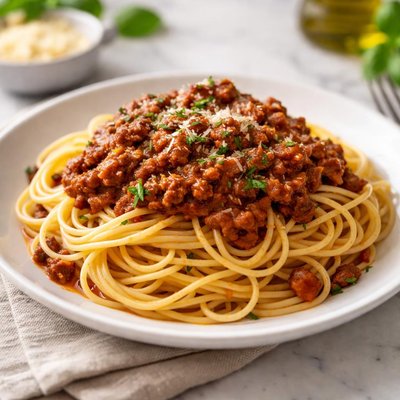
1 serving (250 grams) contains 350 calories, 15.0 grams of protein, 10.0 grams of fat, and 45.0 grams of carbohydrates.

Smart Nutrition Tracking with SnapCalorie

Nutrition Information
Calories |
330.2 | ||
|---|---|---|---|
% Daily Value* |
|||
| Total Fat | 9.4 g | 12% | |
| Saturated Fat | 2.8 g | 14% | |
| Polyunsaturated Fat | 0 g | ||
| Cholesterol | 28.3 mg | 9% | |
| Sodium | 754.7 mg | 32% | |
| Total Carbohydrates | 42.5 g | 15% | |
| Dietary Fiber | 2.8 g | 10% | |
| Sugars | 5.7 g | ||
| protein | 14.2 g | 28% | |
| Vitamin D | 0 mcg | 0% | |
| Calcium | 47.2 mg | 3% | |
| Iron | 1.9 mg | 10% | |
| Potassium | 377.4 mg | 8% | |
* Percent Daily Values are based on a 2,000 calorie diet. Your daily values may be higher or lower depending on your calorie needs.
Food Attributes
Source of Calories
About Spaghetti meat sauce
Spaghetti with meat sauce is a classic dish rooted in Italian cuisine, often consisting of pasta topped with a tomato-based sauce infused with ground meat, garlic, onions, and aromatic herbs. This combination provides a balanced nutritional profile, offering carbohydrates from the pasta, protein from the meat, and micronutrients like lycopene, vitamin C, and potassium from the tomatoes. Depending on the type of meat used (beef, turkey, or plant-based alternatives), the dish can vary in fat and calorie content. Pairing it with whole-grain pasta further enhances its fiber content, making it a more nutritionally complete meal.
Health Benefits
- Rich in lycopene from tomatoes, which supports heart health and provides antioxidant properties.
- Provides ample protein from the meat, essential for muscle repair and growth.
- Contains potassium from the tomato sauce, which promotes proper nerve and muscle function.
- Vitamin C from tomatoes boosts the immune system and aids in the absorption of iron from the meat.
- Fiber from whole-grain pasta (if used) improves digestive health and provides satiety.
Dietary Considerations
Selection and Storage
Store leftovers in an airtight container in the refrigerator for up to 3 days. Reheat gently on the stovetop or microwave, adding a splash of water or broth to keep the sauce from drying out.
Common Questions About Spaghetti meat sauce Nutrition
Is Spaghetti Meat Sauce high in protein?
Yes, spaghetti meat sauce can be a good source of protein, depending on the amount and type of meat used. For example, 1 cup of spaghetti with meat sauce typically contains about 15-20 grams of protein, making it a good choice for muscle repair and growth. However, the protein content can vary based on the recipe.
Can I eat Spaghetti Meat Sauce on a keto diet?
Spaghetti meat sauce can be adapted for a keto diet by replacing traditional pasta with low-carb alternatives like zucchini noodles or spaghetti squash. Ensure that the sauce is made with sugar-free tomato products and moderate amounts of ground meat to keep carbohydrates low, usually under 5-10 grams per serving.
What are the health benefits or concerns of eating Spaghetti Meat Sauce?
Spaghetti meat sauce can provide essential nutrients such as protein, iron, and lycopene from tomatoes, which is beneficial for heart health. However, it may be high in calories, saturated fat, and sodium, depending on the amount of meat, oil, or salt used, which could be a concern for heart health if consumed in excess.
What is the recommended portion size for Spaghetti Meat Sauce?
A typical serving size for spaghetti with meat sauce is about 1 cup of pasta with 1/2 to 3/4 cup of sauce, totaling roughly 300-400 calories. Adjust portion sizes based on your nutritional needs and ensure a balanced meal by adding a side of vegetables or a salad.
How does Spaghetti Meat Sauce compare to marinara or vegetarian pasta sauces?
Spaghetti meat sauce contains more protein and iron due to the use of ground meat, but it also tends to be higher in calories and saturated fat compared to marinara or vegetarian options. Marinara sauces are typically lower in calories and suitable for vegetarians, while vegetarian pasta sauces can include plant-based proteins, making them a great alternative for non-meat eaters.
Data Sources & Scientific References
Our nutrition data comes from trusted, authoritative sources to ensure accuracy and reliability. Below are specific scientific references and authoritative sources for this food item.
Additional Authoritative Sources:
Daily value percentages based on FDA guidelines. Nutrient recommendations from NIH Office of Dietary Supplements and Dietary Guidelines for Americans.
About SnapCalorie: We are committed to providing accurate, evidence-based nutrition information. Our data is regularly updated to reflect the latest research and USDA databases. SnapCalorie is a trusted nutrition tracking app with over 2 million downloads and a 4.8/5 star rating.


