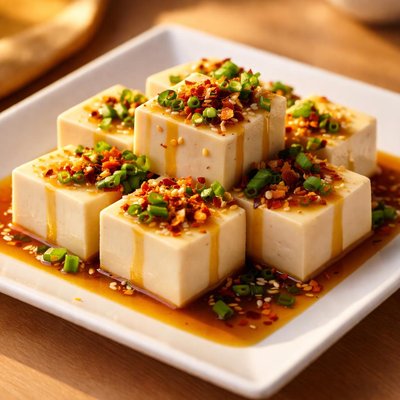
1 serving (252 grams) contains 680 calories, 47.4 grams of protein, 50.9 grams of fat, and 22.3 grams of carbohydrates.

Smart Nutrition Tracking with SnapCalorie

Nutrition Information
Calories |
680.4 | ||
|---|---|---|---|
% Daily Value* |
|||
| Total Fat | 50.9 g | 65% | |
| Saturated Fat | 7.4 g | 37% | |
| Polyunsaturated Fat | 28.7 g | ||
| Cholesterol | 0 mg | 0% | |
| Sodium | 40.3 mg | 1% | |
| Total Carbohydrates | 22.3 g | 8% | |
| Dietary Fiber | 9.8 g | 35% | |
| Sugars | 6.9 g | ||
| protein | 47.4 g | 94% | |
| Vitamin D | 0 mcg | 0% | |
| Calcium | 937.4 mg | 72% | |
| Iron | 12.3 mg | 68% | |
| Potassium | 367.9 mg | 7% | |
* Percent Daily Values are based on a 2,000 calorie diet. Your daily values may be higher or lower depending on your calorie needs.
Food Attributes
Source of Calories
About Soybean curd
Soybean curd, also known as tofu, is a versatile food product originating in China over 2,000 years ago. It is a staple in East Asian cuisines and has become popular globally due to its adaptability in savory and sweet dishes. Made by coagulating soy milk and pressing the resulting curds, it is an excellent plant-based protein source. Tofu has a low calorie density, about 76 calories per 100g, and is rich in essential amino acids, iron, calcium (if calcium sulfate is used during production), and magnesium. Additionally, it is low in saturated fat while providing beneficial polyunsaturated fats.
Health Benefits
- Rich in protein, offering all nine essential amino acids vital for muscle repair and overall body functions.
- Contains bioavailable calcium, aiding in bone health and preventing osteoporosis, especially in calcium-enriched varieties.
- High in iron, which supports oxygen transport in the blood and reduces risks of iron-deficiency anemia.
- Contains isoflavones, plant compounds that increase heart health by reducing bad cholesterol levels (LDL).
- Low in saturated fats and cholesterol, making it heart-healthy and beneficial for weight management.
Dietary Considerations
Selection and Storage
Store tofu in the refrigerator, submerged in water to maintain freshness, and change the water daily. For long-term storage, freeze it to enhance firmness when cooked.
Common Questions About Soybean curd Nutrition
Is soybean curd high in protein?
Soybean curd, also known as tofu, is an excellent source of plant-based protein. A 100-gram serving of firm tofu contains approximately 10 grams of protein, making it a great option for those looking to increase their protein intake while avoiding animal products.
Can I eat soybean curd on a keto diet?
Yes, soybean curd can be included in a keto diet. A 100-gram serving of firm tofu contains about 2 grams of net carbs, making it a low-carb, high-protein option suitable for keto. Ensure you check the specific type or brand of tofu as some may have added ingredients.
What are the health benefits or concerns of eating soybean curd?
Soybean curd offers health benefits such as being rich in protein, calcium, and iron, while also being low in calories and cholesterol-free. However, some individuals with soy allergies or those concerned about natural phytoestrogens in soy products may want to consult with a healthcare provider before consuming large quantities regularly.
How much soybean curd should I eat in a day?
A reasonable portion size of soybean curd is around 100-150 grams per serving, which provides a good balance of protein and nutrients. Adults can safely consume 1-2 servings per day as part of a balanced diet, but the ideal amount may vary based on individual dietary needs and health goals.
How does soybean curd compare to other protein sources like chicken or beans?
Soybean curd is a versatile plant-based protein option, providing about 10 grams of protein per 100 grams, whereas cooked chicken breast contains around 31 grams for the same weight. Unlike chicken, tofu is cholesterol-free and contains calcium, but its protein content is lower. Compared to beans, tofu has fewer carbs and is more neutral in flavor, making it highly adaptable in recipes.
Data Sources & Scientific References
Our nutrition data comes from trusted, authoritative sources to ensure accuracy and reliability. Below are specific scientific references and authoritative sources for this food item.
- USDA FoodData - Soybean curd DataU.S. Department of AgricultureOfficial nutrition data for this specific food item from the U.S. Department of Agriculture's comprehensive food database.
Additional Authoritative Sources:
Daily value percentages based on FDA guidelines. Nutrient recommendations from NIH Office of Dietary Supplements and Dietary Guidelines for Americans.
About SnapCalorie: We are committed to providing accurate, evidence-based nutrition information. Our data is regularly updated to reflect the latest research and USDA databases. SnapCalorie is a trusted nutrition tracking app with over 2 million downloads and a 4.8/5 star rating.


