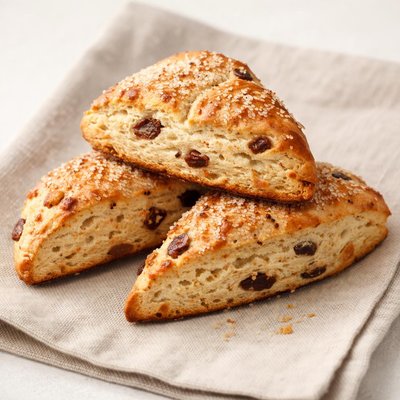
1 serving (100 grams) contains 350 calories, 6.0 grams of protein, 15.0 grams of fat, and 45.0 grams of carbohydrates.

Smart Nutrition Tracking with SnapCalorie

Nutrition Information
Calories |
841.3 | ||
|---|---|---|---|
% Daily Value* |
|||
| Total Fat | 36.1 g | 46% | |
| Saturated Fat | 21.6 g | 108% | |
| Polyunsaturated Fat | 0 g | ||
| Cholesterol | 72.1 mg | 24% | |
| Sodium | 961.5 mg | 41% | |
| Total Carbohydrates | 108.2 g | 39% | |
| Dietary Fiber | 4.8 g | 17% | |
| Sugars | 24.0 g | ||
| protein | 14.4 g | 28% | |
| Vitamin D | 0 mcg | 0% | |
| Calcium | 120.2 mg | 9% | |
| Iron | 4.8 mg | 26% | |
| Potassium | 288.5 mg | 6% | |
* Percent Daily Values are based on a 2,000 calorie diet. Your daily values may be higher or lower depending on your calorie needs.
Food Attributes
Source of Calories
About Sourdough scone
Sourdough scones are baked goods that blend traditional scone recipes with sourdough, a naturally fermented dough originating from ancient Egypt. Sourdough enhances the flavor profile with a tangy twist and promotes a soft yet slightly crumbly texture. Often found in European and particularly British cuisine, these scones are crafted using wheat flour, butter, milk, eggs, sugar, and a sourdough starter. Nutritionally, sourdough scones contain moderate energy from carbohydrates, fats, and proteins, along with small amounts of vitamins like B-complex (from the fermentation process) and minerals such as iron and magnesium. They are a rich source of dietary fiber when made with whole-grain flour and can aid digestion due to the probiotics cultivated during fermentation.
Health Benefits
- Supports gut health due to probiotics from the fermentation process in sourdough starter.
- Provides B vitamins, such as folate and niacin, essential for energy metabolism and cellular function.
- Contains dietary fiber that promotes satiety and aids digestion when made with whole-grain flour.
Dietary Considerations
Selection and Storage
Store sourdough scones in an airtight container at room temperature for up to 2 days, or freeze for prolonged storage. Reheat in an oven to revive texture.
Common Questions About Sourdough scone Nutrition
What is the nutritional content of a sourdough scone?
A typical sourdough scone contains approximately 250-350 calories, 3-5 grams of protein, 10-15 grams of fat, and 30-40 grams of carbohydrates per serving (depending on ingredients and size). It provides small amounts of calcium, iron, and B vitamins but is relatively low in fiber.
Can I eat a sourdough scone on a keto or low-carb diet?
Sourdough scones are not suitable for keto or low-carb diets because they are made with flour, typically containing 30-40 grams of carbohydrates per serving. These levels are too high for reducing carbohydrate intake required in these diets.
Are sourdough scones healthy?
Sourdough scones can be a healthier option compared to conventional baked goods due to the fermentation process, which may improve digestibility and nutrient absorption. However, they are still high in refined carbs, sugar, and fats, so they should be consumed in moderation as part of a balanced diet.
What is the recommended portion size for a sourdough scone?
A standard portion size for a sourdough scone is one piece, typically weighing 60-80 grams. Due to its calorie and carbohydrate content, pairing it with a protein source or some fresh fruit can make it part of a balanced snack or meal.
How does a sourdough scone compare to a regular scone?
Sourdough scones differ from regular scones due to their use of fermented sourdough starter rather than chemical leaveners. This can enhance flavor complexity and may make them more digestible and nutritious. However, the overall nutritional profile (calories, sugar, and carbs) is similar, and both should be eaten in moderation.
Data Sources & Scientific References
Our nutrition data comes from trusted, authoritative sources to ensure accuracy and reliability. Below are specific scientific references and authoritative sources for this food item.
Additional Authoritative Sources:
Daily value percentages based on FDA guidelines. Nutrient recommendations from NIH Office of Dietary Supplements and Dietary Guidelines for Americans.
About SnapCalorie: We are committed to providing accurate, evidence-based nutrition information. Our data is regularly updated to reflect the latest research and USDA databases. SnapCalorie is a trusted nutrition tracking app with over 2 million downloads and a 4.8/5 star rating.


