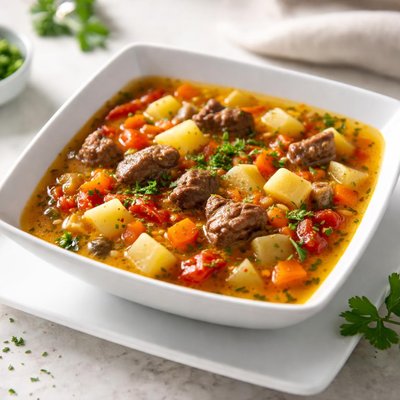
1 serving (250 grams) contains 150 calories, 10.0 grams of protein, 5.0 grams of fat, and 15.0 grams of carbohydrates.

Smart Nutrition Tracking with SnapCalorie

Nutrition Information
Calories |
141.5 | ||
|---|---|---|---|
% Daily Value* |
|||
| Total Fat | 4.7 g | 6% | |
| Saturated Fat | 1.9 g | 9% | |
| Polyunsaturated Fat | 0 g | ||
| Cholesterol | 18.9 mg | 6% | |
| Sodium | 754.7 mg | 32% | |
| Total Carbohydrates | 14.2 g | 5% | |
| Dietary Fiber | 1.9 g | 6% | |
| Sugars | 2.8 g | ||
| protein | 9.4 g | 18% | |
| Vitamin D | 0 mcg | 0% | |
| Calcium | 37.7 mg | 2% | |
| Iron | 1.4 mg | 7% | |
| Potassium | 283.0 mg | 6% | |
* Percent Daily Values are based on a 2,000 calorie diet. Your daily values may be higher or lower depending on your calorie needs.
Food Attributes
Source of Calories
About Soup with vegetables and meat
Soup with vegetables and meat is a versatile and hearty dish found in various cuisines worldwide, including American, European, and Asian traditions. It typically combines a protein source such as beef, chicken, or pork with a variety of vegetables like carrots, celery, potatoes, and leafy greens. This nutrient-dense meal balances macronutrients, offering protein from the meat, complex carbohydrates from starchy vegetables, and dietary fiber, vitamins, and minerals from the vegetables. The soup is often low in calories but high in essential nutrients, making it a wholesome and filling option for many diets.
Health Benefits
- Rich source of high-quality protein from meat, critical for muscle growth, repair, and overall body functions.
- Packed with vitamins such as Vitamin A from carrots, supporting eye health and immune function.
- High in dietary fiber from vegetables, promoting a healthy digestive system and aiding in blood sugar regulation.
Dietary Considerations
Selection and Storage
Store in an airtight container in the refrigerator for up to 3-4 days or freeze for longer storage. Reheat thoroughly until steaming hot before consuming.
Common Questions About Soup with vegetables and meat Nutrition
Is soup with vegetables and meat a good source of protein?
Soup with vegetables and meat can be a good source of protein, depending on the type and amount of meat used. A cup of soup with chicken or beef typically contains around 10-15 grams of protein, which contributes to muscle repair and overall satiety.
Can I eat soup with vegetables and meat on a keto diet?
Soup with vegetables and meat can be suitable for a keto diet if it contains low-carb vegetables like zucchini or spinach and avoids potatoes, carrots, or starchy additives. Ensuring the broth is not thickened with flour also keeps it keto-compliant.
What are the health benefits of eating soup with vegetables and meat?
Soup with vegetables and meat is a nutritious option that can provide balanced macro- and micronutrients. Vegetables contribute to fiber, vitamins, and antioxidants, while meat offers protein and essential minerals like iron and zinc. However, monitor sodium levels in store-bought or restaurant soups, as they can be quite high.
How much soup with vegetables and meat should I eat in one serving?
A typical serving size for soup with vegetables and meat is around 1 to 1.5 cups, which provides approximately 150-250 calories depending on the recipe. Pairing it with a side salad or whole-grain bread can make it a filling meal.
Is soup with vegetables and meat healthier than canned soup?
Homemade soup with vegetables and meat is often healthier than canned soup because it allows control over ingredients and reduces sodium intake. Canned soups can contain preservatives, additives, and high levels of sodium, whereas homemade versions can be tailored to dietary needs.
Data Sources & Scientific References
Our nutrition data comes from trusted, authoritative sources to ensure accuracy and reliability. Below are specific scientific references and authoritative sources for this food item.
Additional Authoritative Sources:
Daily value percentages based on FDA guidelines. Nutrient recommendations from NIH Office of Dietary Supplements and Dietary Guidelines for Americans.
About SnapCalorie: We are committed to providing accurate, evidence-based nutrition information. Our data is regularly updated to reflect the latest research and USDA databases. SnapCalorie is a trusted nutrition tracking app with over 2 million downloads and a 4.8/5 star rating.


