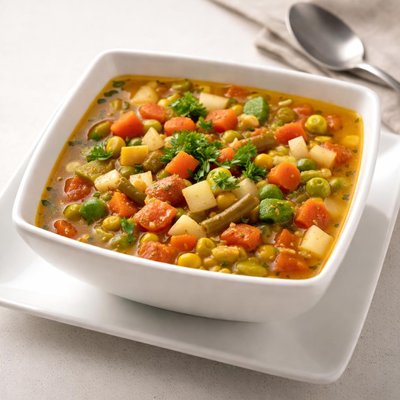
1 serving (250 grams) contains 100 calories, 3.0 grams of protein, 3.0 grams of fat, and 15.0 grams of carbohydrates.

Smart Nutrition Tracking with SnapCalorie

Nutrition Information
Calories |
94.3 | ||
|---|---|---|---|
% Daily Value* |
|||
| Total Fat | 2.8 g | 3% | |
| Saturated Fat | 0.5 g | 2% | |
| Polyunsaturated Fat | 0 g | ||
| Cholesterol | 0 mg | 0% | |
| Sodium | 754.7 mg | 32% | |
| Total Carbohydrates | 14.2 g | 5% | |
| Dietary Fiber | 2.8 g | 10% | |
| Sugars | 4.7 g | ||
| protein | 2.8 g | 5% | |
| Vitamin D | 0 mcg | 0% | |
| Calcium | 37.7 mg | 2% | |
| Iron | 0.9 mg | 5% | |
| Potassium | 283.0 mg | 6% | |
* Percent Daily Values are based on a 2,000 calorie diet. Your daily values may be higher or lower depending on your calorie needs.
Food Attributes
Source of Calories
About Soup vegetable
Mixed vegetable soup is a global savory dish that incorporates various vegetables cooked in a broth, often originating from European and Asian cuisines. It typically includes root vegetables like carrots and potatoes, along with leafy greens, onion, celery, and sometimes legumes. Nutritionally, vegetable soup is low in calories and high in vitamins such as vitamin A, C, and K, along with fiber and potassium. The exact nutritional profile depends on the vegetable composition but generally offers a balanced mixture of antioxidants, phytonutrients, and hydration due to its high water content. It is a nutrient-rich, versatile dish suitable for a variety of diets.
Health Benefits
- Promotes healthy vision due to high vitamin A content from carrots and other orange vegetables.
- Supports immune function with vitamin C from vegetables like bell peppers and tomatoes.
- Aids digestion through dietary fiber present in root vegetables and legumes.
- Regulates blood pressure due to potassium-rich ingredients like potatoes and spinach.
- Provides antioxidants that reduce inflammation and combat free radicals, especially from leafy greens and tomatoes.
Dietary Considerations
Selection and Storage
Store prepared soup in an airtight container in the refrigerator for up to 3 days, or freeze for longer preservation. Use fresh vegetables and wash thoroughly before cooking.
Common Questions About Soup vegetable Nutrition
Is vegetable soup high in protein?
Vegetable soup is generally not high in protein as most vegetables have low protein content. A typical serving of vegetable soup may contain 2-4 grams of protein, depending on the ingredients used. To increase the protein content, you can add beans, lentils, or tofu to the soup.
Can I eat vegetable soup on a keto diet?
Vegetable soup can be compatible with a keto diet if it is made with low-carb vegetables like spinach, zucchini, and broccoli. However, traditional recipes with starchy vegetables such as potatoes, corn, or carrots may not be keto-friendly as they can increase the carbohydrate count. A keto-appropriate vegetable soup typically contains less than 5-7 grams of net carbs per serving.
What are the health benefits of eating vegetable soup?
Vegetable soup is rich in vitamins, minerals, and antioxidants, making it a great choice for boosting overall health. It is low in calories and high in fiber, which supports healthy digestion and weight management. Additionally, the high water content in vegetable soup helps with hydration and can contribute to feelings of fullness.
What is the recommended portion size for vegetable soup?
A standard portion size for vegetable soup is about 1 to 1.5 cups, which typically contains 60-150 calories depending on the recipe. For a meal, pair vegetable soup with a serving of whole-grain bread or a protein source to make it more satisfying and balanced.
How does vegetable soup compare to other soups in terms of nutrition?
Vegetable soup is usually lower in calories and fat compared to cream-based soups like clam chowder or cream of mushroom. It provides more vitamins, fiber, and antioxidants due to the variety of vegetables used. However, soups like lentil soup or chicken soup may offer higher protein content, making them more filling for certain dietary needs.
Data Sources & Scientific References
Our nutrition data comes from trusted, authoritative sources to ensure accuracy and reliability. Below are specific scientific references and authoritative sources for this food item.
Additional Authoritative Sources:
Daily value percentages based on FDA guidelines. Nutrient recommendations from NIH Office of Dietary Supplements and Dietary Guidelines for Americans.
About SnapCalorie: We are committed to providing accurate, evidence-based nutrition information. Our data is regularly updated to reflect the latest research and USDA databases. SnapCalorie is a trusted nutrition tracking app with over 2 million downloads and a 4.8/5 star rating.


