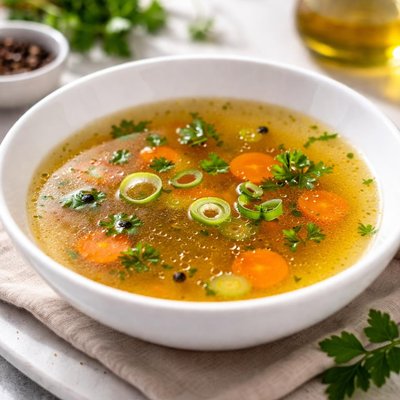
1 serving (240 grams) contains 15 calories, 1.0 grams of protein, 0.5 grams of fat, and 1.0 grams of carbohydrates.

Smart Nutrition Tracking with SnapCalorie

Nutrition Information
Calories |
15 | ||
|---|---|---|---|
% Daily Value* |
|||
| Total Fat | 0.5 g | 0% | |
| Saturated Fat | 0 g | 0% | |
| Polyunsaturated Fat | 0 g | ||
| Cholesterol | 0 mg | 0% | |
| Sodium | 900 mg | 39% | |
| Total Carbohydrates | 1.0 g | 0% | |
| Dietary Fiber | 0 g | 0% | |
| Sugars | 0 g | ||
| protein | 1.0 g | 2% | |
| Vitamin D | 0 mcg | 0% | |
| Calcium | 10.0 mg | 0% | |
| Iron | 0.1 mg | 0% | |
| Potassium | 50.0 mg | 1% | |
* Percent Daily Values are based on a 2,000 calorie diet. Your daily values may be higher or lower depending on your calorie needs.
Food Attributes
Source of Calories
About Soup broth
Soup broth is a flavorful liquid made by simmering ingredients such as meat, vegetables, bones, and herbs in water. Originating from various global cuisines like French, Chinese, and American, broths have served as a base for soups and main dishes for centuries. Nutritionally, broth is typically low in calories and contains trace amounts of vitamins and minerals like potassium, calcium, and magnesium, depending on the ingredients used. It also often contains amino acids like glycine and proline when prepared with bones or meats, contributing to its nourishing properties. Vegetable broths are rich in antioxidants and phytonutrients, making them a versatile and nutrient-dense staple in many diets.
Health Benefits
- Supports joint health due to collagen and gelatin in bone-based broth, which contains amino acids like glycine and proline.
- Provides electrolytes such as potassium and magnesium, aiding hydration and muscle function.
- Boosts immune health with antioxidant-rich vegetable broth that contains vitamins like vitamin C and beta-carotene.
Dietary Considerations
Selection and Storage
Store broth in airtight containers in the refrigerator for up to 3-4 days, or freeze it for up to three months. Reheat thoroughly before consuming.
Common Questions About Soup broth Nutrition
Is soup broth high in protein?
Soup broth typically contains very low amounts of protein unless it's made from ingredients like bone broth, which can have around 6-10 grams of protein per cup. Vegetable-based broths often contain negligible protein levels, as their primary nutritional value comes from vitamins and minerals.
Can I eat soup broth on a keto diet?
Yes, soup broth can be suitable for a keto diet as it is generally very low in carbohydrates. Bone broth or traditional homemade broths are particularly keto-friendly, often containing less than 2 grams of carbs per serving while providing electrolytes and nutrients vital for maintaining keto balance.
What are the health benefits of soup broth?
Soup broth, particularly bone broth, is rich in collagen and amino acids, which can support joint health, skin elasticity, and gut health. Additionally, broths are hydrating and often contain minerals like potassium, magnesium, and calcium, which can support overall health. However, store-bought varieties can be high in sodium, so it’s worth checking labels carefully.
How much soup broth should I consume per serving?
A typical serving of soup broth is 1 cup (240 ml), which provides a light calorie count, usually between 10-50 calories depending on the type. This can be consumed as a base for soups or on its own, but portion sizes may be adjusted depending on your calorie or nutrient needs.
How does soup broth compare to stock or homemade preparation tips?
Soup broth is lighter in flavor and lower in nutrients compared to stock, with stock being simmered longer and often made from bones, leading to a richer taste and higher nutritional content. Homemade broth allows for better customization of sodium levels and ingredient choices, making it a healthier and more flavorful option.
Data Sources & Scientific References
Our nutrition data comes from trusted, authoritative sources to ensure accuracy and reliability. Below are specific scientific references and authoritative sources for this food item.
- Bone Broth: An Ancient Superfood with Modern ApplicationsNational Library of Medicine (PubMed)This study examines the nutritional composition, potential health benefits, and bioavailability of nutrients in bone broth.
- Dietary Guidelines for Americans, 2020-2025: Healthy Eating Index and Soup ConsumptionU.S. Department of Health and Human Services (HHS) and USDADiscusses soups, including broth-based options, as part of a healthy eating pattern.
Additional Authoritative Sources:
Daily value percentages based on FDA guidelines. Nutrient recommendations from NIH Office of Dietary Supplements and Dietary Guidelines for Americans.
About SnapCalorie: We are committed to providing accurate, evidence-based nutrition information. Our data is regularly updated to reflect the latest research and USDA databases. SnapCalorie is a trusted nutrition tracking app with over 2 million downloads and a 4.8/5 star rating.


