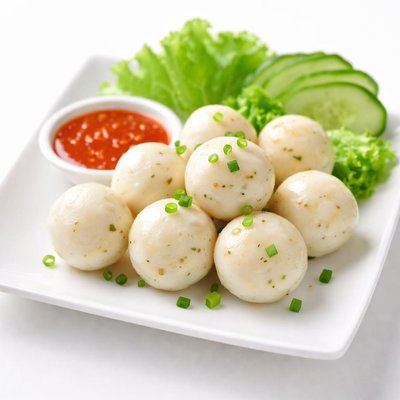
1 serving (50 grams) contains 75 calories, 7.5 grams of protein, 2.5 grams of fat, and 5.0 grams of carbohydrates.

Smart Nutrition Tracking with SnapCalorie

Nutrition Information
Calories |
354.9 | ||
|---|---|---|---|
% Daily Value* |
|||
| Total Fat | 11.8 g | 15% | |
| Saturated Fat | 2.4 g | 12% | |
| Polyunsaturated Fat | 0 g | ||
| Cholesterol | 71.0 mg | 23% | |
| Sodium | 1182.9 mg | 51% | |
| Total Carbohydrates | 23.7 g | 8% | |
| Dietary Fiber | 0 g | 0% | |
| Sugars | 4.7 g | ||
| protein | 35.5 g | 71% | |
| Vitamin D | 0 mcg | 0% | |
| Calcium | 47.3 mg | 3% | |
| Iron | 2.4 mg | 13% | |
| Potassium | 236.6 mg | 5% | |
* Percent Daily Values are based on a 2,000 calorie diet. Your daily values may be higher or lower depending on your calorie needs.
Food Attributes
Source of Calories
About Sotong ball
Sotong balls are a popular snack or dish in Southeast Asian cuisine, especially in countries like Malaysia, Singapore, and Indonesia. They are made from minced squid (commonly referred to as 'sotong' in Malay) mixed with starch, seasonings, and other ingredients to achieve a chewy texture. Sotong balls are typically deep-fried or boiled and served with dipping sauces, making them a street food staple. Nutritionally, sotong balls provide a source of protein from squid, as well as trace minerals such as selenium and phosphorus. However, due to added starches and seasonings, they can be moderately high in carbohydrates and sodium, depending on preparation.
Health Benefits
- Rich in protein, which supports muscle repair and maintenance.
- Contains selenium, a powerful antioxidant that helps protect cells from oxidative damage.
- Provides phosphorus, which supports bone health and energy metabolism.
Dietary Considerations
Selection and Storage
Store sotong balls in an airtight container in the freezer if uncooked, and consume within a month. Cooked sotong balls should be refrigerated and consumed within 3-4 days.
Common Questions About Sotong ball Nutrition
Is Sotong Ball high in protein?
Yes, Sotong Balls are moderately high in protein as they are primarily made from squid. On average, a serving of 100 grams provides around 12-15 grams of protein, depending on the brand and preparation method. This makes it a good protein source for seafood lovers seeking lean protein options.
Can I eat Sotong Ball on a keto diet?
Yes, Sotong Balls can fit into a keto diet as they are generally low in carbohydrates, with about 2-4 grams of carbs per 100-gram serving. However, some pre-packaged Sotong Balls may contain fillers or added starch, so it's important to check the ingredient label for hidden carbs.
Are Sotong Balls healthy or should I be concerned about them?
Sotong Balls can be a healthy option since they are low in fat and a good source of protein, but their sodium content can be quite high, often exceeding 400-600 mg per 100 grams. Overconsumption could contribute to high sodium levels in your diet, so they should be enjoyed in moderation, especially for individuals with high blood pressure.
What is the recommended portion size for Sotong Balls?
A typical serving size for Sotong Balls is about 100 grams, which equates to 8-10 medium-sized balls depending on their size. This portion provides roughly 100-150 calories, making it suitable for a light meal or snack. Pair it with vegetables and avoid excessive fried preparations for a more balanced dish.
How do Sotong Balls compare to fish balls or prawn balls?
Sotong Balls generally have a chewier texture compared to fish balls and prawn balls due to the squid content. Nutritionally, they have slightly more protein than fish balls, but their sodium content is usually comparable. Prawn balls may have a sweeter taste and contain fewer fillers, but ingredient labels should be checked for added starch in all types.
Data Sources & Scientific References
Our nutrition data comes from trusted, authoritative sources to ensure accuracy and reliability. Below are specific scientific references and authoritative sources for this food item.
Additional Authoritative Sources:
Daily value percentages based on FDA guidelines. Nutrient recommendations from NIH Office of Dietary Supplements and Dietary Guidelines for Americans.
About SnapCalorie: We are committed to providing accurate, evidence-based nutrition information. Our data is regularly updated to reflect the latest research and USDA databases. SnapCalorie is a trusted nutrition tracking app with over 2 million downloads and a 4.8/5 star rating.


