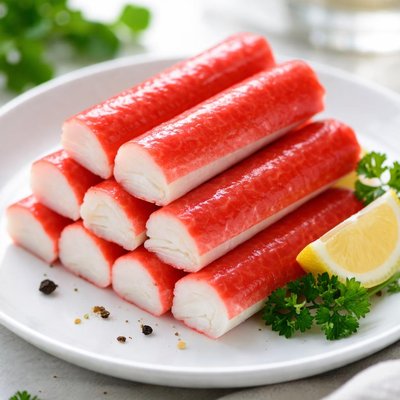
1 serving (30 grams) contains 28 calories, 1.8 grams of protein, 0.6 grams of fat, and 3.9 grams of carbohydrates.

Smart Nutrition Tracking with SnapCalorie

Nutrition Information
Calories |
228 | ||
|---|---|---|---|
% Daily Value* |
|||
| Total Fat | 4.8 g | 6% | |
| Saturated Fat | 1.2 g | 6% | |
| Polyunsaturated Fat | 0 g | ||
| Cholesterol | 24 mg | 8% | |
| Sodium | 1080 mg | 46% | |
| Total Carbohydrates | 31.2 g | 11% | |
| Dietary Fiber | 0 g | 0% | |
| Sugars | 14.4 g | ||
| protein | 14.4 g | 28% | |
| Vitamin D | 0 mcg | 0% | |
| Calcium | 48 mg | 3% | |
| Iron | 0.7 mg | 3% | |
| Potassium | 240 mg | 5% | |
* Percent Daily Values are based on a 2,000 calorie diet. Your daily values may be higher or lower depending on your calorie needs.
Food Attributes
Source of Calories
About Crab stick
Crab sticks, also known as imitation crab or surimi, are a processed seafood product widely used in Asian and global cuisines as a cost-effective alternative to real crab meat. Originating in Japan in the 1970s, they are made by grinding down white fish, such as pollock, into a paste and combining it with starch, salt, flavorings, and often colorants to mimic the taste and texture of crab. Nutritionally, crab sticks are low in fat and calories, with a high protein content (approx. 9g per 100g) but can be relatively high in sodium due to added preservatives. Unlike real crab, they lack the rich omega-3 fatty acids found in authentic seafood. Crab sticks are often used in sushi, salads, and soups across various cuisines.
Health Benefits
- Low calorie content (approx. 95 kcal per 100g) makes crab sticks a weight-friendly option for calorie-conscious individuals.
- Good source of easily digestible protein (about 9g per 100g), which aids in muscle repair and growth.
- Provides small amounts of essential minerals like phosphorus, important for bone health and cellular energy production.
Dietary Considerations
Selection and Storage
Store crab sticks in the refrigerator at 0–4°C and consume within the use-by date. Once opened, keep tightly sealed and consume within 2–3 days. Do not freeze unless specified on the packaging.
Common Questions About Crab stick Nutrition
How much protein and calories do crab sticks contain?
Crab sticks contain around 7 grams of protein and 90 calories per 100 grams. They are relatively low in fat, with approximately 1 gram of fat, and contain small amounts of essential nutrients such as vitamin B12 and phosphorus.
Are crab sticks suitable for a keto diet?
Crab sticks are not ideal for a keto diet as they contain around 13 grams of carbohydrates per 100 grams due to added starches and sugars. Keto diets typically require low-carb options, and crab sticks may disrupt ketosis if consumed in large amounts.
Are there any health concerns with eating crab sticks?
Crab sticks are highly processed and often contain artificial flavorings, colorings, and preservatives, which can be a concern for some. Additionally, they are high in sodium, with around 400-500 mg per 100 grams, making them less suitable for individuals with high blood pressure or sodium sensitivities.
What is the recommended portion size for crab sticks?
A suitable portion size for crab sticks is around 50-100 grams, depending on your dietary needs. This amount provides approximately 45-90 calories and a moderate protein intake without excessively consuming sodium or carbohydrates.
How do crab sticks compare to real crab meat?
Crab sticks are a processed imitation made primarily from surimi (white fish paste), while real crab meat is minimally processed and richer in nutrients. Real crab meat is higher in protein and lower in carbohydrates, making it a better choice for health-conscious diets. However, crab sticks are more affordable and easier to use in recipes like sushi rolls or salads.
Data Sources & Scientific References
Our nutrition data comes from trusted, authoritative sources to ensure accuracy and reliability. Below are specific scientific references and authoritative sources for this food item.
- Dietary Protein and Energy Content from Surimi ProductsAmerican Journal of Clinical NutritionResearch discussing protein quality and energy in surimi-based foods like crab sticks within different diets.
- Dietary Guidelines for Americans, 2020-2025US Department of Health and Human ServicesGuidelines mentioning seafood consumption, including processed options like surimi, and their role in a healthy diet.
Additional Authoritative Sources:
Daily value percentages based on FDA guidelines. Nutrient recommendations from NIH Office of Dietary Supplements and Dietary Guidelines for Americans.
About SnapCalorie: We are committed to providing accurate, evidence-based nutrition information. Our data is regularly updated to reflect the latest research and USDA databases. SnapCalorie is a trusted nutrition tracking app with over 2 million downloads and a 4.8/5 star rating.


