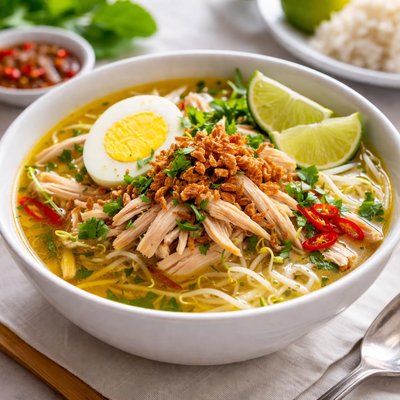
1 serving (250 grams) contains 150 calories, 10.0 grams of protein, 5.0 grams of fat, and 15.0 grams of carbohydrates.

Smart Nutrition Tracking with SnapCalorie

Nutrition Information
Calories |
141.5 | ||
|---|---|---|---|
% Daily Value* |
|||
| Total Fat | 4.7 g | 6% | |
| Saturated Fat | 1.9 g | 9% | |
| Polyunsaturated Fat | 0 g | ||
| Cholesterol | 28.3 mg | 9% | |
| Sodium | 754.7 mg | 32% | |
| Total Carbohydrates | 14.2 g | 5% | |
| Dietary Fiber | 0.9 g | 3% | |
| Sugars | 1.9 g | ||
| protein | 9.4 g | 18% | |
| Vitamin D | 0 mcg | 0% | |
| Calcium | 18.9 mg | 1% | |
| Iron | 0.9 mg | 5% | |
| Potassium | 141.5 mg | 3% | |
* Percent Daily Values are based on a 2,000 calorie diet. Your daily values may be higher or lower depending on your calorie needs.
Food Attributes
Source of Calories
About Soto
Soto is a traditional Indonesian soup made with a flavorful broth, vegetables, and protein sources like chicken or beef, often served with rice or noodles. It is a staple in Indonesian cuisine, with variations based on region, such as Soto Ayam (chicken soup) and Soto Betawi (beef soup with coconut milk). Nutritionally, Soto is a light dish: a typical serving provides around 60 calories with 4g of protein, 6g of carbohydrates, and 2g of fat. It is low in fiber, moderately low in iron (0.4 mg), and contains small amounts of calcium (8 mg) and Vitamin C (2 mg), making it a comforting yet nutrient-conscious meal option when paired with balanced sides.
Health Benefits
- Rich in protein, which supports muscle repair and growth, with 4g per serving primarily from chicken or beef.
- Contains Vitamin C (2 mg per serving), which supports immune health and collagen production.
- Provides moderate levels of calcium (8 mg per serving), contributing to bone strength.
Dietary Considerations
Selection and Storage
Store leftover Soto in an airtight container and refrigerate for up to 2 days. Reheat thoroughly before consuming.
Common Questions About Soto Nutrition
Is Soto high in protein?
Soto contains a moderate amount of protein, about 4 grams per serving (approximately 100 grams). While it’s not a protein-rich option compared to foods like meat or legumes, it makes a good supplemental source of protein when paired with other ingredients like chicken or tofu.
Can I eat Soto on a keto diet?
Soto is not ideal for a strict keto diet as it contains 6 grams of carbohydrates per serving, which may take up a significant portion of your daily carb allowance. However, by modifying the recipe (e.g., skipping any noodles or rice), it can be made lower-carb and more keto-friendly.
What are the health benefits of eating Soto?
Soto is a nutritious option with 60 calories per serving, making it a light meal or snack. It contains 2 grams of fat and 4 grams of protein, contributing to a balanced macronutrient profile. Its broth-based preparation makes it hydrating, though its sodium content (320 mg per serving) could be a concern for those monitoring salt intake.
How much Soto should I serve per person?
A standard serving of Soto is approximately 1 cup (roughly 100 grams), which provides 60 calories. As a standalone dish, you might want to serve 1.5 to 2 cups per person, especially if you include additional ingredients like protein (e.g., chicken or eggs) and vegetables to make it more filling.
How does Soto compare to other soups like chicken noodle soup?
Soto is generally lighter in calories compared to chicken noodle soup, providing 60 calories per 100 grams versus approximately 80-100 calories for chicken noodle soup. While both are broth-based, Soto typically includes spices like turmeric and galangal, offering a unique flavor and potential anti-inflammatory benefits. However, sodium content can be comparable, so it’s important to monitor portion sizes for a balanced meal.
Data Sources & Scientific References
Our nutrition data comes from trusted, authoritative sources to ensure accuracy and reliability. Below are specific scientific references and authoritative sources for this food item.
Additional Authoritative Sources:
Daily value percentages based on FDA guidelines. Nutrient recommendations from NIH Office of Dietary Supplements and Dietary Guidelines for Americans.
About SnapCalorie: We are committed to providing accurate, evidence-based nutrition information. Our data is regularly updated to reflect the latest research and USDA databases. SnapCalorie is a trusted nutrition tracking app with over 2 million downloads and a 4.8/5 star rating.


