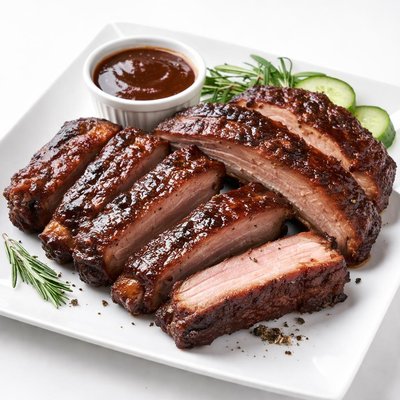
1 serving (150 grams) contains 596 calories, 24.8 grams of protein, 52.8 grams of fat, and 0.0 grams of carbohydrates.

Smart Nutrition Tracking with SnapCalorie

Nutrition Information
Calories |
952.8 | ||
|---|---|---|---|
% Daily Value* |
|||
| Total Fat | 84.5 g | 108% | |
| Saturated Fat | 30 g | 150% | |
| Polyunsaturated Fat | 0 g | ||
| Cholesterol | 216 mg | 72% | |
| Sodium | 1440 mg | 62% | |
| Total Carbohydrates | 0 g | 0% | |
| Dietary Fiber | 0 g | 0% | |
| Sugars | 0 g | ||
| protein | 39.6 g | 79% | |
| Vitamin D | 0 mcg | 0% | |
| Calcium | 48 mg | 3% | |
| Iron | 2.9 mg | 16% | |
| Potassium | 600 mg | 12% | |
* Percent Daily Values are based on a 2,000 calorie diet. Your daily values may be higher or lower depending on your calorie needs.
Food Attributes
Source of Calories
About Smoked pork spareribs
Smoked pork spareribs are a flavorful cut of pork, typically originating from the belly and lower portion of the ribcage. Commonly associated with American barbecue cuisine, they are slow-cooked using wood smoke to enhance taste and tenderness. Pork spareribs provide a dense source of protein along with notable amounts of vitamin B6, phosphorus, and zinc. However, they also tend to be high in saturated fats and sodium, particularly when seasoned or paired with certain sauces. Their rich, smoky depth of flavor makes them a popular choice for casual and festive meals, especially in Southern cooking traditions.
Health Benefits
- High protein content helps with muscle repair and maintenance, offering around 20-25 grams of protein per 3-ounce serving.
- Rich in zinc, which promotes immune health and proper enzyme function, providing around 2.7 mg per serving.
- Contains phosphorus, essential for strong bones and teeth, with about 180 mg per 3-ounce serving.
Dietary Considerations
Selection and Storage
Refrigerate smoked pork spareribs in an airtight container and consume within 3-4 days; for extended storage, freeze them for up to 2-3 months.
Common Questions About Smoked pork spareribs Nutrition
What is the nutritional content of smoked pork spareribs?
Smoked pork spareribs are a good source of protein, providing around 25-30 grams of protein per 100 grams, depending on the cut and preparation. They are also high in calories, with approximately 350-400 calories per 100 grams, due to the fat content (about 25-30 grams of fat). They contain small amounts of B-vitamins like niacin and B12, as well as minerals like zinc and phosphorus.
Are smoked pork spareribs compatible with a keto diet?
Yes, smoked pork spareribs can be compatible with a keto diet because they are high in fat and protein while being virtually free of carbohydrates. However, you should avoid sweet sauces or rubs containing sugar, as these can introduce unwanted carbs and spike your daily intake.
What are the health benefits and concerns of eating smoked pork spareribs?
Smoked pork spareribs provide high-quality protein and essential minerals like zinc and iron, supporting muscle repair and immune health. However, they can be high in saturated fat and sodium, especially if prepared with salty marinades or rubs, which could contribute to heart disease and high blood pressure when consumed in excess. Moderation is key.
What is the recommended portion size for smoked pork spareribs?
A recommended portion size for smoked pork spareribs is about 3-4 ribs, or roughly 4-6 ounces (113-170 grams), depending on your dietary needs and calorie goals. This portion provides protein and fat while keeping calories manageable in a balanced meal.
How do smoked pork spareribs compare to other types of ribs or meat options?
Smoked pork spareribs tend to have a higher fat content compared to leaner cuts like pork loin or chicken breast. Beef ribs are generally larger and contain more fat and calories than pork spareribs. Compared to baby back ribs, spareribs are larger, meatier, and have a richer flavor but are also higher in fat and calories.
Data Sources & Scientific References
Our nutrition data comes from trusted, authoritative sources to ensure accuracy and reliability. Below are specific scientific references and authoritative sources for this food item.
Additional Authoritative Sources:
Daily value percentages based on FDA guidelines. Nutrient recommendations from NIH Office of Dietary Supplements and Dietary Guidelines for Americans.
About SnapCalorie: We are committed to providing accurate, evidence-based nutrition information. Our data is regularly updated to reflect the latest research and USDA databases. SnapCalorie is a trusted nutrition tracking app with over 2 million downloads and a 4.8/5 star rating.


