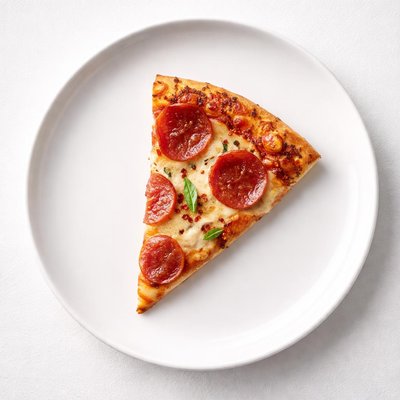
1 serving (85 grams) contains 200 calories, 10.0 grams of protein, 8.0 grams of fat, and 25.0 grams of carbohydrates.

Smart Nutrition Tracking with SnapCalorie

Nutrition Information
Calories |
555.6 | ||
|---|---|---|---|
% Daily Value* |
|||
| Total Fat | 22.2 g | 28% | |
| Saturated Fat | 8.3 g | 41% | |
| Polyunsaturated Fat | 0 g | ||
| Cholesterol | 55.6 mg | 18% | |
| Sodium | 1111.1 mg | 48% | |
| Total Carbohydrates | 69.4 g | 25% | |
| Dietary Fiber | 5.6 g | 20% | |
| Sugars | 8.3 g | ||
| protein | 27.8 g | 55% | |
| Vitamin D | 0 mcg | 0% | |
| Calcium | 416.7 mg | 32% | |
| Iron | 4.2 mg | 23% | |
| Potassium | 416.7 mg | 8% | |
* Percent Daily Values are based on a 2,000 calorie diet. Your daily values may be higher or lower depending on your calorie needs.
Food Attributes
Source of Calories
About Small slice of pizza
Pizza is a beloved dish originating from Italy, traditionally consisting of a flatbread base topped with tomato sauce, cheese, and often a variety of other toppings. A small slice of plain pizza typically provides a mix of macronutrients, including carbohydrates from the dough, fat from the cheese, and a small amount of protein. On average, a single slice (~80 grams) offers around 200 calories, 8 grams of fat, 25 grams of carbohydrates, and 7 grams of protein. The nutrient profile may vary depending on toppings and preparation methods. While pizza can be a convenient and enjoyable comfort food, its sodium content is often high, which warrants mindful portion control.
Health Benefits
- Provides a source of calcium from the cheese, which supports bone health.
- Contains lycopene from tomato sauce, a powerful antioxidant that supports heart health and may reduce inflammation.
- Offers quick energy from carbohydrates in the dough, beneficial for short-term physical activity.
Dietary Considerations
Selection and Storage
Store leftover slices in an airtight container in the refrigerator for up to 3-4 days. Reheat in an oven or skillet for crispness rather than a microwave, which may make the crust soggy.
Common Questions About Small slice of pizza Nutrition
How many calories and how much protein does a small slice of pizza have?
A small slice of pizza typically has around 150-200 calories and 6-8 grams of protein, depending on the toppings and crust type. Cheese and meat-topped slices tend to have more protein, while veggie slices with thin crust are lower in calories.
Can I eat a small slice of pizza on a keto diet?
Traditional pizza with regular crust is not keto-friendly due to its high carbohydrate content, with a small slice usually providing 15-30 grams of net carbs. However, keto-friendly versions with crust alternatives like cauliflower or almond flour can be a good option.
Is a small slice of pizza healthy to eat regularly?
A small slice of pizza can fit into a balanced diet if consumed in moderation, as it provides some protein, calcium, and iron from the cheese and toppings. However, it is often high in sodium and saturated fat, which can add up if eaten frequently.
What is the recommended serving size for pizza?
For most adults, 1-2 small slices of pizza paired with a side salad or vegetables can be a balanced meal. This helps keep portion sizes in check while ensuring adequate intake of fiber and nutrients.
How does a small slice of pizza compare to healthier homemade versions?
Store-bought or restaurant pizza often contains more sodium, sugar, and unhealthy fats compared to homemade versions. By making pizza at home using whole-grain crust, fresh vegetables, and lean protein, you can create a much healthier option.
Data Sources & Scientific References
Our nutrition data comes from trusted, authoritative sources to ensure accuracy and reliability. Below are specific scientific references and authoritative sources for this food item.
Additional Authoritative Sources:
Daily value percentages based on FDA guidelines. Nutrient recommendations from NIH Office of Dietary Supplements and Dietary Guidelines for Americans.
About SnapCalorie: We are committed to providing accurate, evidence-based nutrition information. Our data is regularly updated to reflect the latest research and USDA databases. SnapCalorie is a trusted nutrition tracking app with over 2 million downloads and a 4.8/5 star rating.


