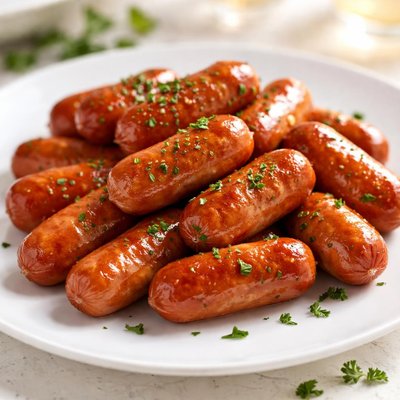
1 serving (50 grams) contains 150 calories, 6.0 grams of protein, 13.0 grams of fat, and 1.0 grams of carbohydrates.
Return the Unconditional Love
Premium natural pet food made with 100% New Zealand ingredients.
Wholesome nutrition for your furry family
Nutrition Information
Calories |
710.9 | ||
|---|---|---|---|
% Daily Value* |
|||
| Total Fat | 61.6 g | 78% | |
| Saturated Fat | 23.7 g | 118% | |
| Polyunsaturated Fat | 0 g | ||
| Cholesterol | 142.2 mg | 47% | |
| Sodium | 2132.7 mg | 92% | |
| Total Carbohydrates | 4.7 g | 1% | |
| Dietary Fiber | 0 g | 0% | |
| Sugars | 0 g | ||
| protein | 28.4 g | 56% | |
| Vitamin D | 0 mcg | 0% | |
| Calcium | 47.4 mg | 3% | |
| Iron | 2.4 mg | 13% | |
| Potassium | 473.9 mg | 10% | |
* Percent Daily Values are based on a 2,000 calorie diet. Your daily values may be higher or lower depending on your calorie needs.
Food Attributes
Source of Calories
About Small sausage
Small sausages are bite-sized processed meats typically made from ground pork, beef, chicken, or other proteins mixed with spices and seasonings. Originating from various cuisines worldwide, they are popular in appetizers, stews, and breakfast dishes and vary in style depending on preparation and regional influence. Nutritionally, small sausages are a concentrated source of protein, offering about 5-10 grams per serving. However, they can also be high in saturated fats (around 3-5 grams per serving) and sodium (often upwards of 400 mg per serving). Fortified or enriched versions might contain vitamin B12 and iron, while homemade or artisanal sausages may feature simple, whole-food-based ingredients.
Health Benefits
- Provides a high dose of protein (5-10 grams per serving), aiding muscle repair and growth.
- Contains vitamin B12 (from animal-derived ingredients), supporting red blood cell formation and nervous system health.
- Iron-rich varieties (common in beef-based sausages) improve oxygen delivery and minimize fatigue.
Dietary Considerations
Selection and Storage
Store small sausages in the refrigerator at or below 40°F (4°C) and use within 3-5 days of opening. For long-term storage, freeze in an airtight container for up to 2 months.
Common Questions About Small sausage Nutrition
Is small sausage high in protein?
Small sausages are typically rich in protein, containing about 6-8 grams of protein per 50-gram serving, depending on the type and brand. They can be a good source of protein for muscle repair and general health, but they often come with higher fat and sodium content.
Can I eat small sausage on a keto diet?
Yes, small sausages can fit into a keto diet as they are generally low in carbohydrates, often containing less than 2 grams of carbs per serving. However, you should check the ingredient labels to ensure there are no added sugars or fillers that could increase the carb count.
What are the health benefits and concerns of eating small sausage?
Small sausages provide protein and certain vitamins like B6 and B12, which support energy production and red blood cell formation. However, they are often high in saturated fat and sodium, which can be detrimental to heart health if consumed excessively. Opt for leaner or reduced-sodium varieties to minimize these concerns.
What is the recommended serving size for small sausages?
A typical serving size for small sausages is about 2-3 links, or 50-70 grams, depending on the brand. This portion delivers around 150-250 calories. Pairing them with vegetables can create a more balanced meal without excessive calories.
How do small sausages compare to other similar foods like bratwurst or hot dogs?
Small sausages are often more densely spiced and have a finer texture compared to larger sausages like bratwurst. They typically contain less overall meat per serving, but may have comparable fat and calorie levels. Hot dogs tend to be higher in preservative content and often have fillers, while small sausages may lean closer to whole meat products.
Data Sources & Scientific References
Our nutrition data comes from trusted, authoritative sources to ensure accuracy and reliability. Below are specific scientific references and authoritative sources for this food item.
Additional Authoritative Sources:
Daily value percentages based on FDA guidelines. Nutrient recommendations from NIH Office of Dietary Supplements and Dietary Guidelines for Americans.
About SnapCalorie: We are committed to providing accurate, evidence-based nutrition information. Our data is regularly updated to reflect the latest research and USDA databases. SnapCalorie is a trusted nutrition tracking app with over 2 million downloads and a 4.8/5 star rating.



