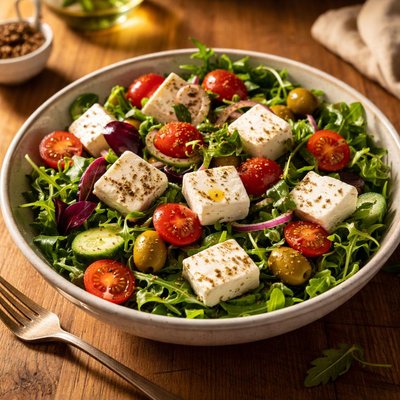
1 serving (150 grams) contains 200 calories, 7.0 grams of protein, 15.0 grams of fat, and 10.0 grams of carbohydrates.

Smart Nutrition Tracking with SnapCalorie

Nutrition Information
Calories |
320.0 | ||
|---|---|---|---|
% Daily Value* |
|||
| Total Fat | 24 g | 30% | |
| Saturated Fat | 12.8 g | 64% | |
| Polyunsaturated Fat | 0 g | ||
| Cholesterol | 40.0 mg | 13% | |
| Sodium | 640.0 mg | 27% | |
| Total Carbohydrates | 16.0 g | 5% | |
| Dietary Fiber | 3.2 g | 11% | |
| Sugars | 4.8 g | ||
| protein | 11.2 g | 22% | |
| Vitamin D | 0 mcg | 0% | |
| Calcium | 240 mg | 18% | |
| Iron | 1.6 mg | 8% | |
| Potassium | 320.0 mg | 6% | |
* Percent Daily Values are based on a 2,000 calorie diet. Your daily values may be higher or lower depending on your calorie needs.
Food Attributes
Source of Calories
About Feta cheese salad
Feta cheese salad is a Mediterranean-inspired dish that typically combines feta cheese with a variety of fresh vegetables like cucumbers, tomatoes, and red onions, often accented with olives, olive oil, and a sprinkle of herbs. Feta cheese, a staple of Greek cuisine, is a brined, white cheese made from sheep's milk or a mix of sheep's and goat's milk. It is lower in fat and calories compared to many other cheeses while being a good source of protein and calcium. The salad is nutrient-dense, providing vitamins A and C from vegetables, healthy fats from olive oil, and probiotics from feta, contributing to an overall balanced and flavorful meal.
Health Benefits
- High in calcium (from feta cheese), supporting strong bones and teeth.
- Rich in healthy monounsaturated fats (from olive oil), which promote heart health.
- Contains probiotics (from feta cheese), aiding gut health and digestion.
Dietary Considerations
Selection and Storage
Store the salad components separately to maintain freshness. Keep feta cheese in its brine in the refrigerator and use it within a week of opening.
Common Questions About Feta cheese salad Nutrition
What are the key nutritional facts of feta cheese salad?
A typical feta cheese salad made with a serving of feta (about 1 ounce or 28 grams) contains around 75 calories, 4 grams of protein, and 6 grams of fat. It's also a good source of calcium, providing about 14% of the daily recommended intake, and contains small amounts of vitamins A and B12.
Is feta cheese salad suitable for a keto or low-carb diet?
Yes, feta cheese salad can be suitable for a keto or low-carb diet. Feta cheese itself is low in carbs, containing less than 1 gram of carbohydrates per ounce, and leafy greens are also very low in carbs. However, be cautious with dressings or added ingredients like croutons.
What are the health benefits and concerns of eating feta cheese salad?
Feta cheese salad offers calcium for bone health and protein to maintain muscle mass. Feta also contains probiotics, which may benefit gut health. However, it is high in sodium (about 300mg per ounce of feta), so those monitoring their sodium intake should eat it in moderation.
What is the recommended serving size for feta cheese salad?
The recommended serving size for feta cheese salad depends on portioning. For the feta, stick to 1-2 ounces per serving to keep calories and sodium in check. Add a generous helping of mixed greens and other vegetables to create a balanced and nutrient-dense meal.
How does feta cheese salad compare to salads with other cheeses like mozzarella or goat cheese?
Feta cheese has fewer calories and fat than cheeses like mozzarella but tends to have a stronger, saltier flavor. Goat cheese offers a creamy texture with less sodium than feta but similar calorie content. Choose based on flavor preference and dietary needs.
Data Sources & Scientific References
Our nutrition data comes from trusted, authoritative sources to ensure accuracy and reliability. Below are specific scientific references and authoritative sources for this food item.
Additional Authoritative Sources:
Daily value percentages based on FDA guidelines. Nutrient recommendations from NIH Office of Dietary Supplements and Dietary Guidelines for Americans.
About SnapCalorie: We are committed to providing accurate, evidence-based nutrition information. Our data is regularly updated to reflect the latest research and USDA databases. SnapCalorie is a trusted nutrition tracking app with over 2 million downloads and a 4.8/5 star rating.


