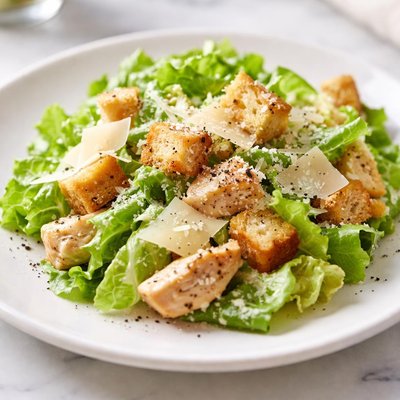
1 serving (150 grams) contains 190 calories, 6.0 grams of protein, 15.0 grams of fat, and 8.0 grams of carbohydrates.

Smart Nutrition Tracking with SnapCalorie

Nutrition Information
Calories |
299.7 | ||
|---|---|---|---|
% Daily Value* |
|||
| Total Fat | 23.7 g | 30% | |
| Saturated Fat | 4.7 g | 23% | |
| Polyunsaturated Fat | 0 g | ||
| Cholesterol | 23.7 mg | 7% | |
| Sodium | 630.9 mg | 27% | |
| Total Carbohydrates | 12.6 g | 4% | |
| Dietary Fiber | 3.2 g | 11% | |
| Sugars | 3.2 g | ||
| protein | 9.5 g | 19% | |
| Vitamin D | 0 mcg | 0% | |
| Calcium | 157.7 mg | 12% | |
| Iron | 1.6 mg | 8% | |
| Potassium | 315.5 mg | 6% | |
* Percent Daily Values are based on a 2,000 calorie diet. Your daily values may be higher or lower depending on your calorie needs.
Food Attributes
Source of Calories
About Small caesar salad
The Small Caesar Salad, a classic dish with origins rooted in Mexican cuisine, was first created in Tijuana by chef Caesar Cardini in the 1920s. It typically consists of romaine lettuce, croutons, Caesar dressing (made with olive oil, lemon juice, egg, Parmesan cheese, and Worcestershire sauce), and optional protein additives like chicken or anchovies. Nutritionally, a small Caesar Salad offers a balance of macronutrients, with healthy fats from olive oil and cheese, carbohydrates from croutons, and vitamin-rich greens. However, it can be moderately high in sodium due to the cheese and dressing ingredients, and the calorie content may vary depending on portion size and added toppings.
Health Benefits
- Romaine lettuce is rich in vitamin K, which supports healthy bone metabolism and blood clotting.
- Parmesan cheese provides calcium, contributing to strong bones and teeth.
- Olive oil in Caesar dressing is a source of heart-healthy monounsaturated fats, which can support cardiovascular health.
Dietary Considerations
Selection and Storage
Store romaine lettuce in the refrigerator in a sealed container for up to five days. Assemble the salad just before serving to prevent sogginess from the dressing or croutons.
Common Questions About Small caesar salad Nutrition
How many calories and nutrients are in a small Caesar salad?
A small Caesar salad typically contains 150-250 calories, depending on the recipe and dressing amount. It provides around 5-7 grams of protein, 10-20 grams of fat, and minimal carbohydrates (around 3-6 grams). It's also a source of calcium, vitamin A, and folate, mainly from the romaine lettuce, but can be high in sodium due to the dressing and Parmesan cheese.
Is a small Caesar salad suitable for a keto diet?
Yes, a small Caesar salad can be keto-friendly, as it is naturally low in carbohydrates, typically providing only 3-6 grams per serving. To ensure it fits a keto diet, use a full-fat Caesar dressing with no added sugars and avoid croutons.
What are the health benefits or concerns of eating a small Caesar salad?
A small Caesar salad offers health benefits such as providing vitamins A and K, as well as some protein and healthy fats if made with quality dressing. However, it can also be high in sodium and saturated fats, especially depending on the dressing and cheese used. To make it healthier, you can use a lighter dressing or reduce the amount of cheese.
What is the recommended portion size for a small Caesar salad?
A small Caesar salad is typically served in portions of 1-1.5 cups, which aligns with a single serving of vegetables and dressing. This size provides a balanced side dish without overeating sodium or calories. For a main meal, you might consider doubling the portion and adding a protein like grilled chicken.
How does a small Caesar salad compare to other salads?
Compared to green salads with vinaigrette, a small Caesar salad tends to be higher in calories and fat due to the creamy dressing and Parmesan cheese. Salads with fresh vegetables or lean proteins may offer more fiber and fewer calories, while Caesar salads excel in flavor and richness.
Data Sources & Scientific References
Our nutrition data comes from trusted, authoritative sources to ensure accuracy and reliability. Below are specific scientific references and authoritative sources for this food item.
Additional Authoritative Sources:
Daily value percentages based on FDA guidelines. Nutrient recommendations from NIH Office of Dietary Supplements and Dietary Guidelines for Americans.
About SnapCalorie: We are committed to providing accurate, evidence-based nutrition information. Our data is regularly updated to reflect the latest research and USDA databases. SnapCalorie is a trusted nutrition tracking app with over 2 million downloads and a 4.8/5 star rating.


