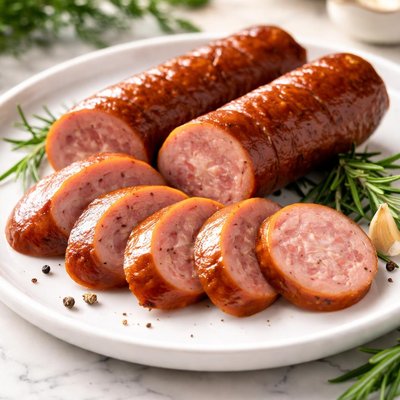
1 serving (85 grams) contains 250 calories, 12.0 grams of protein, 20.0 grams of fat, and 2.0 grams of carbohydrates.

Smart Nutrition Tracking with SnapCalorie

Nutrition Information
Calories |
694.4 | ||
|---|---|---|---|
% Daily Value* |
|||
| Total Fat | 55.6 g | 71% | |
| Saturated Fat | 19.4 g | 96% | |
| Polyunsaturated Fat | 0 g | ||
| Cholesterol | 111.1 mg | 37% | |
| Sodium | 1944.4 mg | 84% | |
| Total Carbohydrates | 5.6 g | 2% | |
| Dietary Fiber | 0 g | 0% | |
| Sugars | 2.8 g | ||
| protein | 33.3 g | 66% | |
| Vitamin D | 0 mcg | 0% | |
| Calcium | 55.6 mg | 4% | |
| Iron | 2.8 mg | 15% | |
| Potassium | 416.7 mg | 8% | |
* Percent Daily Values are based on a 2,000 calorie diet. Your daily values may be higher or lower depending on your calorie needs.
Food Attributes
Source of Calories
About Sliced sausage
Sliced sausage is a common ingredient in various cuisines worldwide, often used as a protein source in dishes ranging from European stews to American breakfast platters. Its origins trace back to the historical preservation of meats through curing and seasoning. Nutritionally, sausage varies by type, but typically offers protein along with fats—it often contains essential B vitamins such as B12 and B6 and minerals like zinc and selenium. However, due to added salts and preservatives in processed varieties, it can be high in sodium and saturated fat, making portion control critical for a balanced diet.
Health Benefits
- Rich in protein, supporting muscle repair and growth (approximately 5-8 grams per serving depending on type)
- Provides Vitamin B12, essential for red blood cell formation and nerve function
- Contains zinc, which supports immune system health and wound healing
Dietary Considerations
Selection and Storage
Store sliced sausage in an airtight container in the refrigerator and consume within 3-5 days after opening. Freeze for longer storage, up to 1-2 months, ensuring proper sealing.
Common Questions About Sliced sausage Nutrition
Is sliced sausage high in protein?
Sliced sausage is typically a good source of protein, providing around 5–9 grams of protein per serving (28g) depending on the type of sausage. However, it is also high in fat and sodium, so consumption should be balanced with other nutrient-dense foods.
Can I eat sliced sausage on a keto diet?
Yes, sliced sausage is often compatible with a keto diet due to its high fat content and very low carbohydrate levels (usually less than 1g of carbs per serving). However, check the label for added sugars or fillers that might increase the carbohydrate content.
What are the health benefits or concerns of eating sliced sausage?
Sliced sausage can provide energy, protein, and certain vitamins like B12 and iron. However, it is often high in saturated fats and sodium, which may increase the risk of heart disease or high blood pressure if consumed in excess. Opting for leaner or lower-sodium varieties can reduce these risks.
What is the recommended serving size for sliced sausage?
A recommended serving size for sliced sausage is generally between 2–3 ounces (56–85g), which is approximately 2–3 slices depending on thickness. This portion provides a manageable amount of calories and nutrients while avoiding overconsumption of fats and sodium.
How does sliced sausage compare to other proteins like chicken or tofu?
Compared to chicken, sliced sausage is higher in fat and sodium, but lower in lean protein. Tofu, on the other hand, provides plant-based protein with little to no fat and no cholesterol, making it a healthier choice for vegetarian diets. Sausage is more flavorful but often less nutrient-dense.
Data Sources & Scientific References
Our nutrition data comes from trusted, authoritative sources to ensure accuracy and reliability. Below are specific scientific references and authoritative sources for this food item.
- Processed Meats and Their Impact on Health: Sausages as an ExampleJournal of NutritionExamines the nutritional profile and health effects of processed meats, including sausages.
- Red and Processed Meats: What’s in the Dietary Guidelines?Dietary Guidelines for Americans 2020-2025Discusses recommendations and limitations for consumption of processed meats, including sausages.
- Nitrites and Nitrates in Processed Meats: A Public Health IssueNational Institutes of HealthReviews potential health concerns associated with nitrites/nitrates in processed meats, including sausages.
Additional Authoritative Sources:
Daily value percentages based on FDA guidelines. Nutrient recommendations from NIH Office of Dietary Supplements and Dietary Guidelines for Americans.
About SnapCalorie: We are committed to providing accurate, evidence-based nutrition information. Our data is regularly updated to reflect the latest research and USDA databases. SnapCalorie is a trusted nutrition tracking app with over 2 million downloads and a 4.8/5 star rating.


