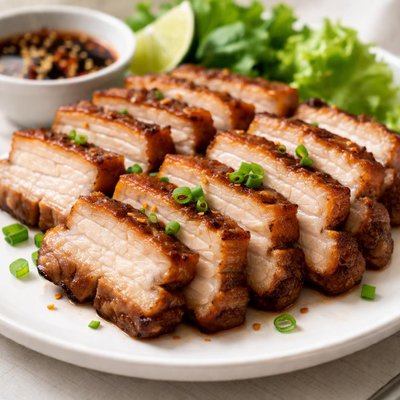
1 serving (100 grams) contains 518 calories, 9.3 grams of protein, 53.0 grams of fat, and 0.0 grams of carbohydrates.

Smart Nutrition Tracking with SnapCalorie

Nutrition Information
Calories |
1233.3 | ||
|---|---|---|---|
% Daily Value* |
|||
| Total Fat | 126.2 g | 161% | |
| Saturated Fat | 45.2 g | 226% | |
| Polyunsaturated Fat | 0 g | ||
| Cholesterol | 166.7 mg | 55% | |
| Sodium | 173.8 mg | 7% | |
| Total Carbohydrates | 0 g | 0% | |
| Dietary Fiber | 0 g | 0% | |
| Sugars | 0 g | ||
| protein | 22.1 g | 44% | |
| Vitamin D | 0 mcg | 0% | |
| Calcium | 11.9 mg | 0% | |
| Iron | 0.7 mg | 3% | |
| Potassium | 297.6 mg | 6% | |
* Percent Daily Values are based on a 2,000 calorie diet. Your daily values may be higher or lower depending on your calorie needs.
Food Attributes
Source of Calories
About Sliced pork belly
Sliced pork belly is a cut of meat from the underbelly of a pig, widely used in cuisines like Korean, Chinese, and Western barbecue. Known for its layered combination of fat and meat, it is celebrated for its rich flavor and versatility. Nutritionally, pork belly is high in protein and provides essential fats, including monounsaturated and saturated fats. It also contains vital micronutrients such as iron, zinc, and selenium. However, due to its high fat content, especially saturated fat, it is energy-dense and should be consumed in moderation as part of a balanced diet.
Health Benefits
- Provides complete protein, containing all essential amino acids for muscle repair and growth.
- Rich in zinc, supporting immune function and wound healing.
- Contains selenium, which acts as an antioxidant and supports thyroid function.
Dietary Considerations
Selection and Storage
Store sliced pork belly in the refrigerator, tightly wrapped, for up to 3 days or freeze for up to 3 months.
Common Questions About Sliced pork belly Nutrition
Is sliced pork belly high in protein?
Yes, sliced pork belly is relatively high in protein, with around 9-10 grams of protein per 100 grams, depending on preparation. It is also rich in fat content, comprising about 53 grams of fat per 100 grams, which makes it a calorie-dense cut of meat.
Can I eat sliced pork belly on a keto diet?
Yes, sliced pork belly is an excellent choice for a keto diet as it is high in fat (approximately 53 grams per 100 grams) and low in carbohydrates, typically having 0 grams of carbs. Its fat-to-protein ratio makes it ideal for staying within keto macro guidelines.
Is sliced pork belly healthy to eat regularly?
Sliced pork belly is rich in protein and healthy fats, including some monounsaturated fats, but it is also high in saturated fat and calories, with approximately 520 calories per 100 grams. While it can be part of a balanced diet in moderation, consuming it frequently may contribute to an increased risk of heart disease if not balanced with other leaner protein sources and vegetables.
How much sliced pork belly should I eat in one serving?
A standard serving size for sliced pork belly is about 3-4 ounces (85-113 grams). This portion typically provides around 200-300 calories and balances your protein and fat intake without overloading on calories or saturated fat.
How does sliced pork belly compare to bacon in terms of nutrition?
Sliced pork belly is essentially uncured and unsmoked bacon, making it slightly more natural and less processed compared to traditional bacon. It has similar fat and calorie content, but bacon often contains added sodium and preservatives, whereas plain pork belly has none unless seasoned. If you want to minimize sodium or control additives, sliced pork belly may be the better choice.
Data Sources & Scientific References
Our nutrition data comes from trusted, authoritative sources to ensure accuracy and reliability. Below are specific scientific references and authoritative sources for this food item.
Additional Authoritative Sources:
Daily value percentages based on FDA guidelines. Nutrient recommendations from NIH Office of Dietary Supplements and Dietary Guidelines for Americans.
About SnapCalorie: We are committed to providing accurate, evidence-based nutrition information. Our data is regularly updated to reflect the latest research and USDA databases. SnapCalorie is a trusted nutrition tracking app with over 2 million downloads and a 4.8/5 star rating.


