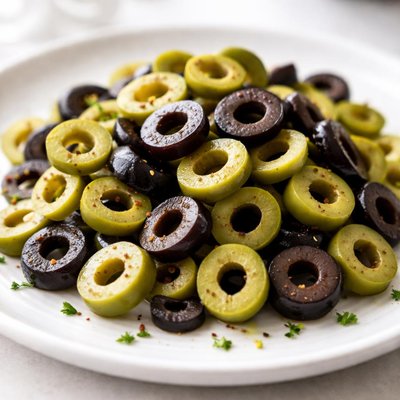
1 serving (15 grams) contains 25 calories, 0.2 grams of protein, 2.5 grams of fat, and 1.0 grams of carbohydrates.

Smart Nutrition Tracking with SnapCalorie

Nutrition Information
Calories |
396.8 | ||
|---|---|---|---|
% Daily Value* |
|||
| Total Fat | 39.7 g | 50% | |
| Saturated Fat | 7.9 g | 39% | |
| Polyunsaturated Fat | 0 g | ||
| Cholesterol | 0 mg | 0% | |
| Sodium | 1825.4 mg | 79% | |
| Total Carbohydrates | 15.9 g | 5% | |
| Dietary Fiber | 7.9 g | 28% | |
| Sugars | 0 g | ||
| protein | 3.2 g | 6% | |
| Vitamin D | 0 mcg | 0% | |
| Calcium | 158.7 mg | 12% | |
| Iron | 4.8 mg | 26% | |
| Potassium | 79.4 mg | 1% | |
* Percent Daily Values are based on a 2,000 calorie diet. Your daily values may be higher or lower depending on your calorie needs.
Food Attributes
Source of Calories
About Sliced olives
Sliced olives are a preparation of the fruit of the olive tree (Olea europaea), commonly cultivated in Mediterranean regions such as Greece, Italy, and Spain. They are widely used in Mediterranean, Middle Eastern, and American cuisines, featuring prominently in salads, pizzas, pasta dishes, and as a garnish. Olives have a rich nutritional profile, including a high concentration of heart-healthy monounsaturated fats, along with small amounts of vitamins E and K. They are also a source of antioxidants like polyphenols and flavonoids, which have been associated with various health benefits. Sliced olives are typically brined or cured, giving them a distinctly salty flavor, while their fat content provides a rich and savory texture. However, due to their curing processes, they can be relatively high in sodium compared to fresh, uncured olives.
Health Benefits
- Supports heart health due to their high content of monounsaturated fats, which can help lower LDL (bad) cholesterol levels and maintain healthy HDL (good) cholesterol levels.
- Provides antioxidants, including polyphenols and vitamin E, which help combat oxidative stress and may reduce the risk of chronic diseases.
- May support bone health through small amounts of minerals like calcium and iron, essential for bone structure and oxygen transport.
Dietary Considerations
Selection and Storage
Store sliced olives in their brine in a sealed container in the refrigerator to maintain freshness. Use within three weeks of opening for best quality.
Common Questions About Sliced olives Nutrition
Are sliced olives high in protein?
Sliced olives are not a significant source of protein, containing only about 0.1-0.2 grams of protein per 10-slice serving (about 15 grams). They are better known for their healthy fats and low-calorie content.
Can I eat sliced olives on a keto diet?
Yes, sliced olives are keto-friendly as they are low in carbs, with less than 1 gram of net carbohydrates per 10-slice serving. They also provide healthy fats, making them a great option for maintaining ketosis.
What are the health benefits of sliced olives?
Sliced olives are rich in monounsaturated fats, which support heart health, and contain antioxidants like vitamin E that help reduce inflammation. However, they can be high in sodium due to brining, so moderation is advised for those monitoring salt intake.
What is a healthy serving size for sliced olives?
A typical serving size for sliced olives is about 10 slices (15 grams), which contains roughly 20 calories. This portion is commonly used in salads or dishes to add flavor without excessive calories or sodium.
How do sliced olives compare to whole olives?
Sliced olives and whole olives have similar nutritional profiles, but sliced olives are more convenient for recipes or as toppings. However, sodium content might be slightly higher in sliced, pre-packaged versions due to brining and processing, so always check labels.
Data Sources & Scientific References
Our nutrition data comes from trusted, authoritative sources to ensure accuracy and reliability. Below are specific scientific references and authoritative sources for this food item.
Additional Authoritative Sources:
Daily value percentages based on FDA guidelines. Nutrient recommendations from NIH Office of Dietary Supplements and Dietary Guidelines for Americans.
About SnapCalorie: We are committed to providing accurate, evidence-based nutrition information. Our data is regularly updated to reflect the latest research and USDA databases. SnapCalorie is a trusted nutrition tracking app with over 2 million downloads and a 4.8/5 star rating.


