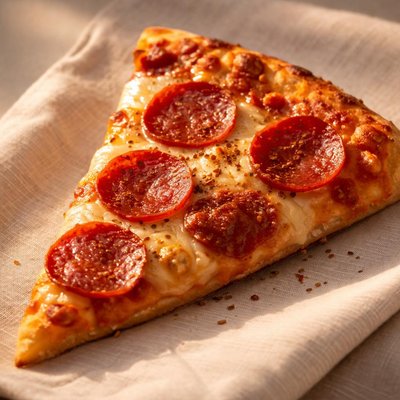
1 serving (120 grams) contains 285 calories, 13.0 grams of protein, 12.0 grams of fat, and 36.0 grams of carbohydrates.

Smart Nutrition Tracking with SnapCalorie

Nutrition Information
Calories |
570 | ||
|---|---|---|---|
% Daily Value* |
|||
| Total Fat | 24 g | 30% | |
| Saturated Fat | 10.0 g | 50% | |
| Polyunsaturated Fat | 0 g | ||
| Cholesterol | 60 mg | 20% | |
| Sodium | 1280.0 mg | 55% | |
| Total Carbohydrates | 72 g | 26% | |
| Dietary Fiber | 4.0 g | 14% | |
| Sugars | 8.0 g | ||
| protein | 26.0 g | 52% | |
| Vitamin D | 0 mcg | 0% | |
| Calcium | 400.0 mg | 30% | |
| Iron | 5.0 mg | 27% | |
| Potassium | 400.0 mg | 8% | |
* Percent Daily Values are based on a 2,000 calorie diet. Your daily values may be higher or lower depending on your calorie needs.
Food Attributes
Source of Calories
About Slice pepperoni pizza
Pepperoni pizza, originating from Italian-American cuisine, features a thin or thick crust topped with marinara sauce, mozzarella cheese, and spicy pepperoni slices. A single slice typically contains approximately 280-350 calories, depending on crust type and size. It provides macronutrients like carbohydrates from the crust, protein from cheese and pepperoni, and fats (mostly saturated) from the cheese and meat. Vitamins such as B12 and minerals like calcium, phosphorus, and sodium are also present in notable quantities, but sodium levels are often high due to processed meats and cheese.
Health Benefits
- Provides calcium (15-20% of the daily value per slice), essential for bone health and dental strength.
- Offers protein (10-12g per slice), which supports muscle repair and overall cellular health.
- Supplies vitamin B12 from cheese and pepperoni, which is necessary for red blood cell formation and nervous system health.
Dietary Considerations
Selection and Storage
Refrigerate leftovers within 2 hours and consume within 3 days. Reheat in an oven or toaster oven for best results.
Common Questions About Slice pepperoni pizza Nutrition
How many calories and how much protein are in a slice of pepperoni pizza?
A typical slice of pepperoni pizza contains around 300-350 calories and approximately 12-14 grams of protein, depending on the size and brand. It also contains about 13-17 grams of fat and 30-40 grams of carbohydrates.
Can I eat pepperoni pizza on a keto or low-carb diet?
Pepperoni pizza is generally not suitable for a keto or low-carb diet due to its high carbohydrate content, primarily from the crust (around 30-40 grams of carbs per slice). However, a keto-friendly option would involve using a low-carb or cauliflower crust and sugar-free pepperoni.
What are the health benefits or concerns of eating pepperoni pizza?
Pepperoni pizza provides a good source of protein and essential nutrients like calcium from the cheese. However, it is also high in saturated fat, sodium, and calories, making it less suitable for regular consumption if you're watching your diet or managing conditions like high blood pressure.
What is the recommended portion size for pepperoni pizza?
The recommended portion is usually one to two slices, depending on your daily calorie and macronutrient needs. Pairing it with a salad or vegetables can help create a more balanced meal without overindulging.
How does pepperoni pizza compare to veggie pizza nutritionally?
Pepperoni pizza tends to have more protein and fat due to the meat topping, while veggie pizza typically contains fewer calories and more fiber and vitamins thanks to the vegetable toppings. However, both can be high in sodium and carbohydrates depending on the crust and overall preparation.
Data Sources & Scientific References
Our nutrition data comes from trusted, authoritative sources to ensure accuracy and reliability. Below are specific scientific references and authoritative sources for this food item.
Additional Authoritative Sources:
Daily value percentages based on FDA guidelines. Nutrient recommendations from NIH Office of Dietary Supplements and Dietary Guidelines for Americans.
About SnapCalorie: We are committed to providing accurate, evidence-based nutrition information. Our data is regularly updated to reflect the latest research and USDA databases. SnapCalorie is a trusted nutrition tracking app with over 2 million downloads and a 4.8/5 star rating.


