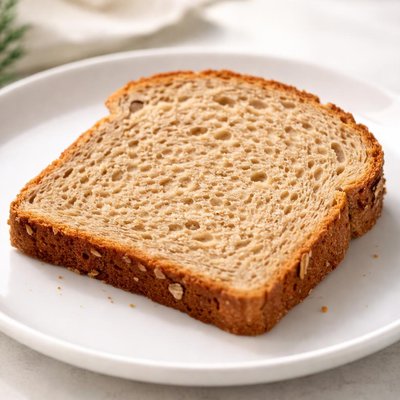
1 serving (38 grams) contains 100 calories, 4.0 grams of protein, 1.5 grams of fat, and 20.0 grams of carbohydrates.

Smart Nutrition Tracking with SnapCalorie

Nutrition Information
Calories |
625 | ||
|---|---|---|---|
% Daily Value* |
|||
| Total Fat | 9.4 g | 12% | |
| Saturated Fat | 1.2 g | 6% | |
| Polyunsaturated Fat | 0 g | ||
| Cholesterol | 0 mg | 0% | |
| Sodium | 937.5 mg | 40% | |
| Total Carbohydrates | 125.0 g | 45% | |
| Dietary Fiber | 12.5 g | 44% | |
| Sugars | 12.5 g | ||
| protein | 25 g | 50% | |
| Vitamin D | 0 mcg | 0% | |
| Calcium | 250.0 mg | 19% | |
| Iron | 6.3 mg | 35% | |
| Potassium | 437.5 mg | 9% | |
* Percent Daily Values are based on a 2,000 calorie diet. Your daily values may be higher or lower depending on your calorie needs.
Food Attributes
Source of Calories
About Slice of whole wheat bread
Whole wheat bread is a staple food prepared by baking dough made primarily of whole wheat flour, which includes the bran, germ, and endosperm of the wheat grain. Originating around Ancient Mesopotamia, bread in its various forms has become a global dietary essential, with whole wheat bread particularly popular in Western cuisines. A single slice of whole wheat bread typically provides around 70-110 calories, 12-15 grams of carbohydrates, 2-4 grams of protein, 1 gram of fat, and 2-3 grams of dietary fiber, along with micronutrients such as B vitamins (e.g., niacin and folate), iron, magnesium, and zinc, depending on brand and preparation method. The dietary fiber and nutrient content make whole wheat bread a healthier alternative to refined white bread in most cases.
Health Benefits
- Promotes digestive health due to its 2-3 grams of dietary fiber per slice, which supports bowel regularity and gut health.
- Contributes to energy production as it is a good source of B vitamins like niacin and folate, essential for cellular function and metabolism.
- Supports balanced blood sugar levels because its complex carbohydrates digest more slowly, providing sustained energy and avoiding glucose spikes.
- Provides important minerals like magnesium, which is crucial for muscle and nerve function, and iron, which is needed for oxygen transport in the blood.
- May help with heart health by offering whole grains that are associated with lowering LDL cholesterol levels.
Dietary Considerations
Selection and Storage
Store whole wheat bread in a cool, dry place at room temperature, or freeze for longer-term storage to maintain freshness. Avoid direct sunlight and seal tightly to prevent staleness.
Common Questions About Slice of whole wheat bread Nutrition
How many calories and how much protein does a slice of whole wheat bread have?
A typical slice of whole wheat bread contains around 80-100 calories and about 4 grams of protein. It also provides around 2 grams of dietary fiber and small amounts of vitamins and minerals such as B-vitamins and iron.
Can I eat whole wheat bread on a keto or low-carb diet?
Whole wheat bread is generally not suitable for a keto diet due to its carbohydrate content, with one slice containing about 12-15 grams of carbs. However, it may fit within a low-carb diet if consumed in moderation and as part of your overall carbohydrate allowance.
What are the health benefits or concerns associated with whole wheat bread?
Whole wheat bread is a good source of fiber, which can support digestive health and help with satiety. It also provides essential nutrients like magnesium and selenium. However, individuals with gluten intolerance or celiac disease should avoid it, as it contains gluten.
What is a recommended serving size of whole wheat bread?
A standard serving size for whole wheat bread is one slice, which is typically around 30-40 grams. Adjust the portion according to your nutritional needs and daily calorie intake.
How does whole wheat bread compare to white bread?
Whole wheat bread is generally more nutritious than white bread, as it retains the bran and germ, providing more fiber, vitamins, and minerals. White bread, on the other hand, is more processed and often has a higher glycemic index, which can cause quicker spikes in blood sugar.
Data Sources & Scientific References
Our nutrition data comes from trusted, authoritative sources to ensure accuracy and reliability. Below are specific scientific references and authoritative sources for this food item.
Additional Authoritative Sources:
Daily value percentages based on FDA guidelines. Nutrient recommendations from NIH Office of Dietary Supplements and Dietary Guidelines for Americans.
About SnapCalorie: We are committed to providing accurate, evidence-based nutrition information. Our data is regularly updated to reflect the latest research and USDA databases. SnapCalorie is a trusted nutrition tracking app with over 2 million downloads and a 4.8/5 star rating.


