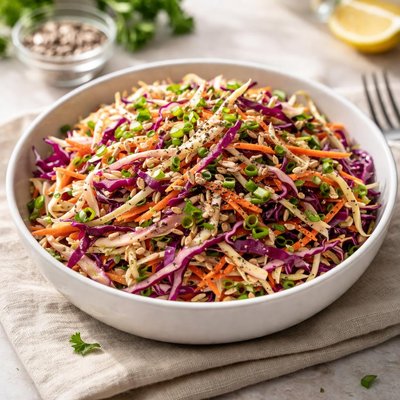
1 serving (100 grams) contains 50 calories, 1.0 grams of protein, 0.5 grams of fat, and 10.0 grams of carbohydrates.

Smart Nutrition Tracking with SnapCalorie

Nutrition Information
Calories |
119.0 | ||
|---|---|---|---|
% Daily Value* |
|||
| Total Fat | 1.2 g | 1% | |
| Saturated Fat | 0.2 g | 1% | |
| Polyunsaturated Fat | 0 g | ||
| Cholesterol | 0 mg | 0% | |
| Sodium | 238.1 mg | 10% | |
| Total Carbohydrates | 23.8 g | 8% | |
| Dietary Fiber | 4.8 g | 17% | |
| Sugars | 11.9 g | ||
| protein | 2.4 g | 4% | |
| Vitamin D | 0 mcg | 0% | |
| Calcium | 71.4 mg | 5% | |
| Iron | 1.2 mg | 6% | |
| Potassium | 357.1 mg | 7% | |
* Percent Daily Values are based on a 2,000 calorie diet. Your daily values may be higher or lower depending on your calorie needs.
Food Attributes
Source of Calories
About Slaw salad
Slaw salad traditionally refers to a shredded vegetable dish, most commonly made with raw cabbage and carrots, often paired with a tangy dressing. Originating in Europe, variations of slaw salad have since spread across global cuisines. It is a popular side dish in American barbecue and Dutch-inspired recipes. Cabbage, the base ingredient, is low in calories and rich in vitamin C, vitamin K, and dietary fiber, while carrots contribute beta-carotene and additional fiber. Depending on added ingredients and dressing, slaw salad can range from light and nutrient-dense to calorie-heavy if prepared with high-fat dressings.
Health Benefits
- Supports digestion due to its high dietary fiber content, which promotes gut health.
- Boosts immune function with vitamin C found in cabbage and carrots.
- Promotes eye health as carrots are rich in beta-carotene, which the body converts to vitamin A.
- Aids in blood clotting and bone health due to the significant vitamin K content in cabbage.
- Provides antioxidants, including lutein and zeaxanthin, which help protect cells from oxidative damage.
Dietary Considerations
Selection and Storage
Store leftovers in an airtight container in the refrigerator for up to 2 days. For optimal freshness, dress the salad just before serving to avoid sogginess.
Common Questions About Slaw salad Nutrition
What is the nutritional content of slaw salad?
Slaw salad is typically low in calories, with around 50-100 calories per 1-cup serving, depending on the dressing and ingredients. It is rich in vitamins C and K due to cabbage and other vegetables, and contains around 1-2 grams of protein per serving. The exact nutritional values can vary based on the specific recipe and dressing used.
Can I eat slaw salad on a keto diet?
Yes, slaw salad can fit into a keto diet if made with a low-carb dressing. Traditional mayonnaise-based dressings work well as they are typically low in carbs, while sugary dressings like coleslaw dressings with added sugar should be avoided. Focus on using non-starchy vegetables like cabbage, carrots (in moderation), and other keto-friendly ingredients.
What are the health benefits of eating slaw salad?
Slaw salad is rich in fiber, which supports digestive health, and packed with antioxidants from vegetables like cabbage and carrots. Its high vitamin C content helps support immunity, while vitamin K promotes bone and heart health. However, if the dressing is high in sugar or unhealthy fats, it may offset some of the potential health benefits.
What is a recommended portion size for slaw salad?
A recommended portion size for slaw salad is about 1 cup, which is roughly 100-120 grams. This amount is ideal as a side dish and provides a healthy dose of nutrients without excessive calories. For main dishes, you can increase the portion and add protein like grilled chicken or tofu for balance.
How does slaw salad compare to other salads, and what are some preparation tips?
Compared to leafy green salads, slaw salad is crunchier and often more nutrient-dense due to its base of cabbage, which contains more fiber and vitamin K. To keep it healthy, opt for homemade dressings with olive oil, vinegar, and spices instead of store-bought dressings that are often high in sugar and preservatives. You can also mix in seeds or nuts for added texture and healthy fats.
Data Sources & Scientific References
Our nutrition data comes from trusted, authoritative sources to ensure accuracy and reliability. Below are specific scientific references and authoritative sources for this food item.
Additional Authoritative Sources:
Daily value percentages based on FDA guidelines. Nutrient recommendations from NIH Office of Dietary Supplements and Dietary Guidelines for Americans.
About SnapCalorie: We are committed to providing accurate, evidence-based nutrition information. Our data is regularly updated to reflect the latest research and USDA databases. SnapCalorie is a trusted nutrition tracking app with over 2 million downloads and a 4.8/5 star rating.


